Booking a Visit
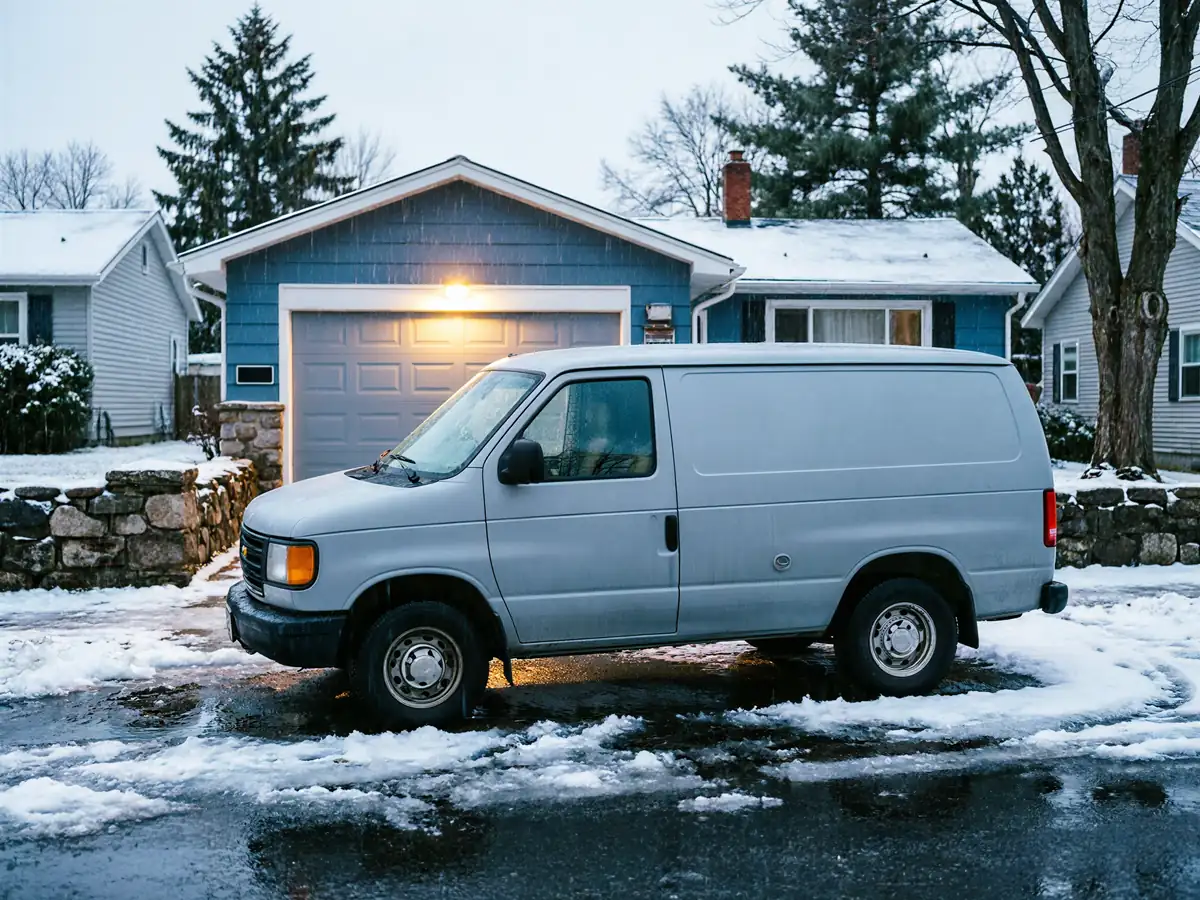
We're based in Manchester, about 13 miles out, and we run roller jobs into Pembroke on a scheduled basis rather than keeping a crew sitting in town. That means we ask a few questions up front - how old the door is, whether the rumble is constant or only on the way down, whether a panel's already loose - so the truck that shows up has the right rollers on it the first time. A 7-foot double door built with the hardware common around 1969 doesn't take the same roller as a door from the 1980s retrofit market, and guessing wrong wastes your afternoon and ours. Tell us the brand plate if you can read it, or just the approximate age of the house. We'll bring options.
We don't claim a same-day window here - we're honest that Pembroke gets worked into the route, not treated as a satellite branch. If your roller has already jumped the track and the door won't move at all, say so when you call; that changes what we load before we leave Manchester.
Where This Job Goes Sideways
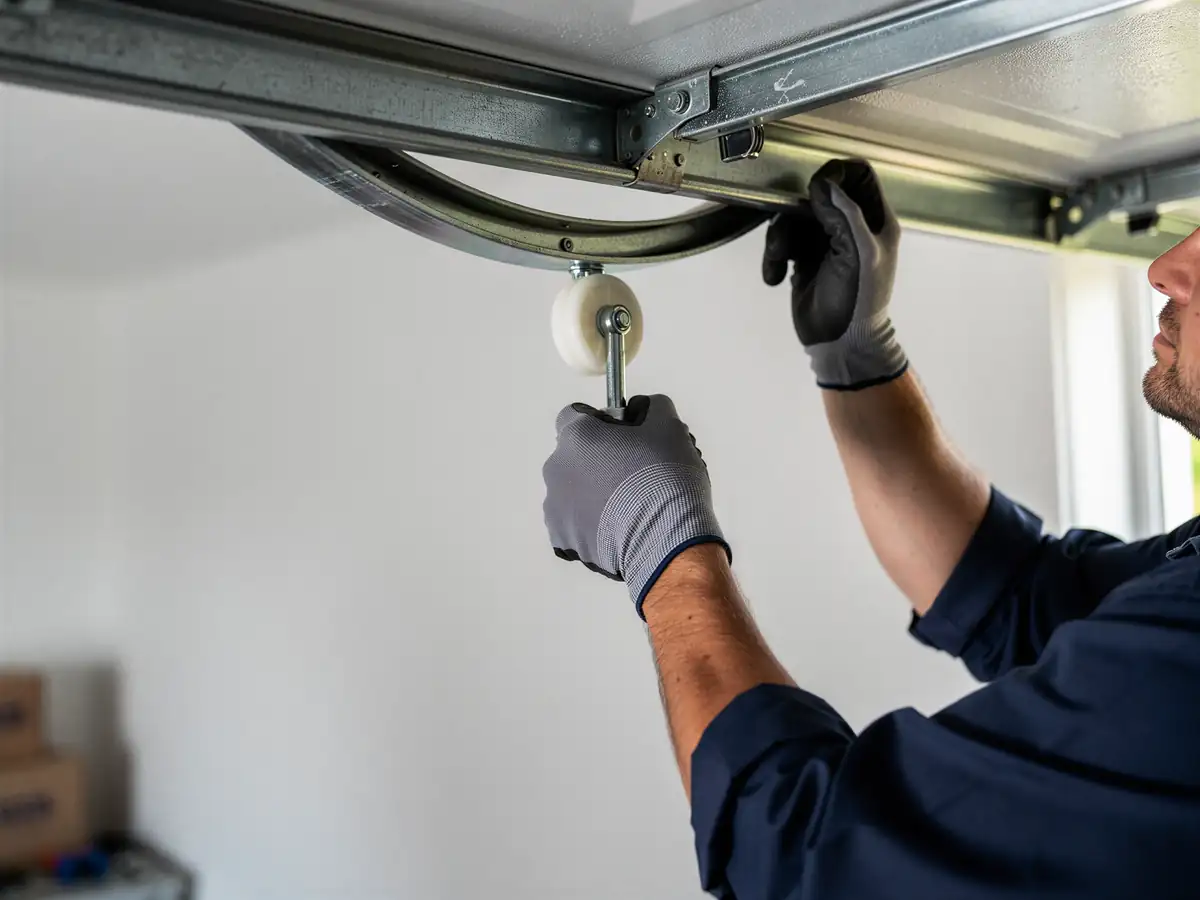
The trouble isn't the roller itself - it's what's happened to the track around it over 50-plus years. A worn 2-inch steel roller on a house built near 1969 has usually been grinding against the same galvanized track since installation, and that track has worn a groove that a new standard roller won't ride true in. Swap the roller alone and the door sounds fine for two weeks, then starts binding again because the track itself is the actual problem.
We see this more in Pembroke's older stock than in neighborhoods built in the 1980s and 90s, where 45 named areas across the wider service area got doors with lighter, quieter nylon rollers from the factory. Here, the original steel-on-steel setup means roller replacement is often a two-part job - new rollers, and a track straightening or swap - and we'll tell you that on-site rather than selling you a roller-only fix that won't hold.
The Symptom
The giveaway on a house from this era is a low grinding or rattling sound that gets worse as the door nears full open or full close
Not a smooth hum. That's the sound of a worn steel roller riding on flat spots instead of its wheel. Some owners describe it as the door 'catching' a few inches before the top, then jerking through. That jerk is usually the roller skipping a worn section of track, not the opener struggling.
If the noise is sudden and sharp rather than gradual, and the door won't close square
A roller has likely come off its stem entirely - at that point stop running the opener before the cable or track takes more damage.
Parts We Carry
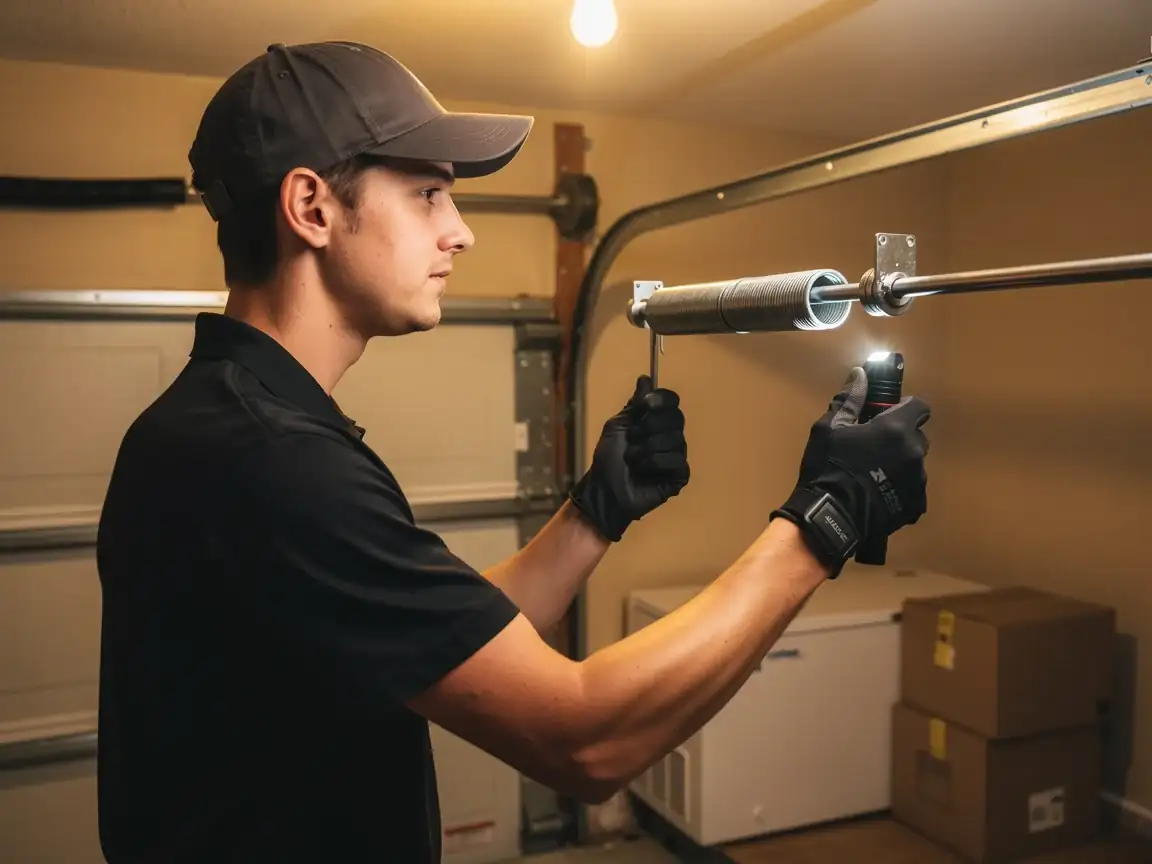
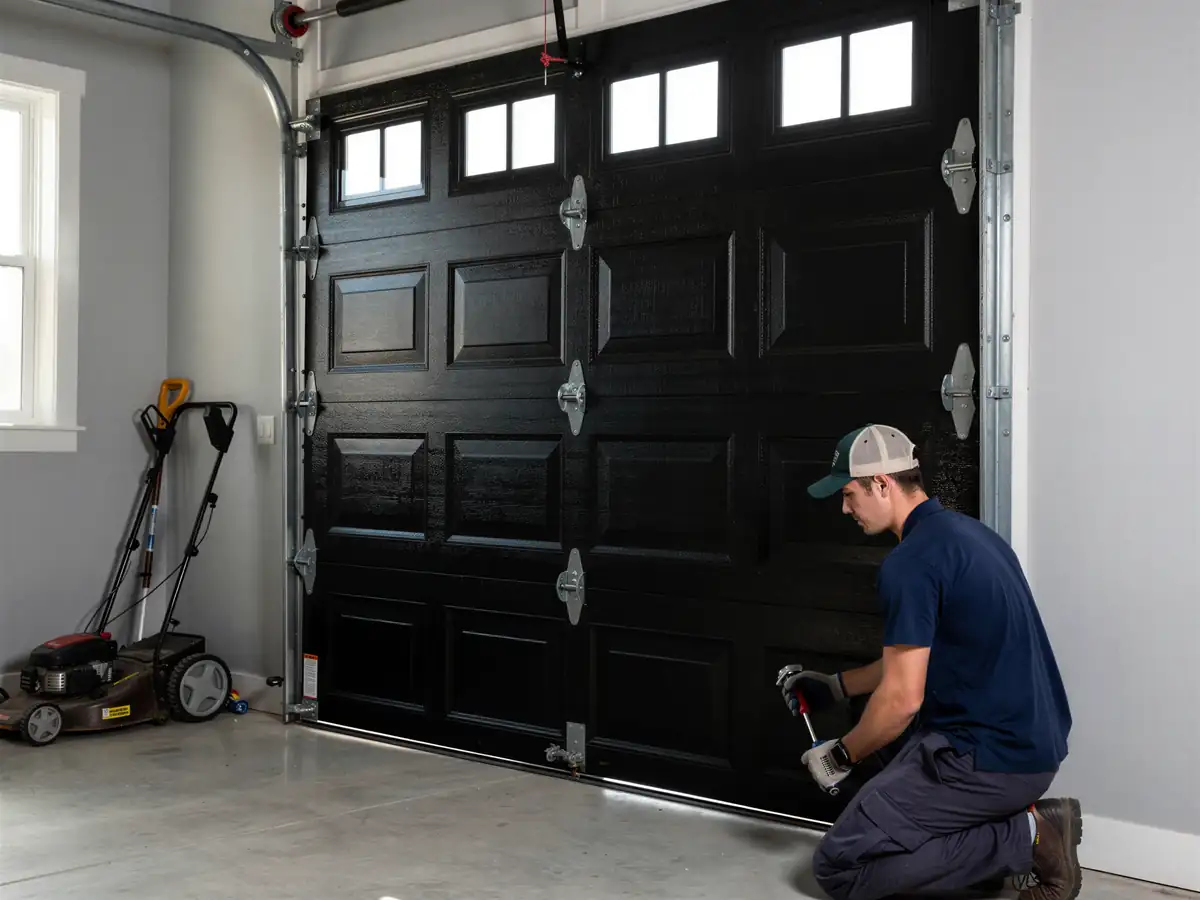
We stock standard 7-ball steel rollers, sealed nylon rollers, and the stem lengths that fit both short-track and extended-track setups, since Pembroke has a mix depending on when a given door was last replaced. For houses still running the original 1960s-70s hardware, we also carry the heavier-gauge track sections that original steel rollers wear down, because replacing the roller without addressing a grooved track is a repair that doesn't last.
One limit worth saying plainly: if the track has bowed or rusted through rather than just worn, we'll tell you to replace the full track assembly rather than patch it - and that's a bigger job than a roller swap, with its own parts lead time we won't promise you around on the spot.
Why This Fails Locally
New Hampshire's cold band hits steel rollers harder than it hits nylon - the lubricant stiffens, the steel contracts slightly, and a roller that was already worn grinds louder and fails faster through a cold winter than it would in a milder climate. On a door built around 1969, that steel roller has already had 50-plus winters to wear the groove we mentioned above, so the failure point tends to show up earlier in the season here than on a 1980s door with nylon rollers from the start.
Household income in Pembroke runs lower than the wider Manchester service area's $115,712 median, which is part of why we carry both a basic steel-roller fix and the quieter nylon upgrade - so you can choose based on what the door needs now versus what you want to avoid dealing with again in five years.