Booking a Visit
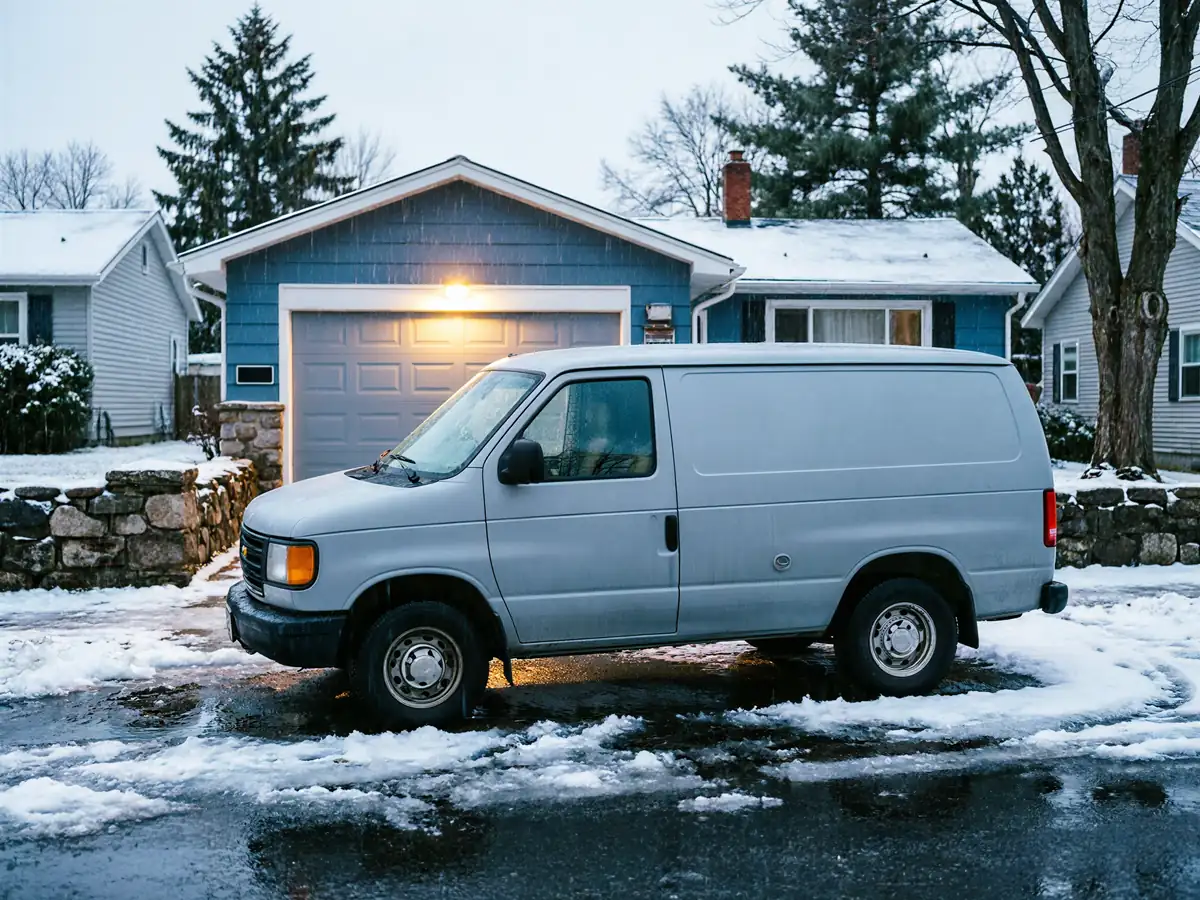
We run maintenance calls out to Pembroke from our Manchester shop, about 13 miles each way. Because this isn't a town we're based in, we batch Pembroke visits rather than offering same-day drop-ins - worth knowing before you call expecting someone in an hour. Tell us the age of the door and whether it's ever been serviced, and we'll bring the right spring sizes and roller stock instead of guessing on-site. With 2,779 households in Pembroke and a median build year of 1969, a lot of what we find hasn't been touched since it was hung. A maintenance visit here is less about a tune-up and more about an inspection: we're checking whether the spring, cable, and drum are original and how much life is left in them. If something's past the point of adjustment, we'll say so plainly rather than charge you for a lubricant-and-tighten pass on a door that needs a part. Call ahead with the year the house was built if you know it - that one number tells us more than almost anything else about what we'll find.
Where This Job Goes Sideways
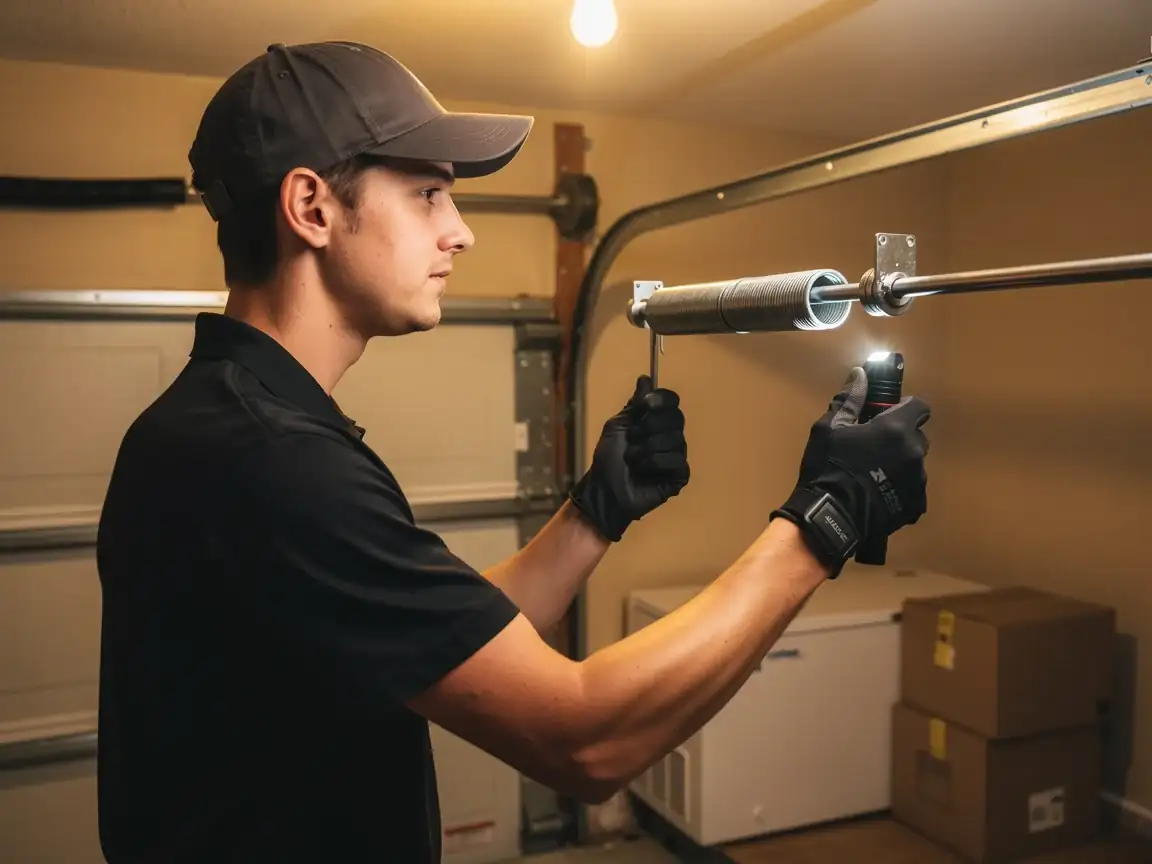
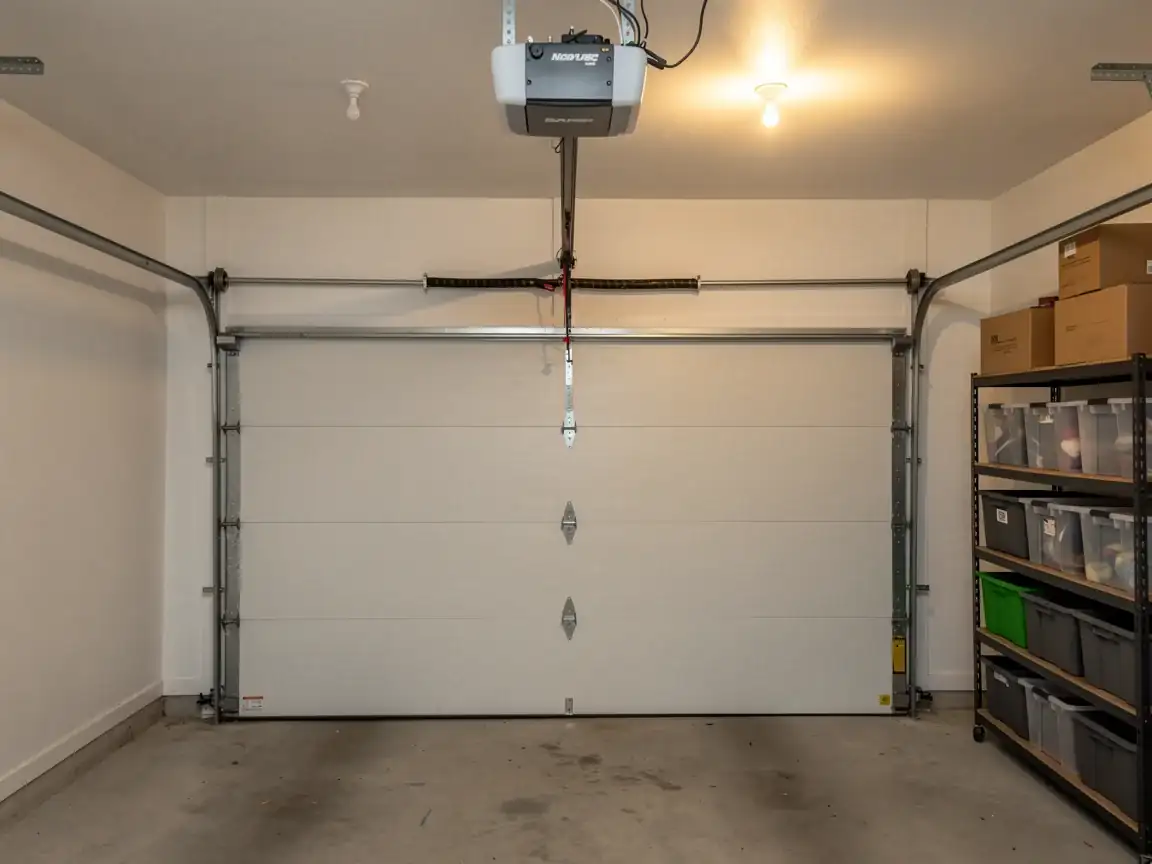
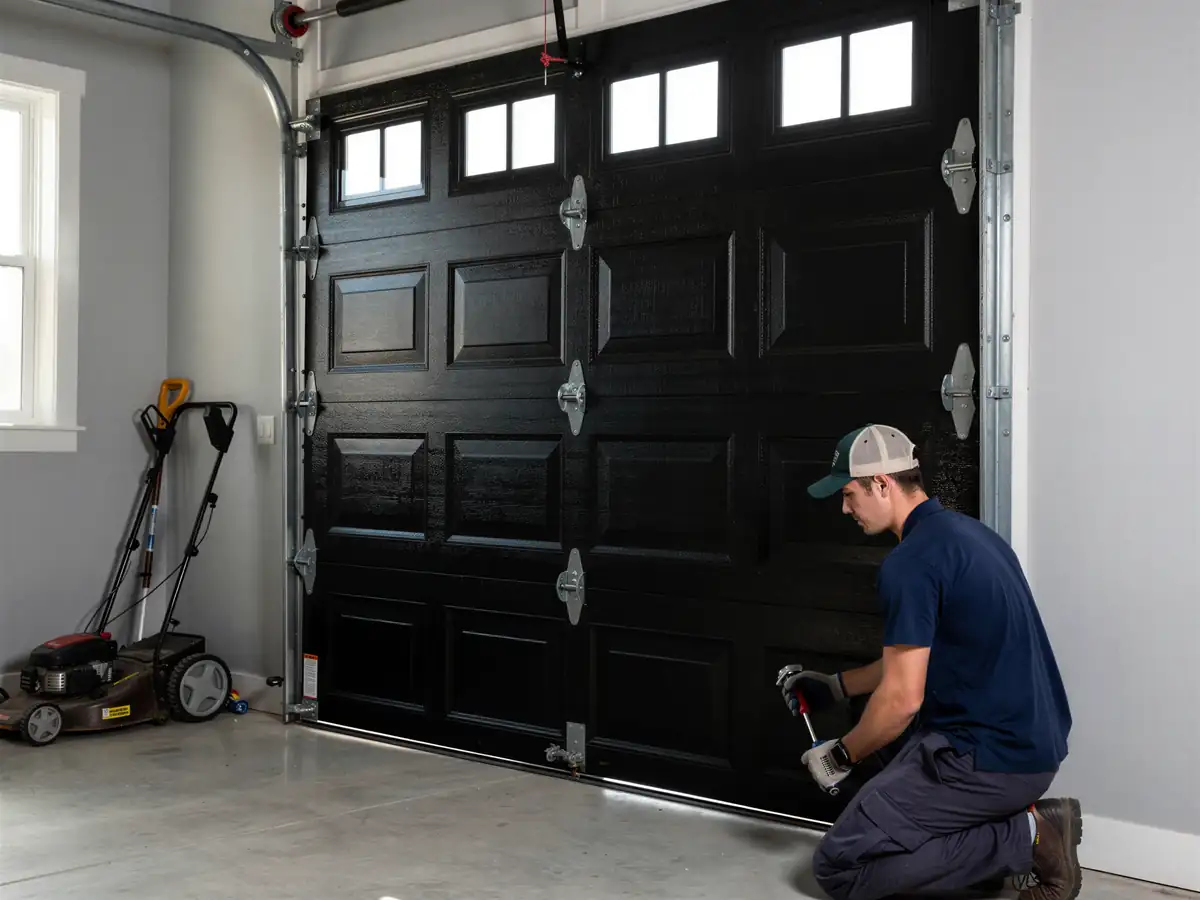
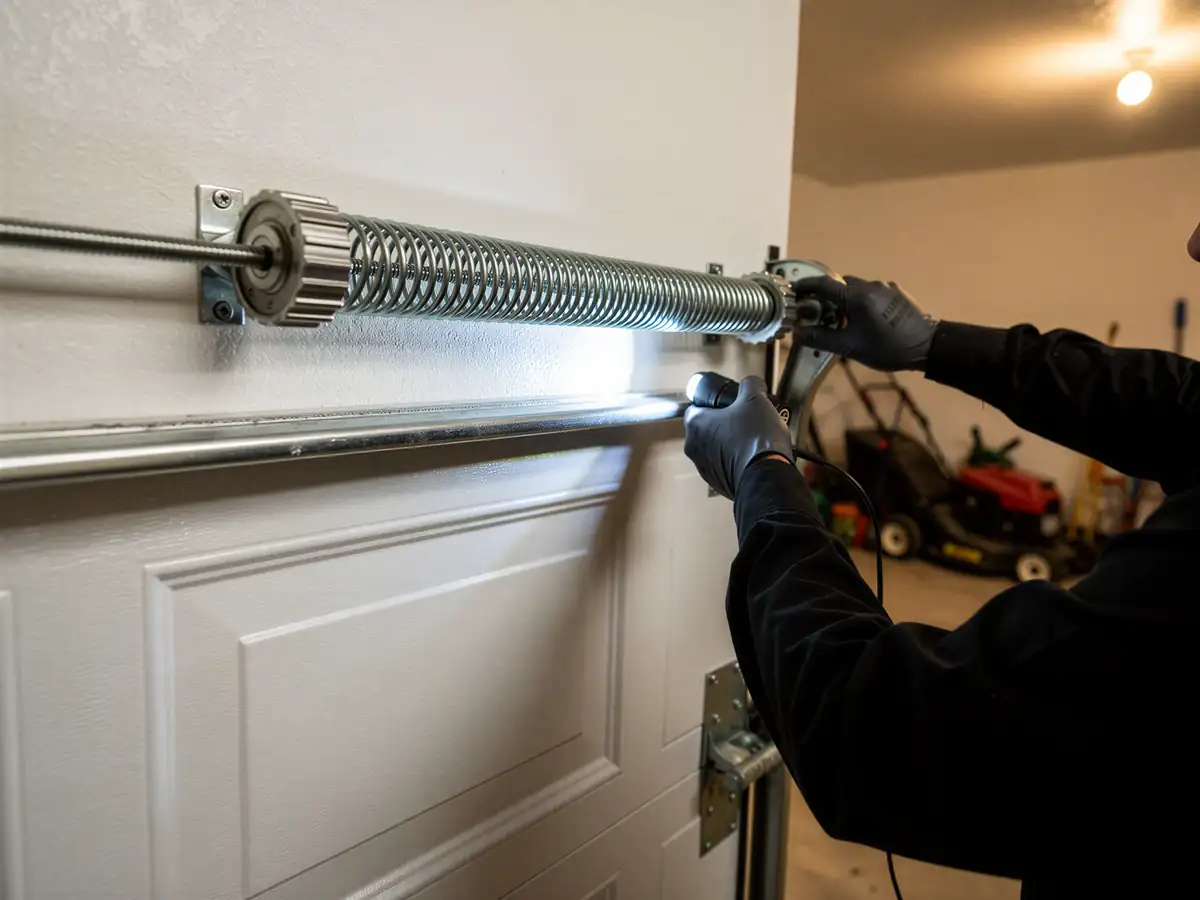
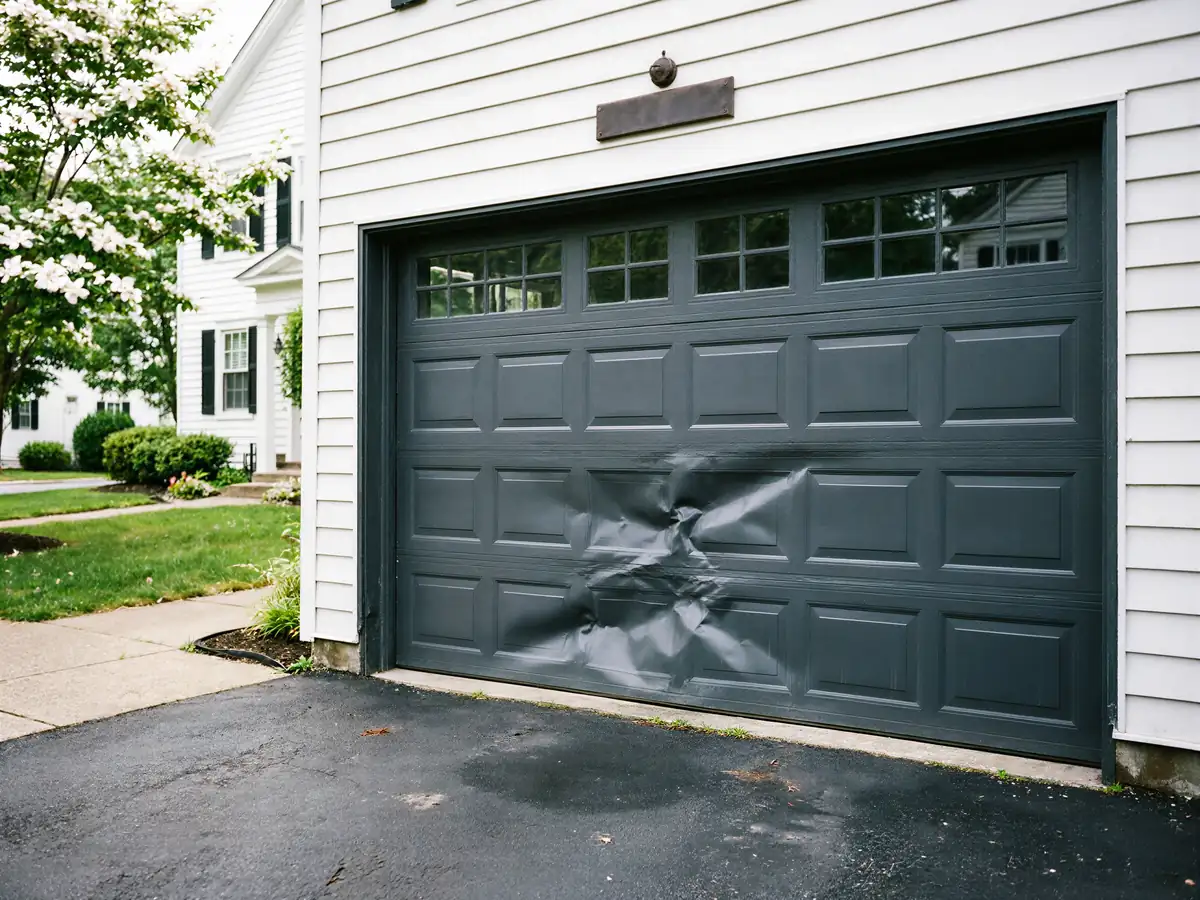
The trouble in Pembroke isn't that doors are neglected - it's that a door built around 1969 has outlasted the hardware it shipped with by decades, and nobody flagged the swap point. A torsion spring rated for 10,000 cycles doesn't care that the door still looks fine; it just breaks, usually without warning, often on a cold morning when the steel is least forgiving. Jobs go sideways here when a homeowner asks for a quick lube job on a door whose spring is already stretched past safe tension, or whose track is bowed from decades of minor misalignment nobody noticed because the opener kept muscling through it. We've also seen maintenance turn into a bigger job once we're under the door and find the bottom bracket or end bearing plate is original 1960s stock - parts that don't match anything we stock on the truck and that we have to source before finishing the job. That's the honest limitation: we can't always complete a repair on original hardware in one visit, because nobody makes a direct replacement for some of what's still bolted to these doors.
Parts We Carry
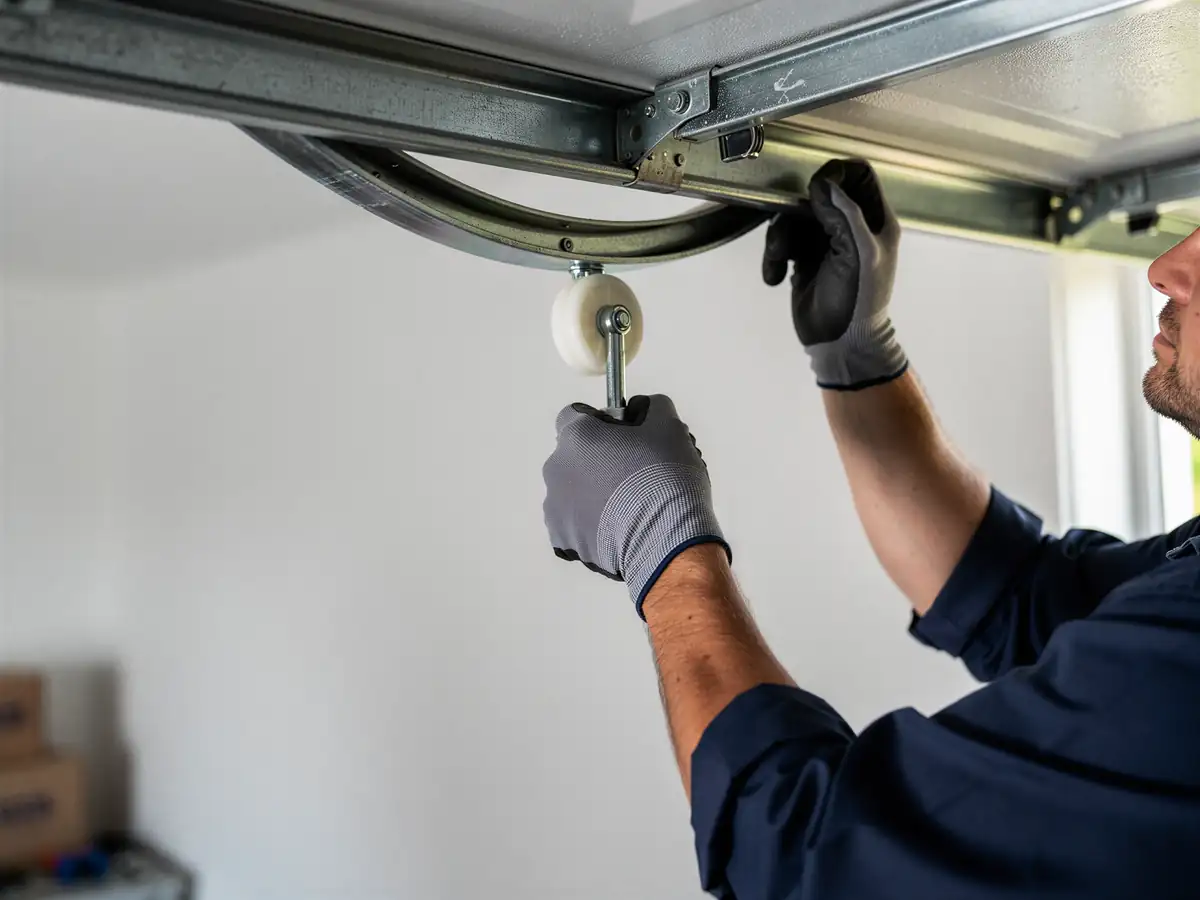
For a town where the housing stock skews toward 1969, we carry standard torsion springs, galvanized lift cables, and nylon rollers sized for the single and double doors most common on homes of that era. What we don't carry on the truck is obsolete bracket hardware or doors sized to older non-standard rough openings - if your door or frame is original and nonstandard, we'll need to order that piece rather than swap it on the spot. We stock enough common spring wire sizes to cover most torsion setups we find in this part of the service area, but a job on a genuinely original 1960s-era extension spring system sometimes means a return trip once the right part is in hand. We'd rather tell you that upfront than leave a job half-finished and call it done.
Why This Fails Locally
Pembroke's median household income sits at $95,307, noticeably below the $115,712 figure across the wider service area, and that gap shows up in how long doors get run past their service life here - maintenance gets deferred longer when the budget's tighter, and original hardware stays in place past the point it should've been swapped. Combine that with a median build year of 1969, a decade or more older than the broader area's 1982 median, and you get a higher share of doors still running on their first spring and first set of cables. Add our region's severe cold winters, which punish worn steel hardest right when you need the door most, and the pattern is consistent: failures cluster in homes where the original spring never got replaced on schedule. That's the local math - older stock, tighter maintenance budgets, and a hard winter climate all pushing the same direction.