The Situation
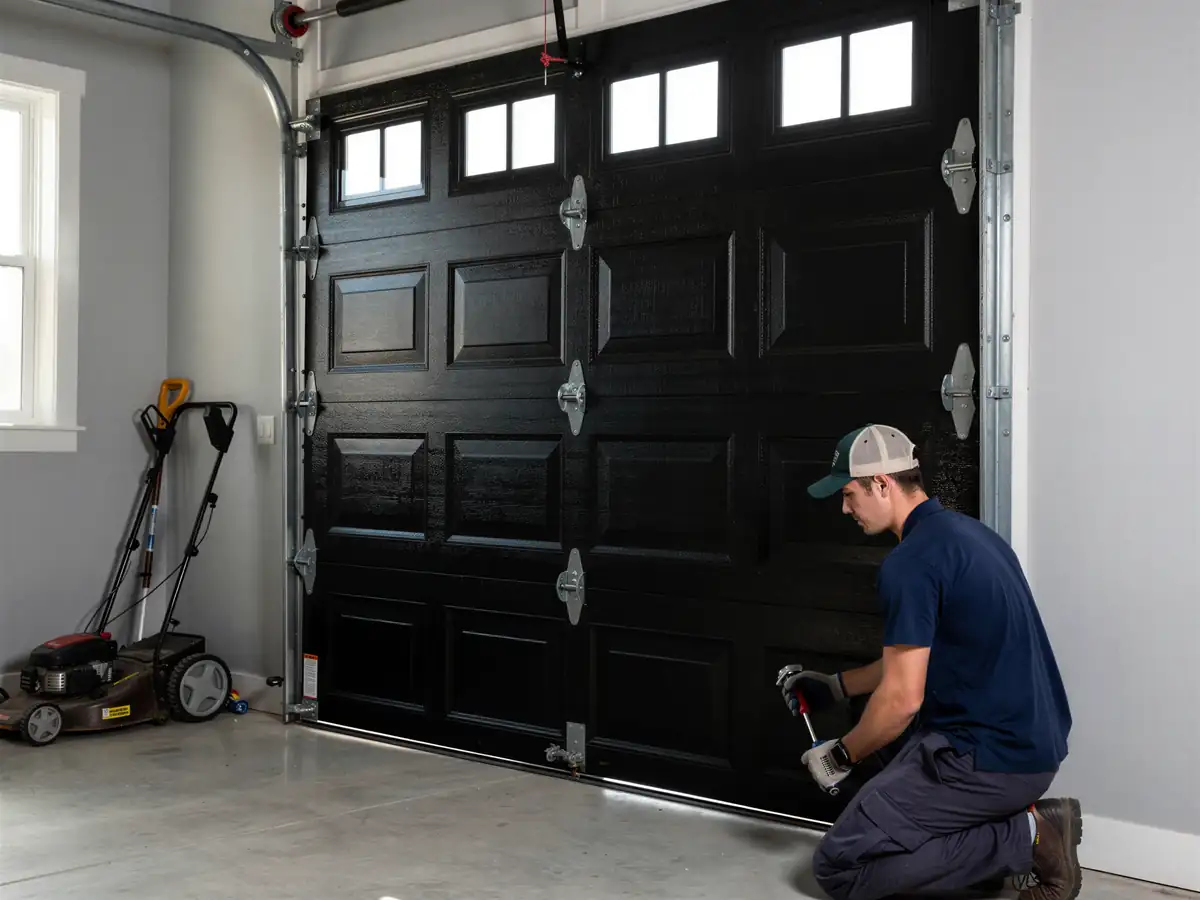
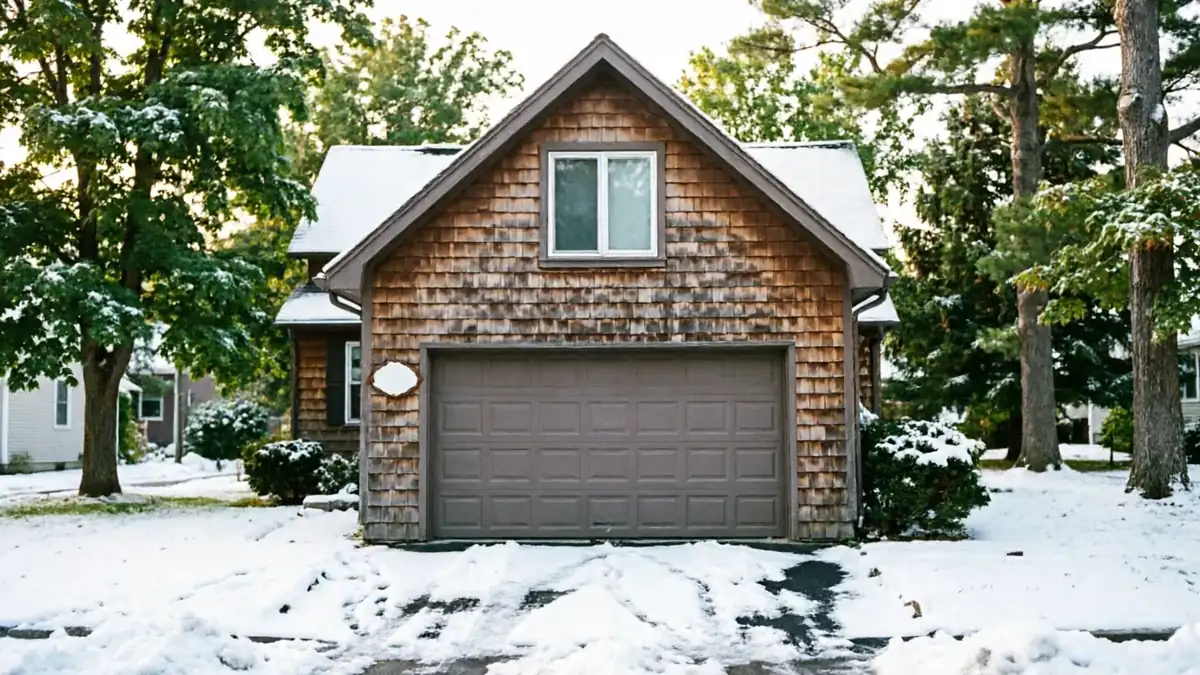
Most houses in this service area were built between 1938 and 1997, with the median landing in 1982 - old enough that a lot of them still run the torsion springs that came with the house. That matters because steel fatigues on a cycle count, and a spring installed during the Carter or Reagan years has been through a lot of winters by now. You hear it before you see it: a bang from the garage around dawn, then the door won't budge past a foot off the floor, or it slams down on its own. That's a spring letting go, and it almost always happens on the coldest morning of the stretch, not the warmest. Cold steel is brittle steel. A spring that's been flexing fine for twenty years can finally give out the first hard freeze of the season because the metal has less give left in it when it's cold. If your door's opener is straining, grinding, or reversing halfway up, don't keep hitting the button. That's the motor fighting a broken or weakened spring, and running it that way burns out the opener on top of the spring problem you already have.
What to Look At First
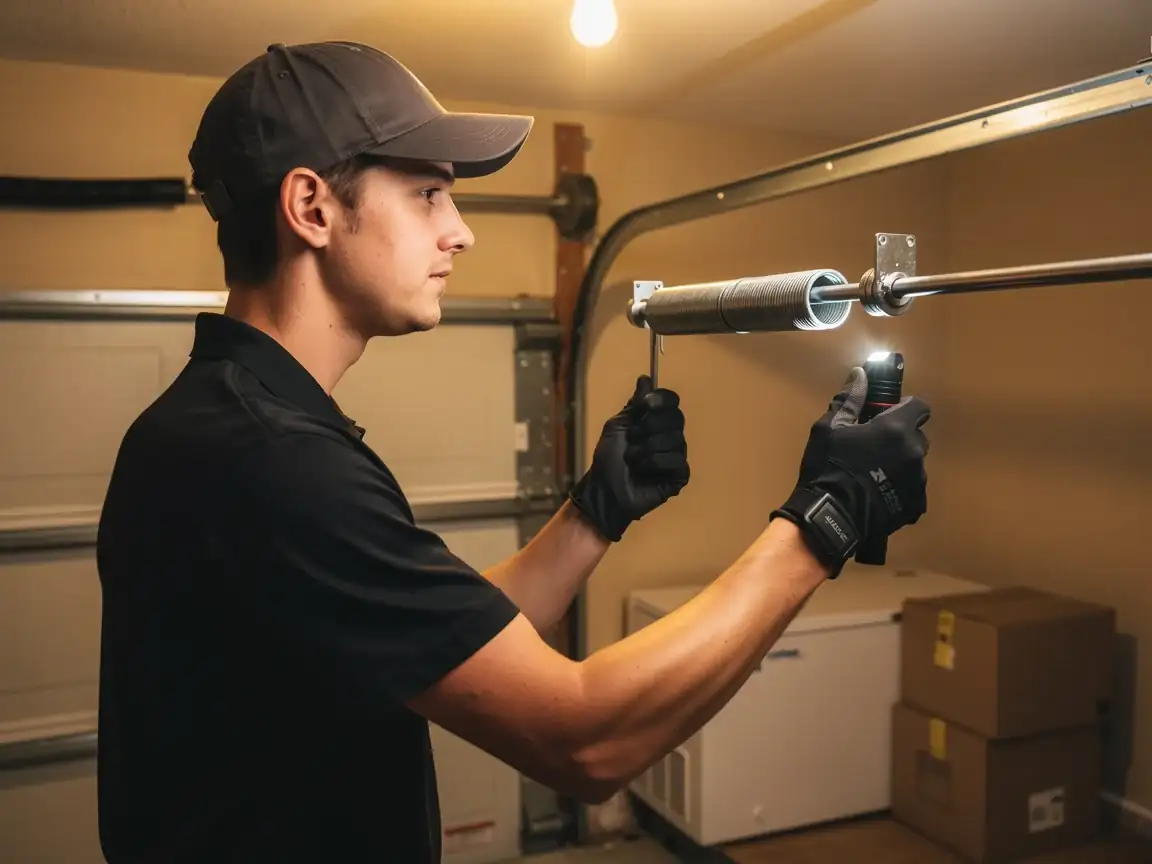
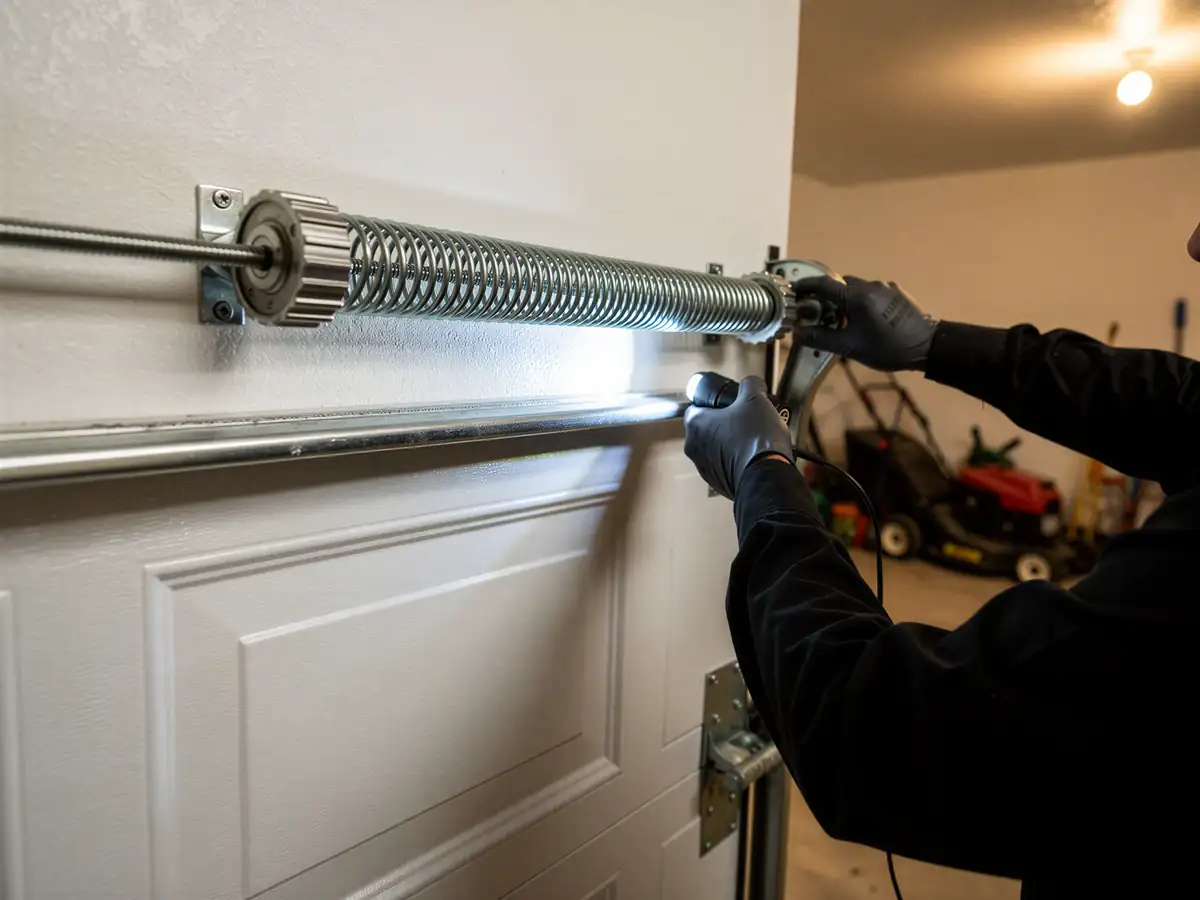
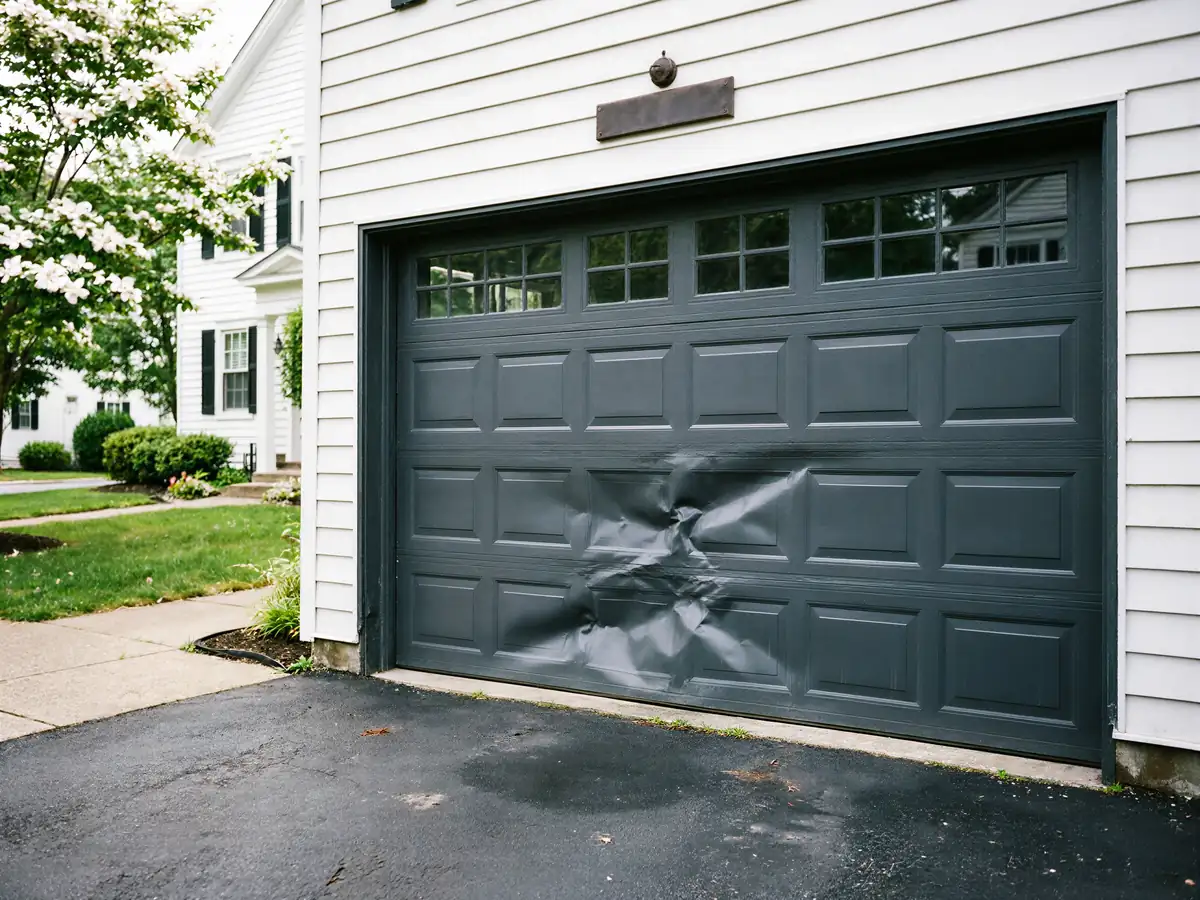
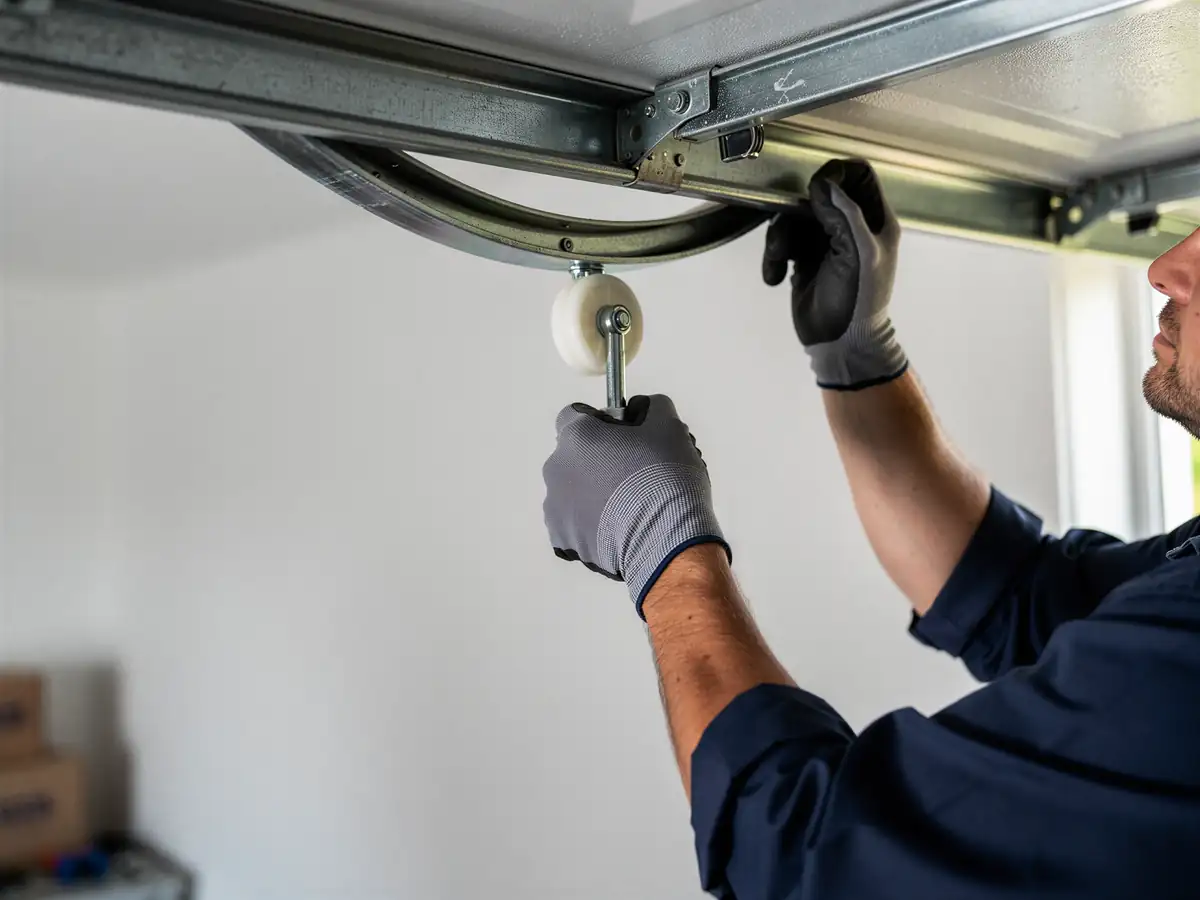
Look at the spring itself before anything else - it's the torsion bar above the door, or the pair of stretched springs along the upper tracks on older setups still common in houses from the 1938-1997 build range. A separated coil, a visible gap, or a spring hanging loose off to one side means it's broken, full stop. Next check the cables on either side of the bottom bracket; a cable that's slack or frayed usually means it jumped the drum when the spring let go, and running the opener with a loose cable can bend a track fast. Check the rollers too, especially if the house is on the older end of that 1938-1982 range - original steel rollers in nylon-sleeve housings get brittle in the cold and chip, which throws the whole door off its path. If the bottom panel is cracked or the weatherstrip is torn, note it, but that's a separate repair from the spring. Write down what you see and when it happened. A tech working from
How Local Conditions Play In
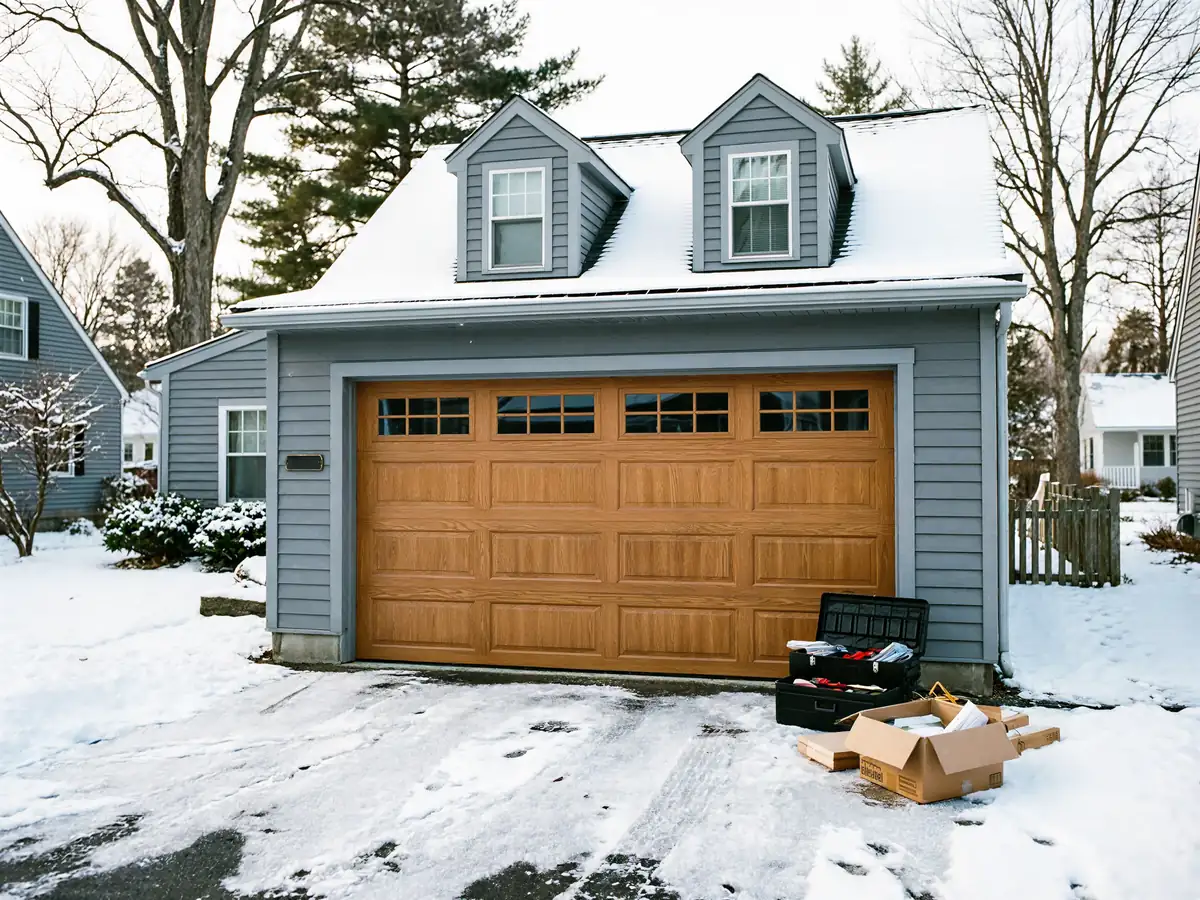
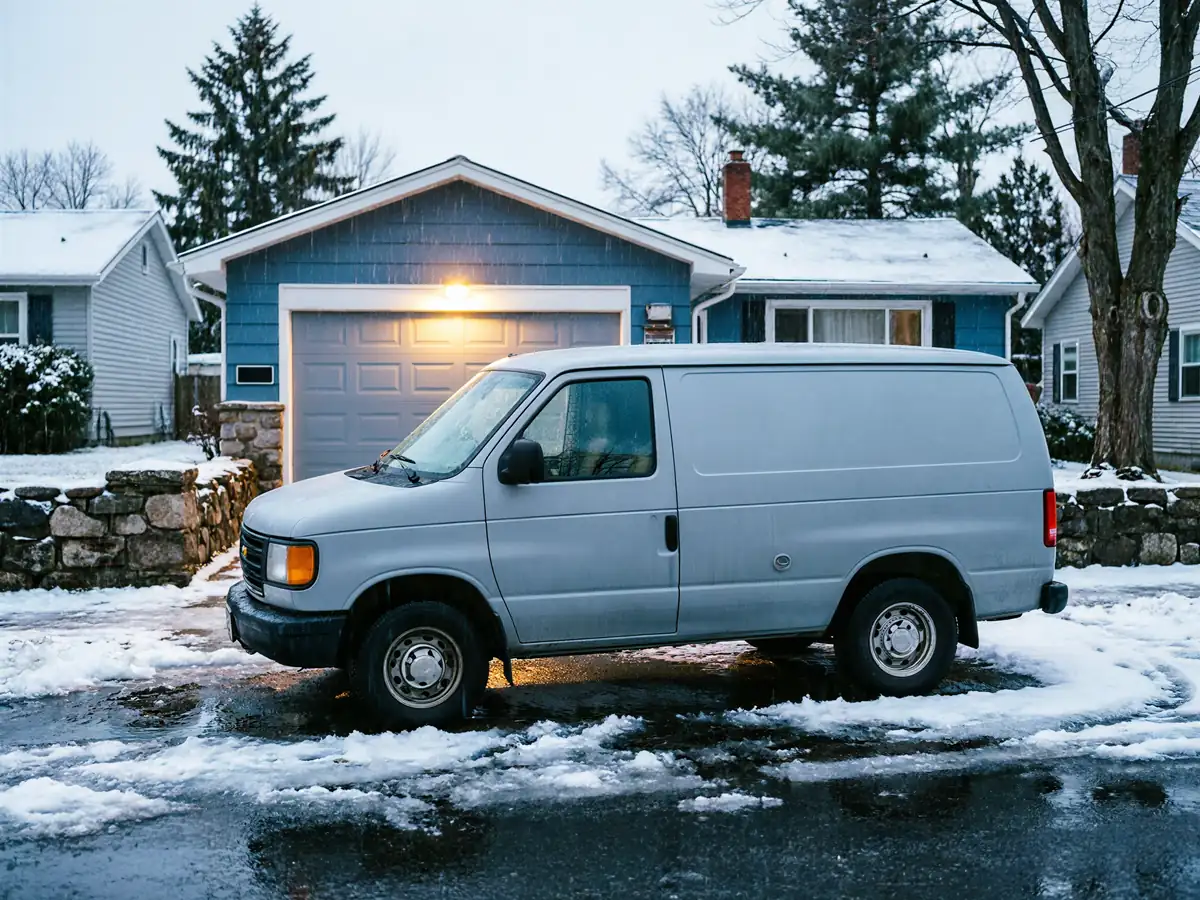
Manchester sits in a severe cold climate band, and that's the detail that ties the housing stock to the failure pattern. Steel springs lose tension fastest during sustained cold snaps, not single cold nights, and a stretch of days below freezing is normal here most winters. Across the 45 named neighborhoods in this service area - from the out through South Hooksett - the bulk of the housing dates to the 1980s and 90s, which means a huge share of doors are running factory-spec torsion hardware that's now thirty-plus years into a cold-climate duty cycle no warranty ever covered. With 82,285 owner-occupied houses among 141,685 households in the area, that's a lot of garages built on the same timeline hitting the same wear point around the same age. At a median household income of $115,712, most owners here can afford to replace a spring system properly instead of patching it, but plenty still wait until the morning it breaks. Cold doesn't cause the failure by itself - it just picks the day.