Booking a Visit
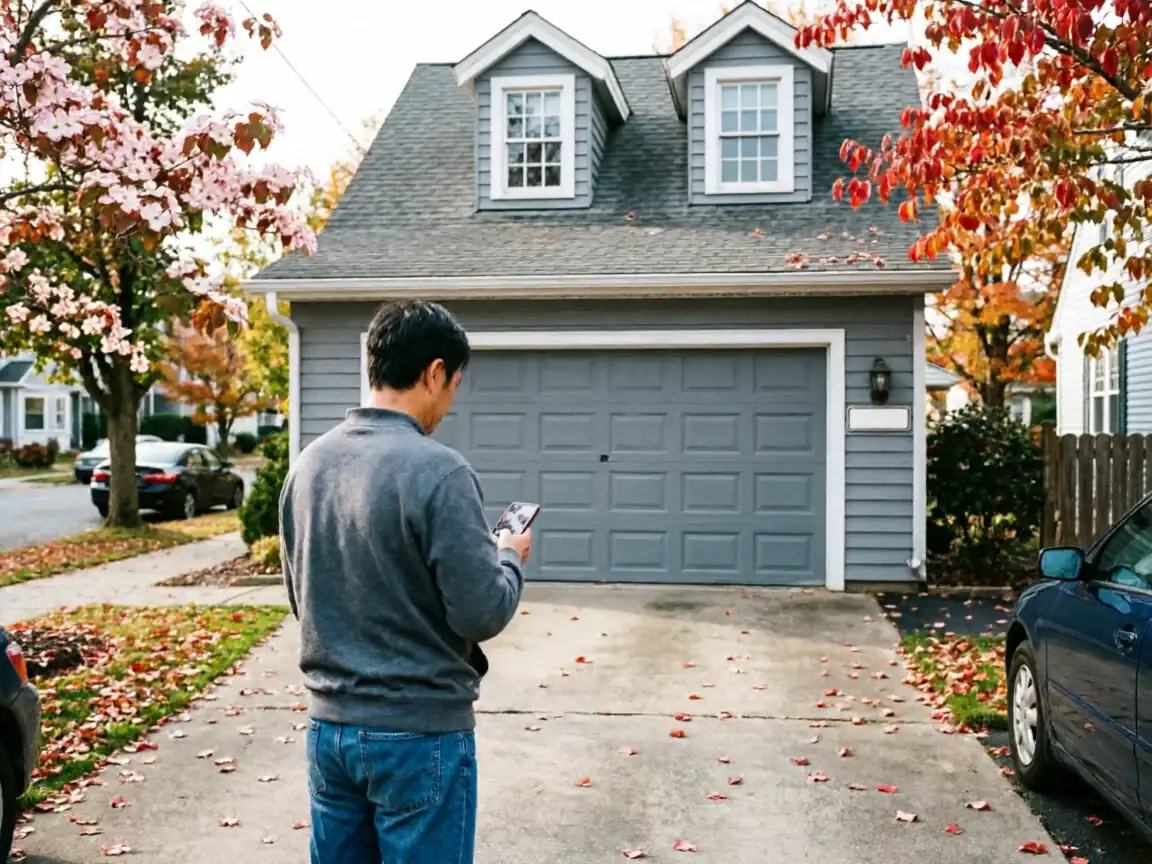
We run this call out of Manchester, about 13 miles down to Pembroke, so when you phone in a door that's stuck or off its track, say so plainly: is the door up or down, is anyone able to get a car out, and is anything binding or grinding when you try the opener. That tells us what's riding in the truck before we leave the shop.
We don't keep a branch or a drop point in Pembroke, so there's no walk-in counter here and we're not going to pretend there is. What we can tell you is that we carry parts sized for the housing stock on this side of the service area - Pembroke's homes run older than most of what we see closer to Manchester, median build year 1969, and that changes what's likely broken before we even look at it.
If your opener has simply lost power or the remote needs a battery, say that too - it saves you an emergency call and saves us a trip for something you can fix with a 9-volt.
Where This Job Goes Sideways
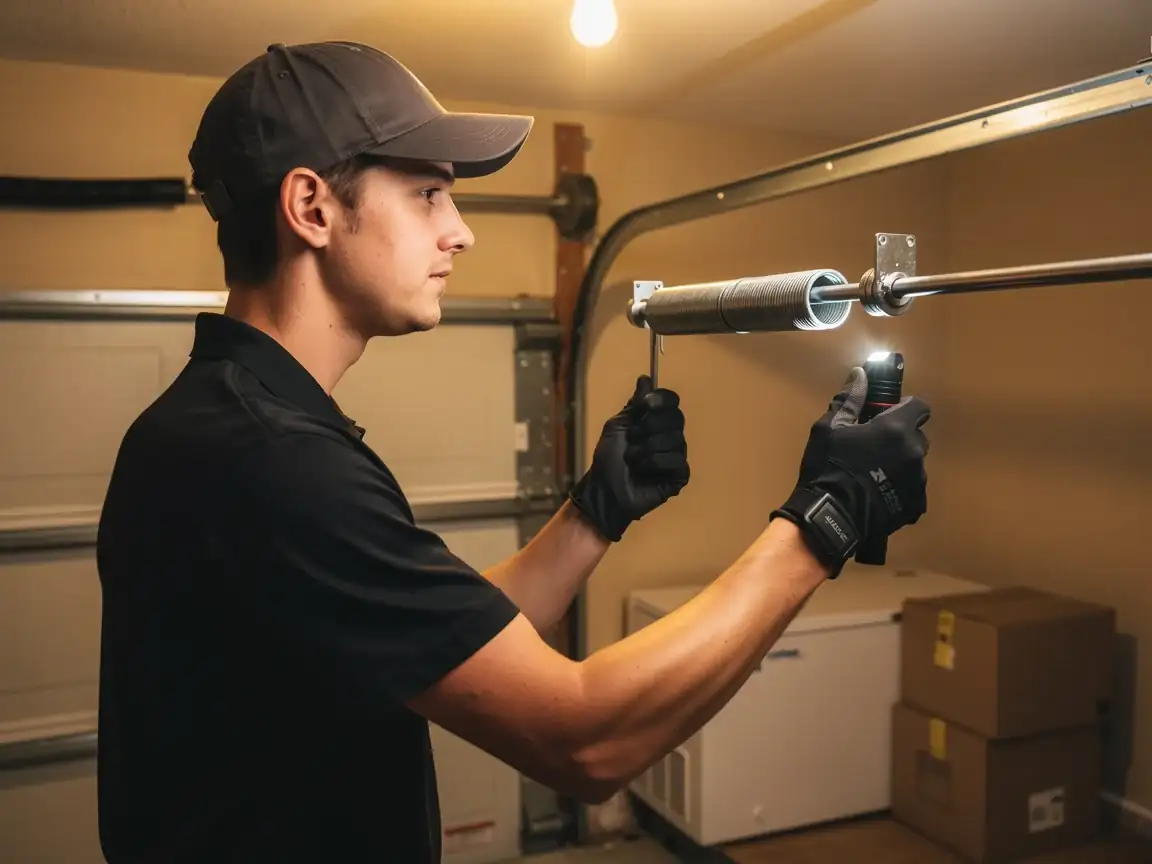
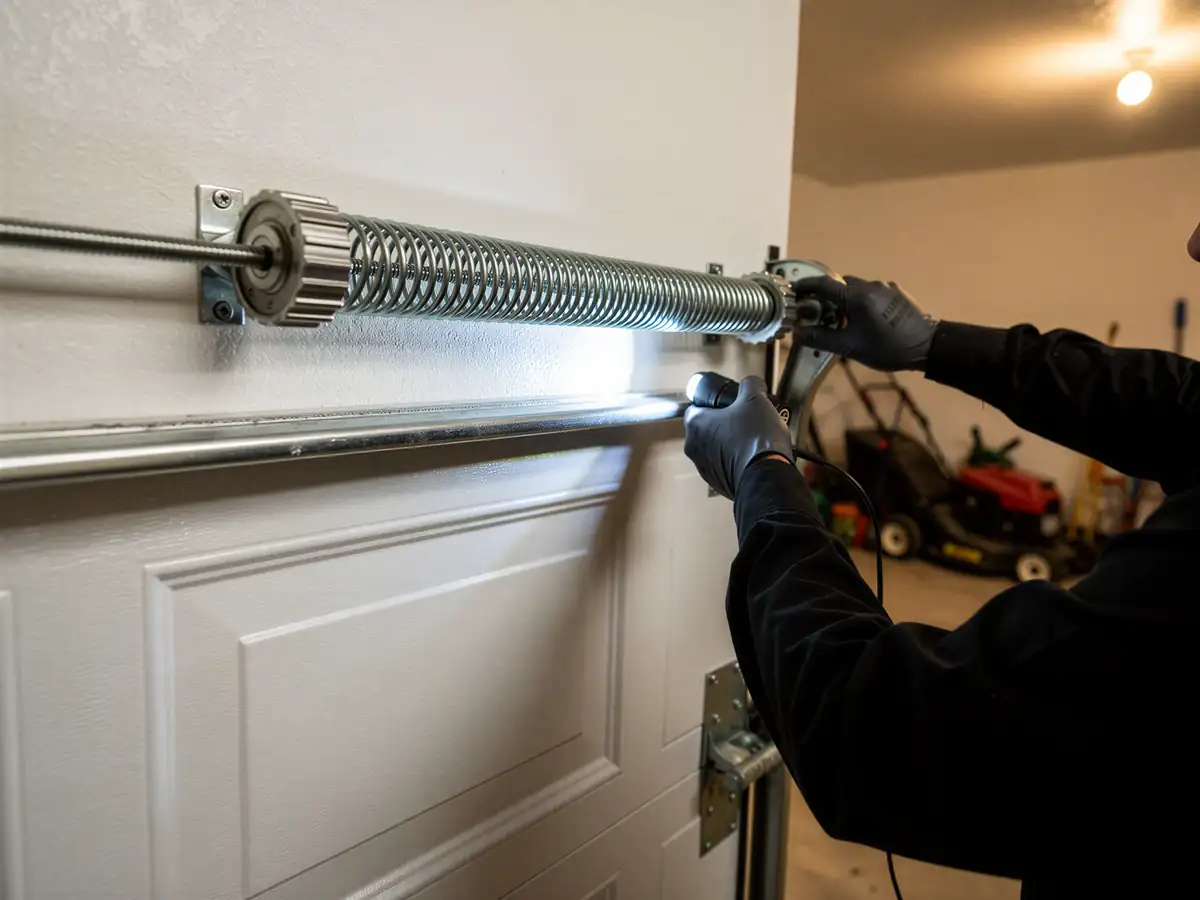
The trouble with a 1969-era door in Pembroke isn't usually the door itself - it's the opener bolted onto it later, maybe decades later, without anyone checking whether the original track and drum were ever rated for an automatic system. Extension spring setups from that period were never built with containment cables, so when one lets go, it doesn't fail quietly. It drops, fast, and sometimes takes a bracket with it.
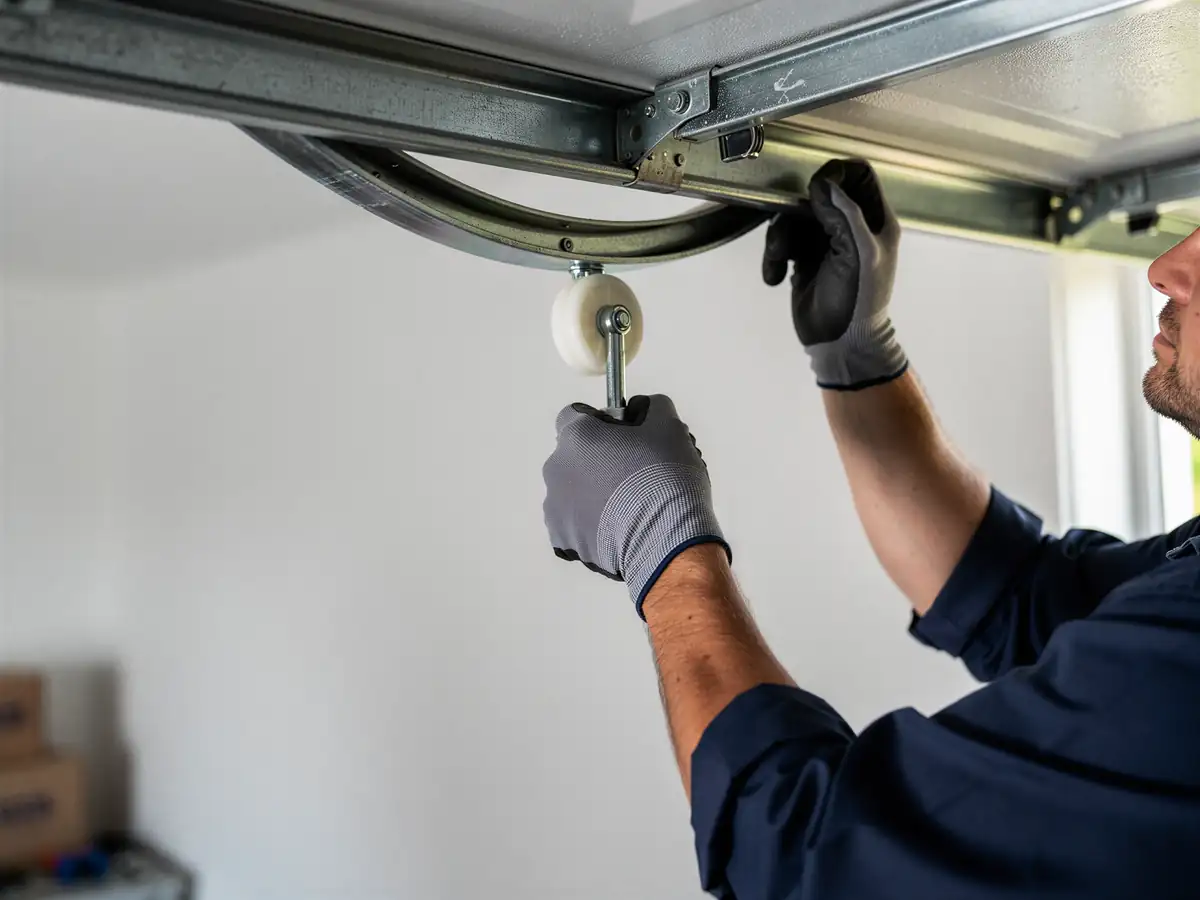
The other way this goes sideways: a homeowner replaces the opener but not the hardware underneath it, so you end up with a modern motor fighting 50-year-old rollers and a bent track that was already marginal. We've seen that combination burn out a drive gear in under a year.
We're straight with people about this - sometimes the fix a caller wants (just swap the spring, just reset the opener) isn't the fix the door needs, and we'll say so on site rather than bill you twice.
The Symptom
Most emergency calls we take out to Pembroke start the same way
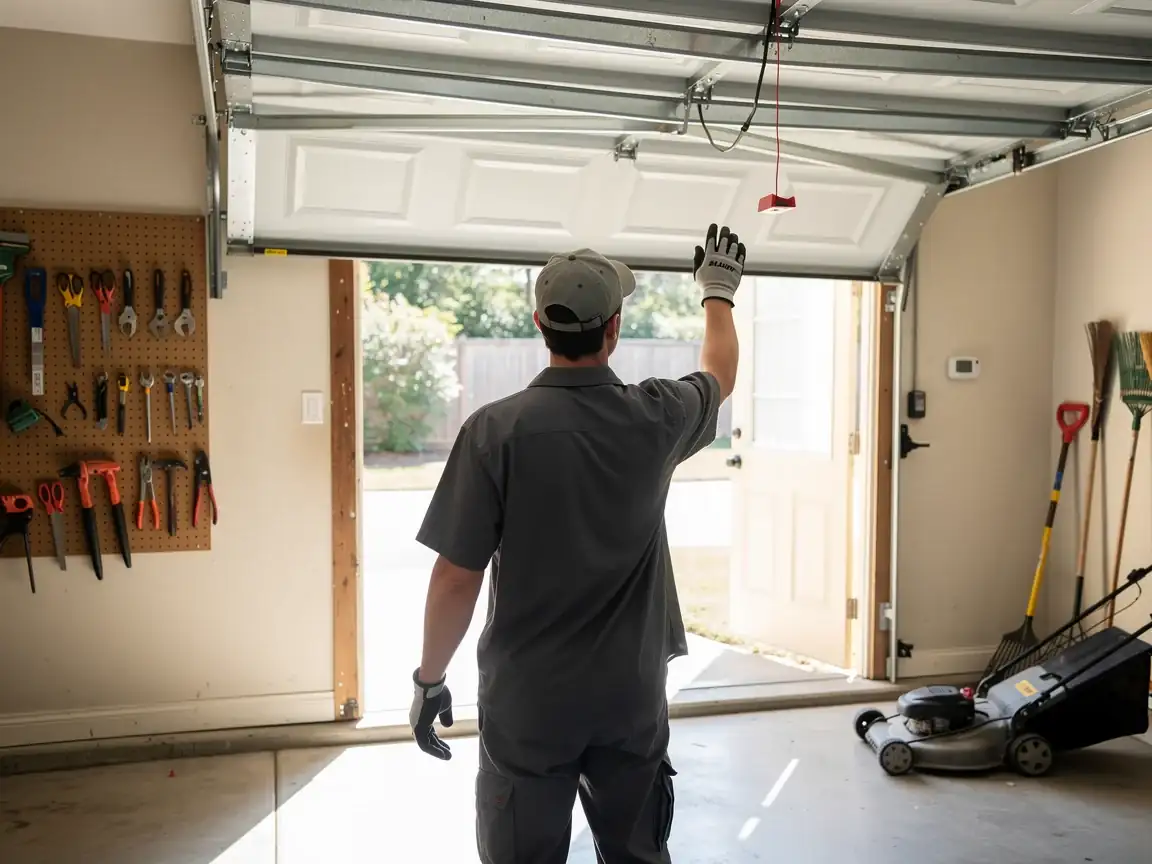
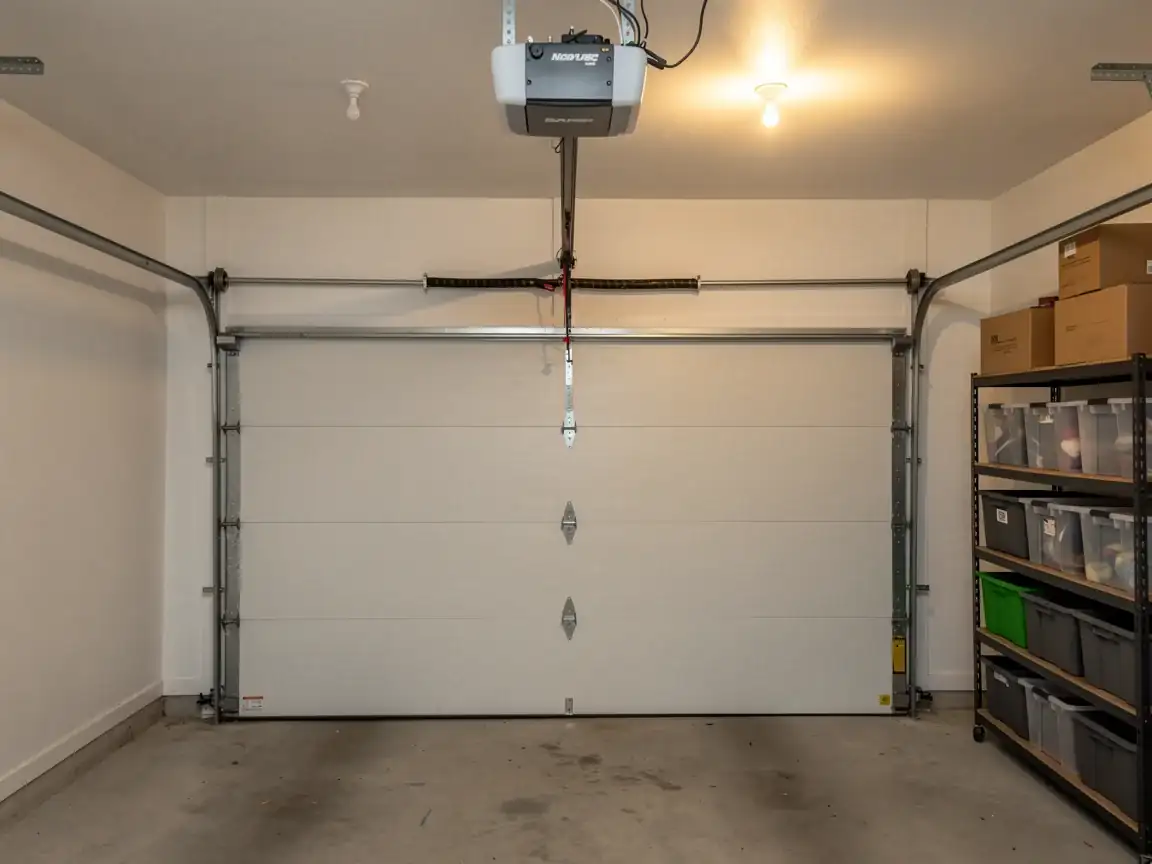
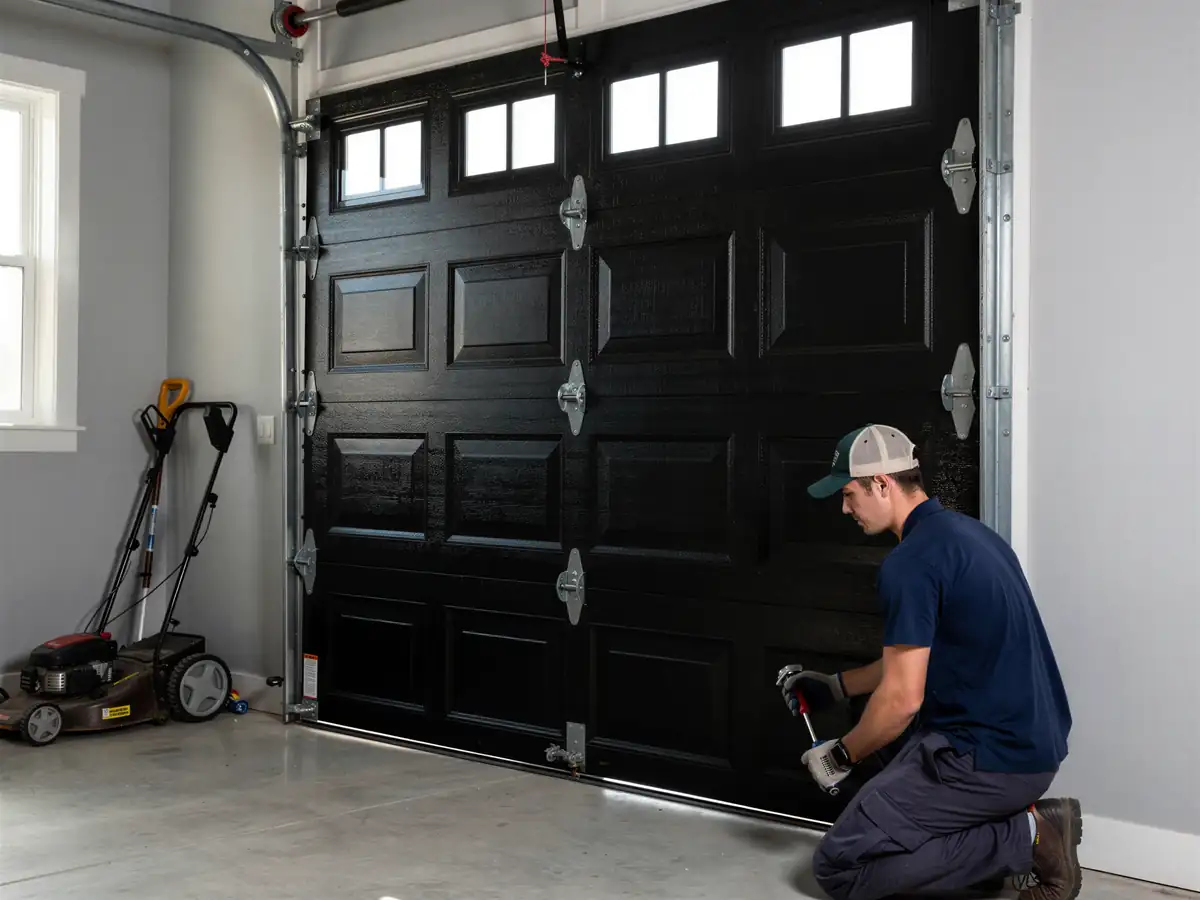
The door won't move, or it moves partway and stops hard. On a house from this era, that's very often an extension spring that's stretched past its coil life, or a cable that's frayed where it wraps the drum - both common failure points on hardware installed before the current torsion-spring standard became the default. Cold makes it worse. This region sits in a severe cold climate band, and steel springs lose flex in a hard freeze, so the failure that was coming anyway tends to show up on the coldest night of the month.
Sometimes the symptom is quieter
The door reverses right after it starts closing, which on an older opener usually means the force setting was never adjusted for a heavier replacement door, not a sensor problem. We check both before we touch a spring.
Parts We Carry
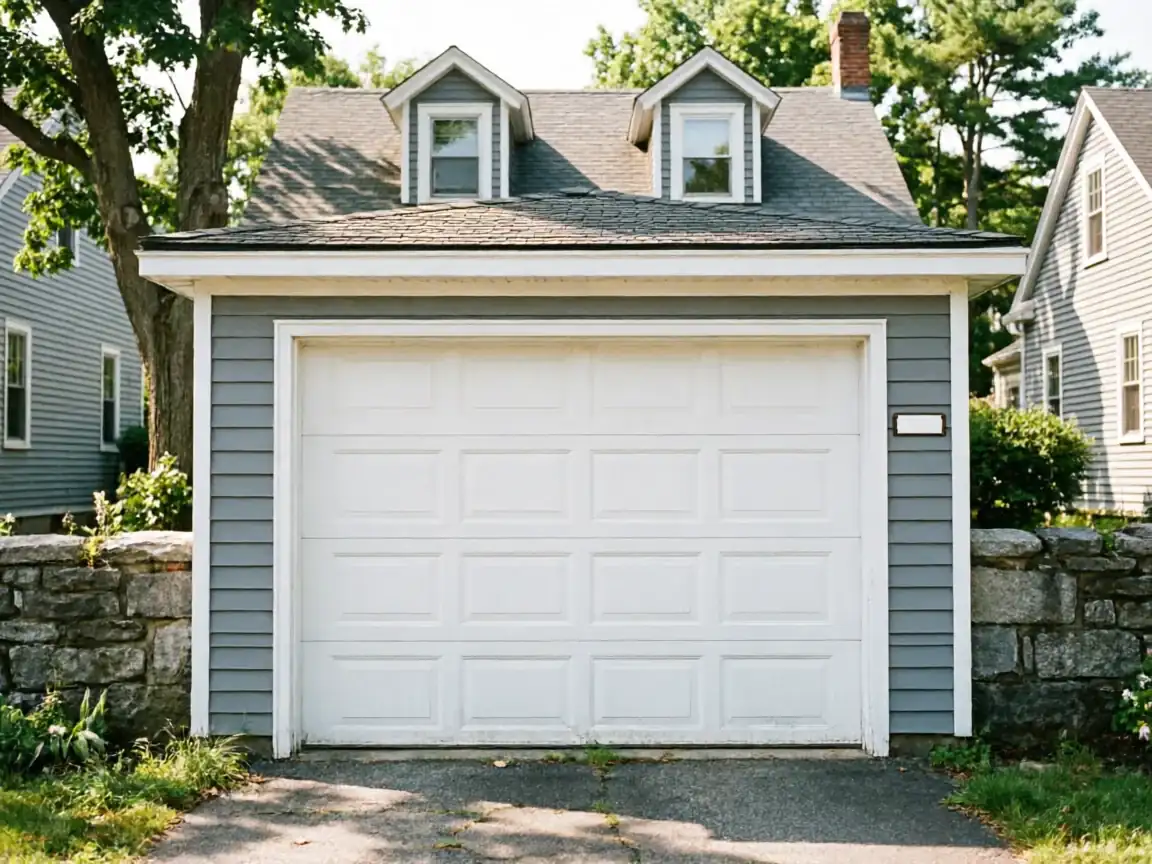
We stock torsion springs, extension springs, and cable in the sizes that match doors installed through the 1970s and 80s, which covers the bulk of what's on the road out to Pembroke - a town where the median home still dates to 1969. We also carry standard rollers, hinges, and bottom brackets for single and double doors.
What we don't carry on the truck is a full replacement panel for a discontinued door profile. If your original door is a style nobody's made new panels for in years, we'll tell you that on site rather than have you wait on a part that isn't coming. At that point replacing the section, or the whole door, usually costs less than hunting down an obsolete match.
We also carry the opener boards and circuit parts for the handful of brands we see most in this part of the service area, but a dead logic board on an older unit sometimes means the opener itself is past the point of repair.
Why This Fails Locally
Pembroke has about 2,779 households, smaller than most of the towns we cover, and the housing here leans older than the service-area median of 1982 - this town's own median sits around 1969. That gap matters: a door and opener combination from the late 60s or early 70s wasn't engineered to the same spring-containment standards you'd find on anything built after the mid-80s, which is most of what we service closer in.
Median household income here runs around $95,307, below the wider service area's $115,712, and that's worth naming plainly: it means a straight repair, where one's possible, usually makes more financial sense here than a full replacement - and we price jobs that way rather than defaulting to a new door.
Add the climate. A severe cold band stresses old steel every winter, and on hardware that's already 50-plus years old, that stress finds the weak point first.