The Situation
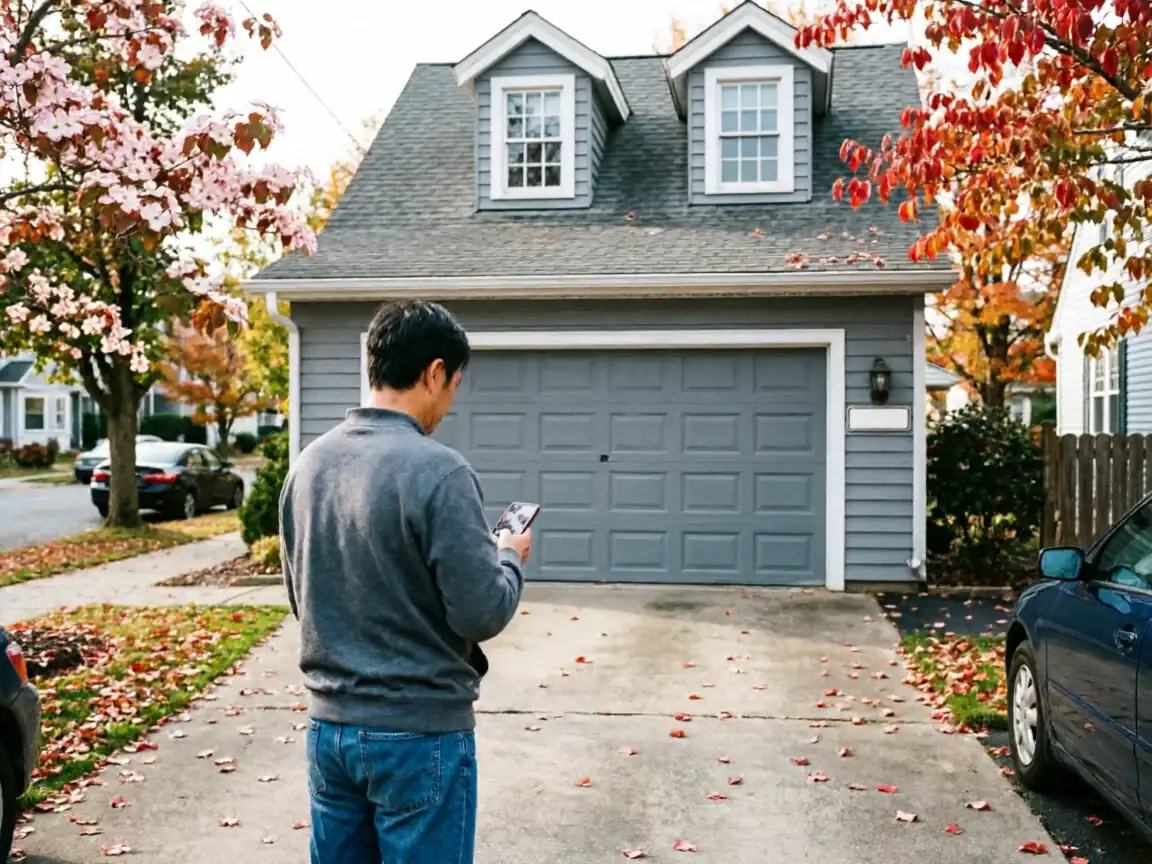
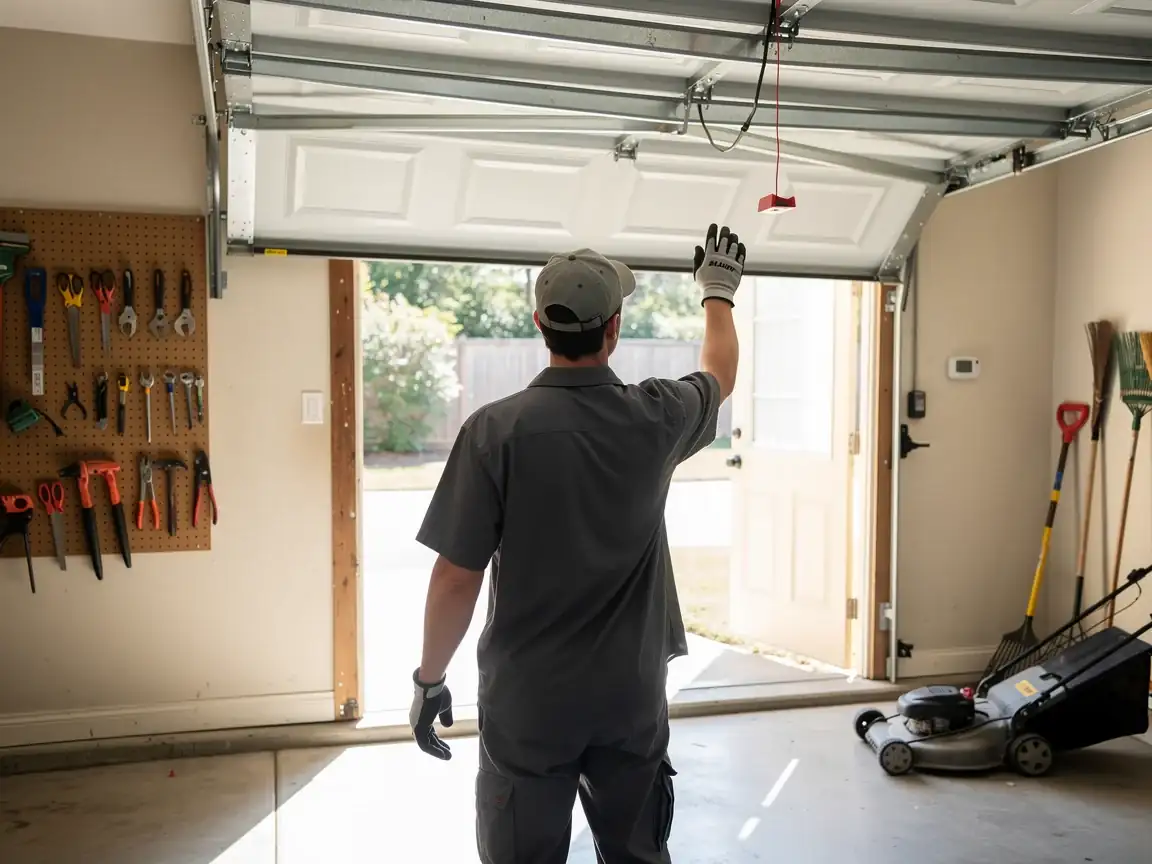
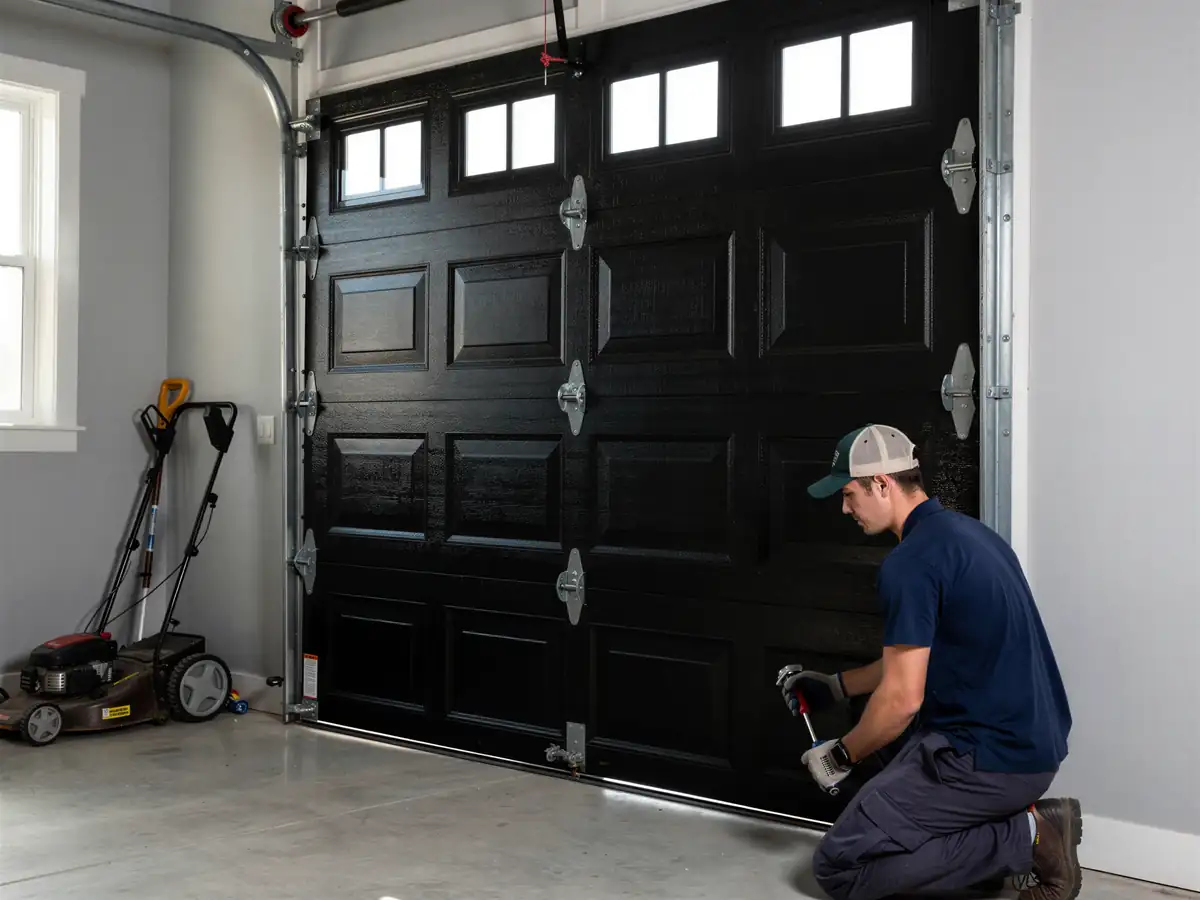
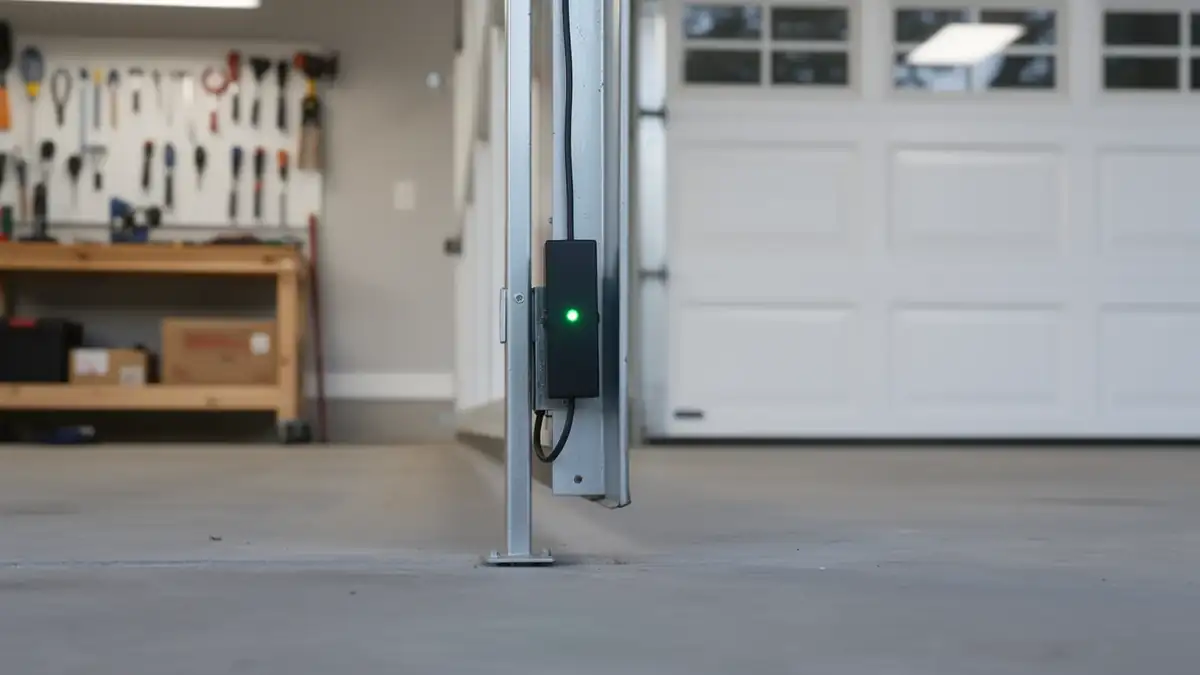
You press the remote and the door stops halfway, or it refuses to close at all and just blinks the light on the opener head. Nine times out of ten that's not a broken opener - it's the two safety sensors near the bottom of the track, the small eyes that shoot an infrared beam across the opening, no longer looking straight at each other. In a lot of the homes we go into around Manchester, built anywhere from 1938 to 1997 with a lot of that stock dating to the early 1980s, those sensor brackets were bolted to wood jambs or thin metal track that's had forty-plus years to move. Nobody notices the drift happening. You just notice the door stops working one cold morning. That's the situation almost every call starts from here, and it's worth understanding before you assume the opener itself is dying.
What to Look At First
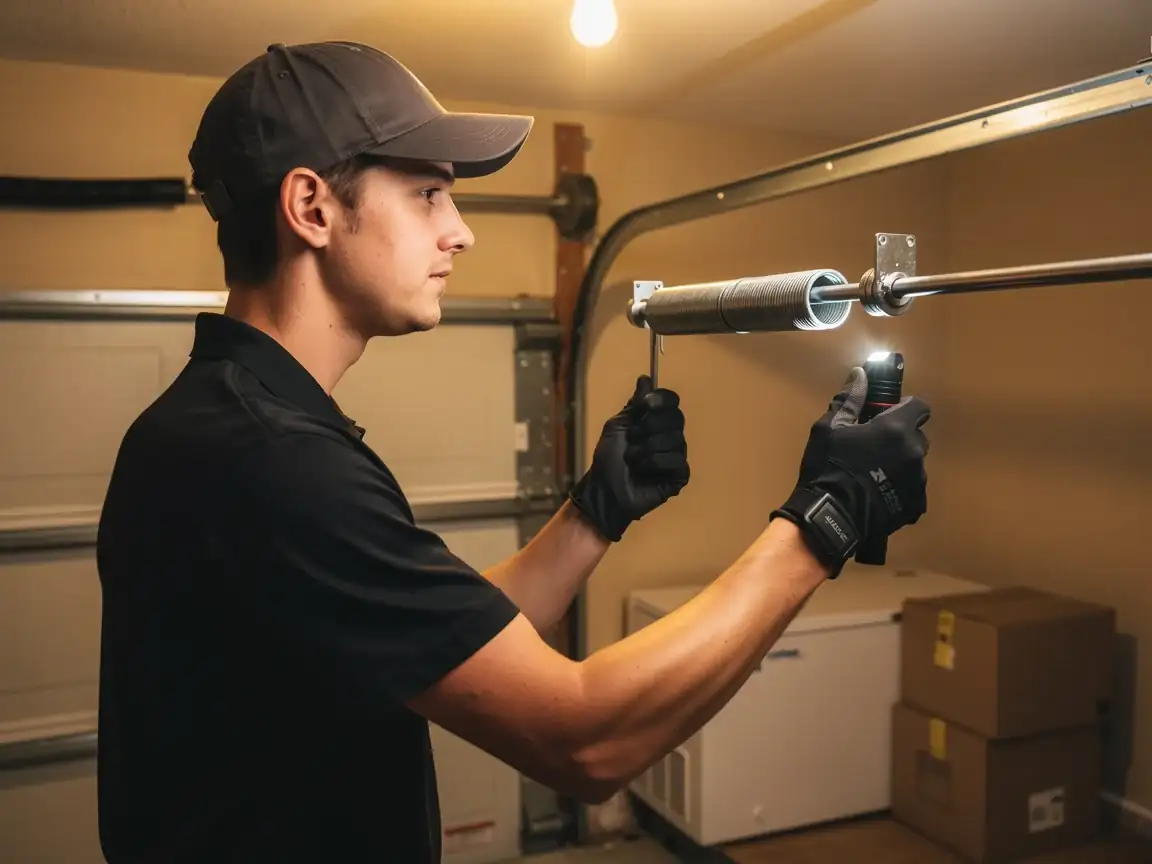
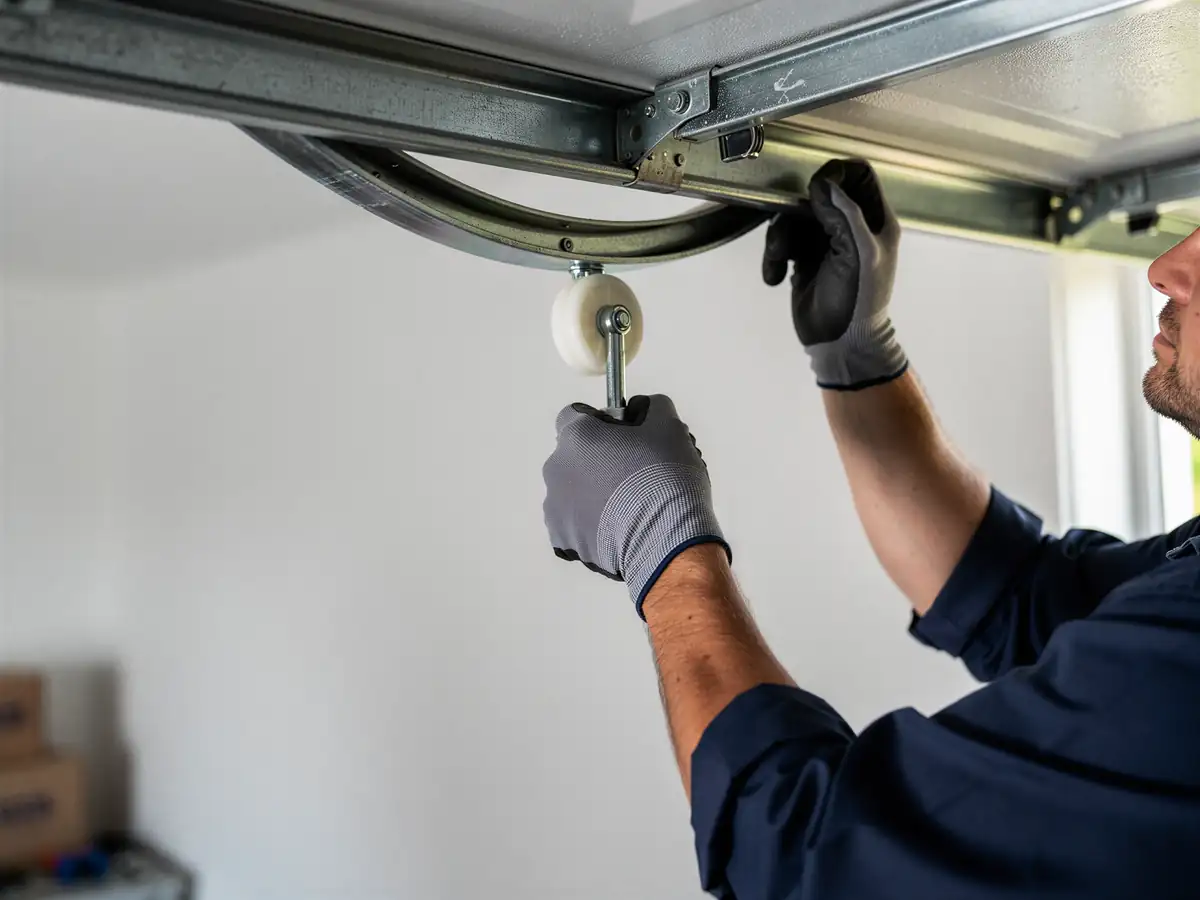
Start at the brackets, not the opener. On a garage this age, the bracket holding each sensor is usually a thin L of steel screwed into track that's been loosened and retightened a few times over the decades - sometimes by a prior repair, sometimes just from the door banging the track on heavy use. Look for a bracket that's rotated even a few degrees; that's enough to throw the beam off a sensor eye half an inch wide. Next, check the lenses themselves for a film of dust or condensation - common in a cold-climate house where the garage swings from near-freezing overnight to warmer in the afternoon sun. Wipe each lens with a dry cloth before you touch alignment at all. If both lights on the sensors glow solid instead of blinking, they're seeing each other fine and the problem is somewhere else - likely the travel limits or the opener's logic board, not something to chase with a screwdriver on the bracket.
How Local Conditions Play In
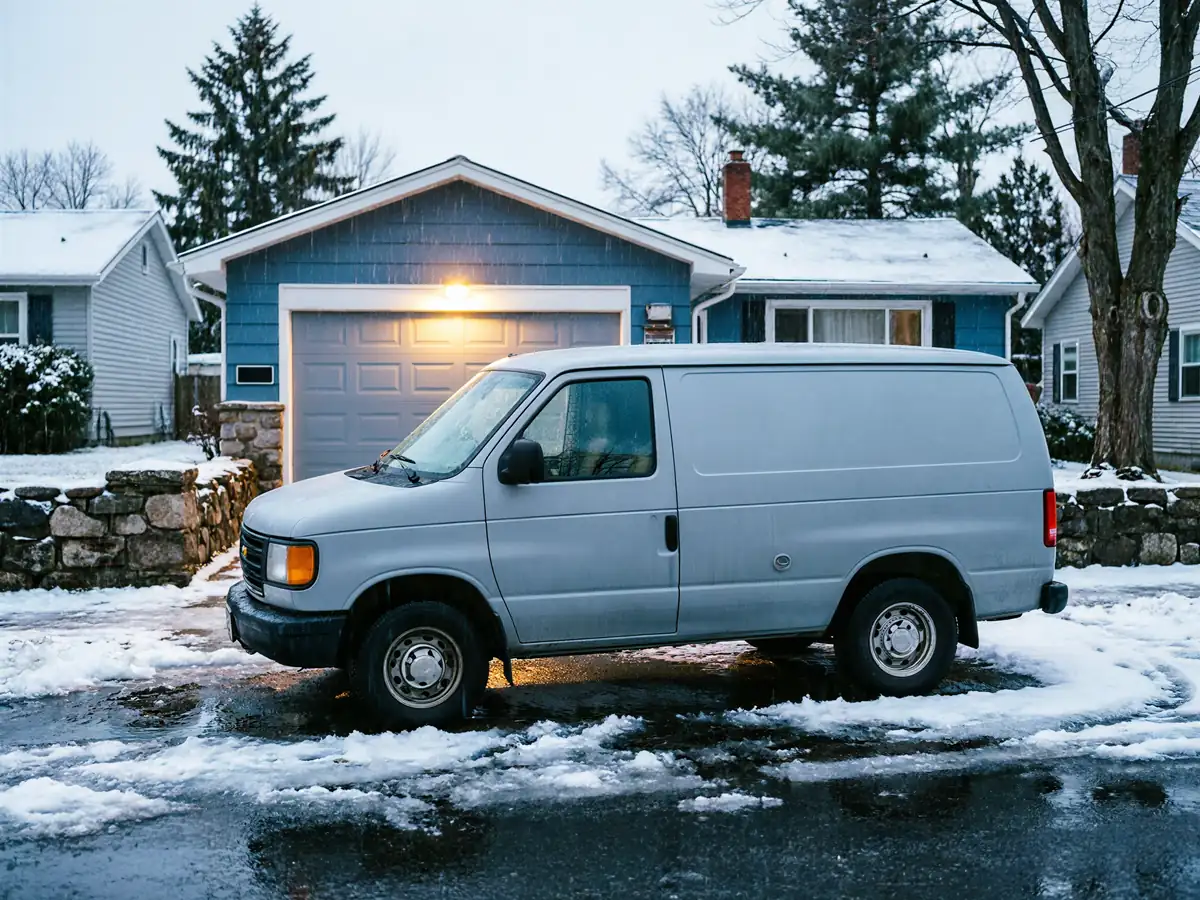
Manchester sits in a cold, severe climate band, and that matters more for sensors than people expect. Frost heave shifts concrete slabs a little every winter, and a garage floor that moves even an eighth of an inch can tilt a slab-mounted track enough to throw off a sensor bolted to it. Houses built in the median year of 1982 around here often still have their original track and bracket hardware, never upgraded, which means decades of that seasonal heave have had time to accumulate. Add in the condensation that forms on a cold sensor lens when warm, humid air moves through an attached garage, and you've got two separate local reasons - ground movement and temperature swing - that don't show up the same way in a milder, newer-housing market. That's why realignment here is often a recurring fall and spring job, not a one-time fix.