The Situation
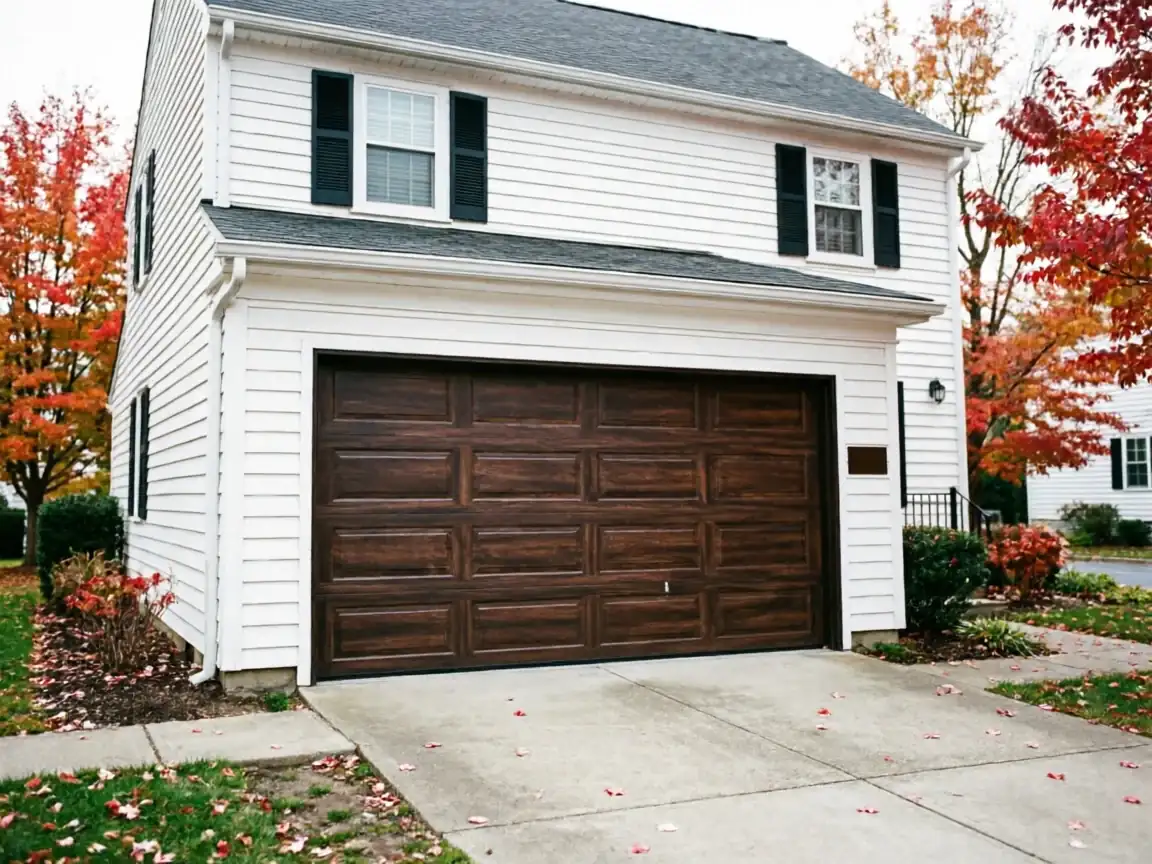
Manchester's housing runs mostly 1938 to 1997, with the median build year landing around 1982. That spread matters because it means we're working on three different generations of hardware in the same week - prewar wood-frame garages with old jamb brackets, 1960s-70s tract construction, and the 80s/90s builds that make up most of the stock across the 45 named areas we cover. A service call here isn't one script. It's figuring out which era of door and track you've got before we touch anything.
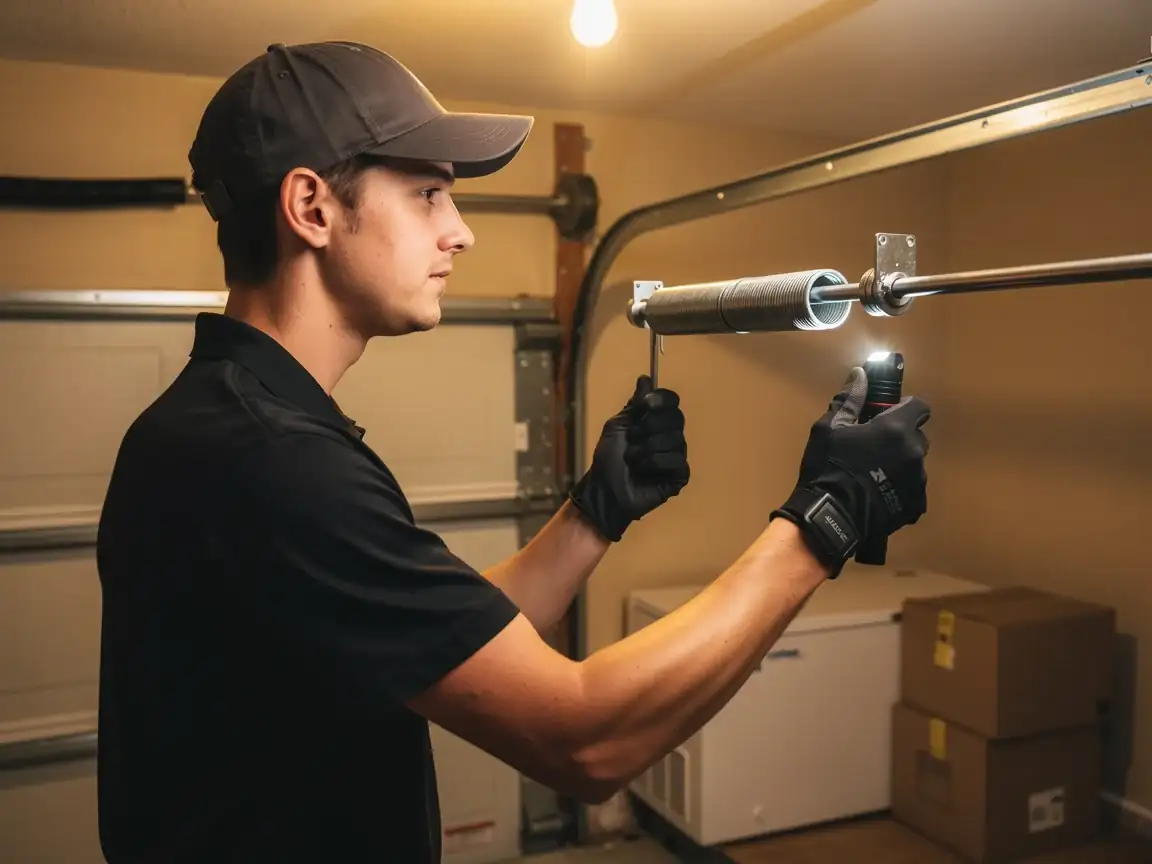
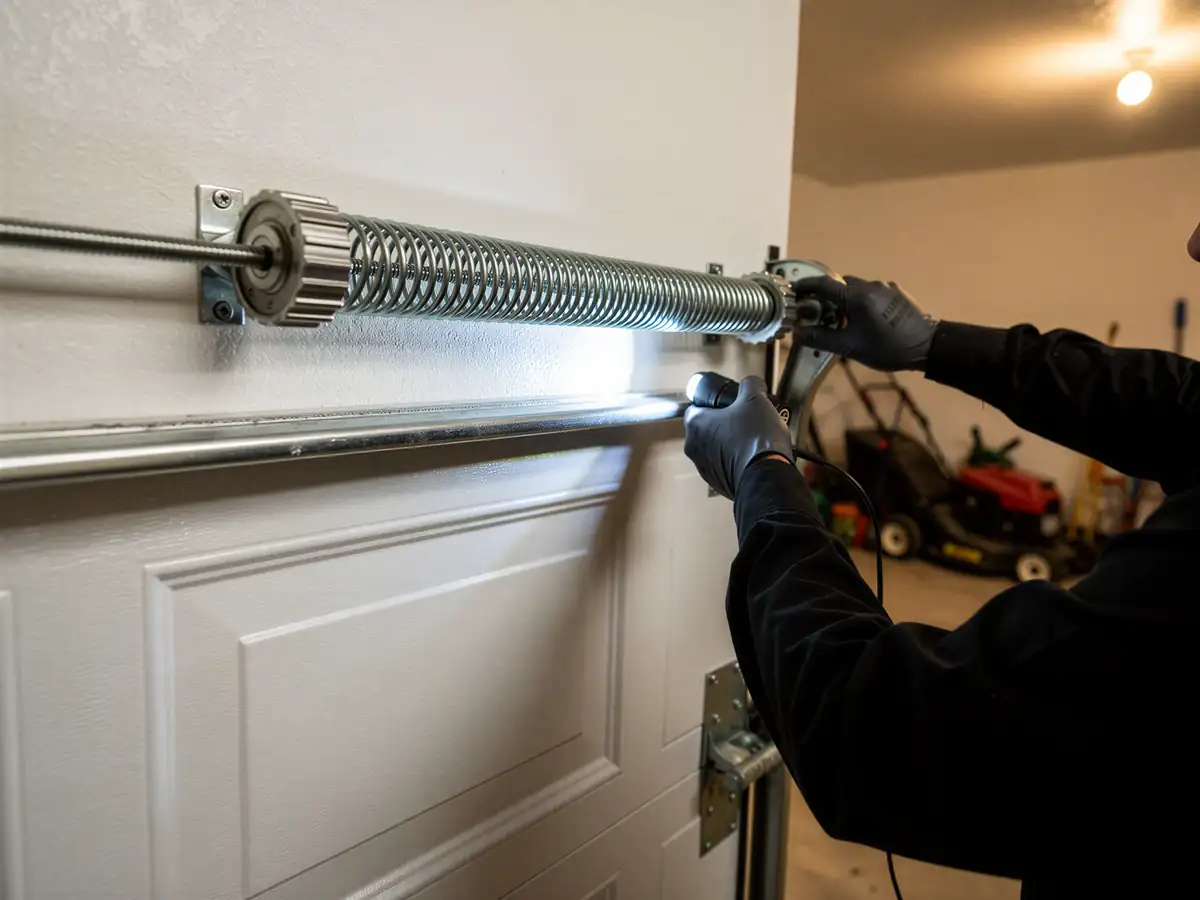
We don't walk in assuming a torsion spring setup, because a good chunk of Manchester's older housing still runs extension springs over the track, not torsion bars overhead. The first ten minutes of any call is just establishing what's actually on the wall, because the fix for one is wrong for the other.
What to Look At First
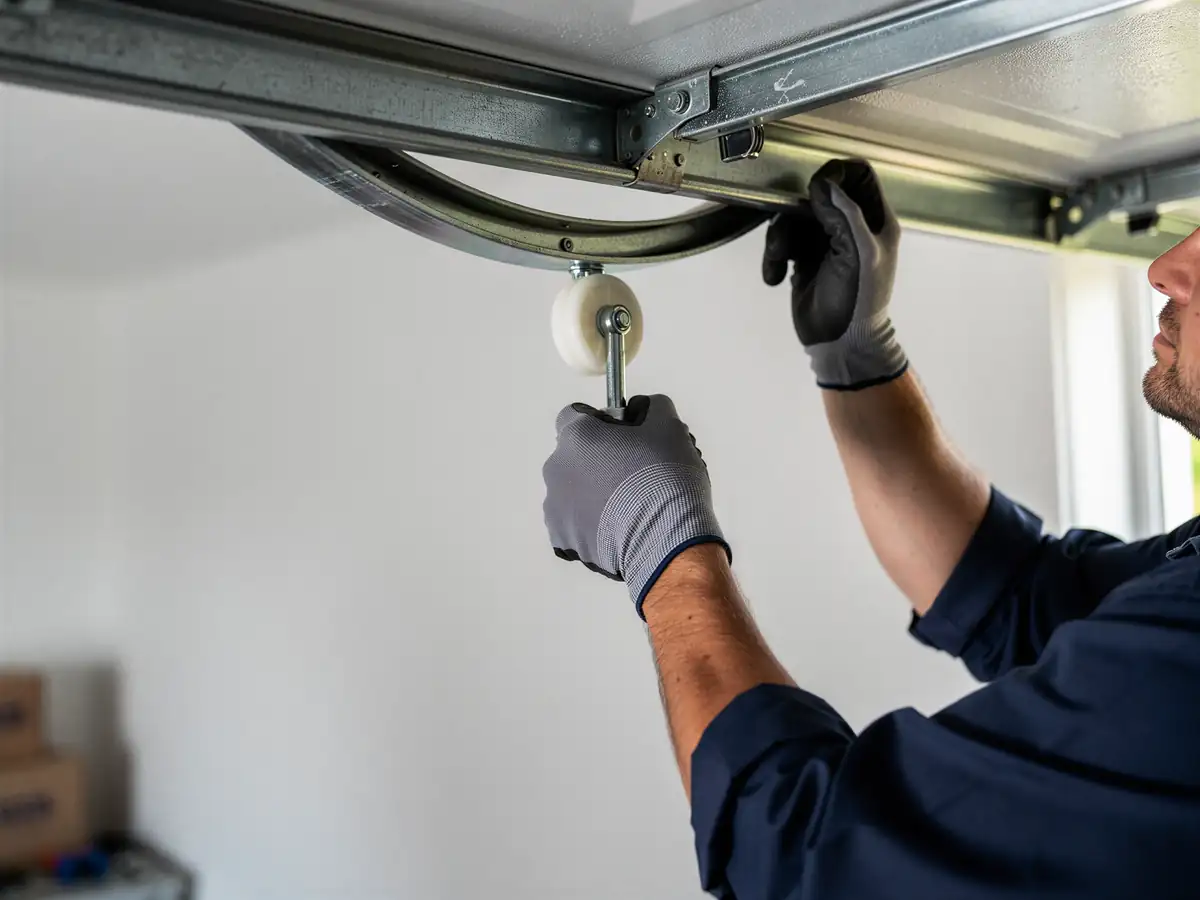
On a call, we start at the opener's travel - how the door moves through its full cycle, not just whether it opens. Given the age range of Manchester garages, that's usually where the story is: a 1980s-90s door riding original rollers that have gone out of round, or a bracket pattern from the 1938-1997 window that doesn't match any roller we'd carry on the truck without checking first.
Next is the spring itself, because in this climate band the metal fatigues differently than it would somewhere warmer - cold makes steel brittle and shortens the working life of a spring that's already near the end of its cycle count. We also check the bottom seal and weatherstrip condition, since a severe-cold climate puts real stress on rubber that a mild one wouldn't. Last, we look at the track alignment - older Manchester garages built before standard concrete-pad slab work sometimes settled a little over the decades, and a door that's slightly racked in the opening shows up as uneven wear on one side of the track before it shows up as anything else.
Leaving It Alone
Not every call needs a swap
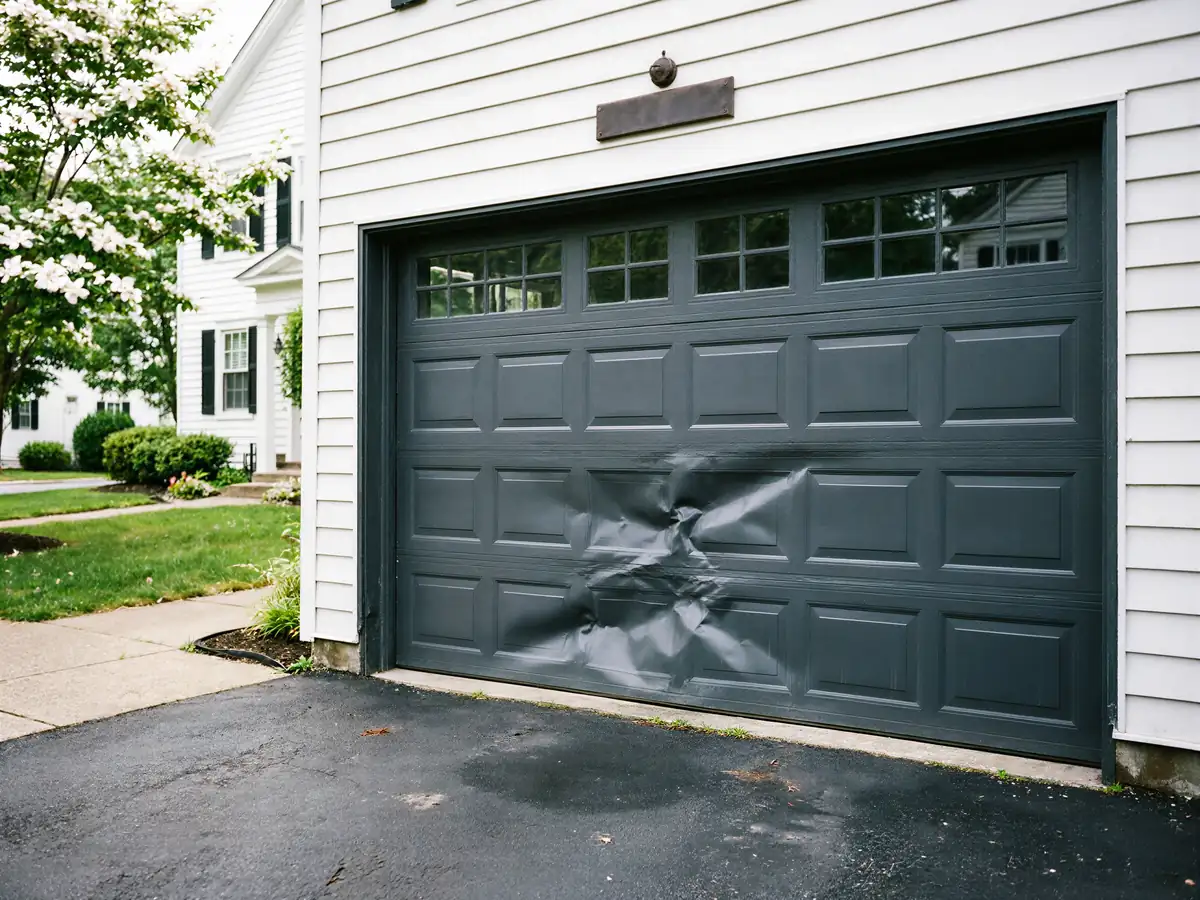
If a door from the 1938-1997 stock still has a straight track, square jambs, and a spring that's just lost tension rather than cracked, we'll say so and fix what's there instead of pushing a replacement. We won't tell you to tear out a serviceable 1980s steel door because it's not the newest thing on the block - across this service area of roughly 141,685 households, the median income is $115,712, and we'd rather earn repeat calls than pad one invoice.
- 141,685 households
- $115,712 median household income
One honest limit: if a part is specific to a pre-1970s build and the manufacturer's discontinued it
We may need a day or two to source something compatible rather than an exact match. We'll tell you that up front instead of promising same-day on a part we don't have on the truck.
How Local Conditions Play In
Manchester sits in a severe-cold climate band, and that shapes what breaks and when. Steel contracts in a hard freeze, which pulls fasteners and brackets just enough to loosen them over a winter - that's why so many of our calls cluster around cold snaps rather than spreading evenly through the year. Nylon rollers get brittle in deep cold faster than the steel ones, so on an older Manchester door still running the original rollers from its 1938-1997-era install, that's usually the first thing to crack.
Across the 82,285 owner-occupied houses in this service area, a lot of garages are attached, which means a failed seal or a door that won't close tight isn't just a door problem in winter - it's a heating-bill problem. We factor that into what we recommend: in this climate, a seal replacement that might be cosmetic elsewhere is worth doing before it's an emergency.