Time on the Job
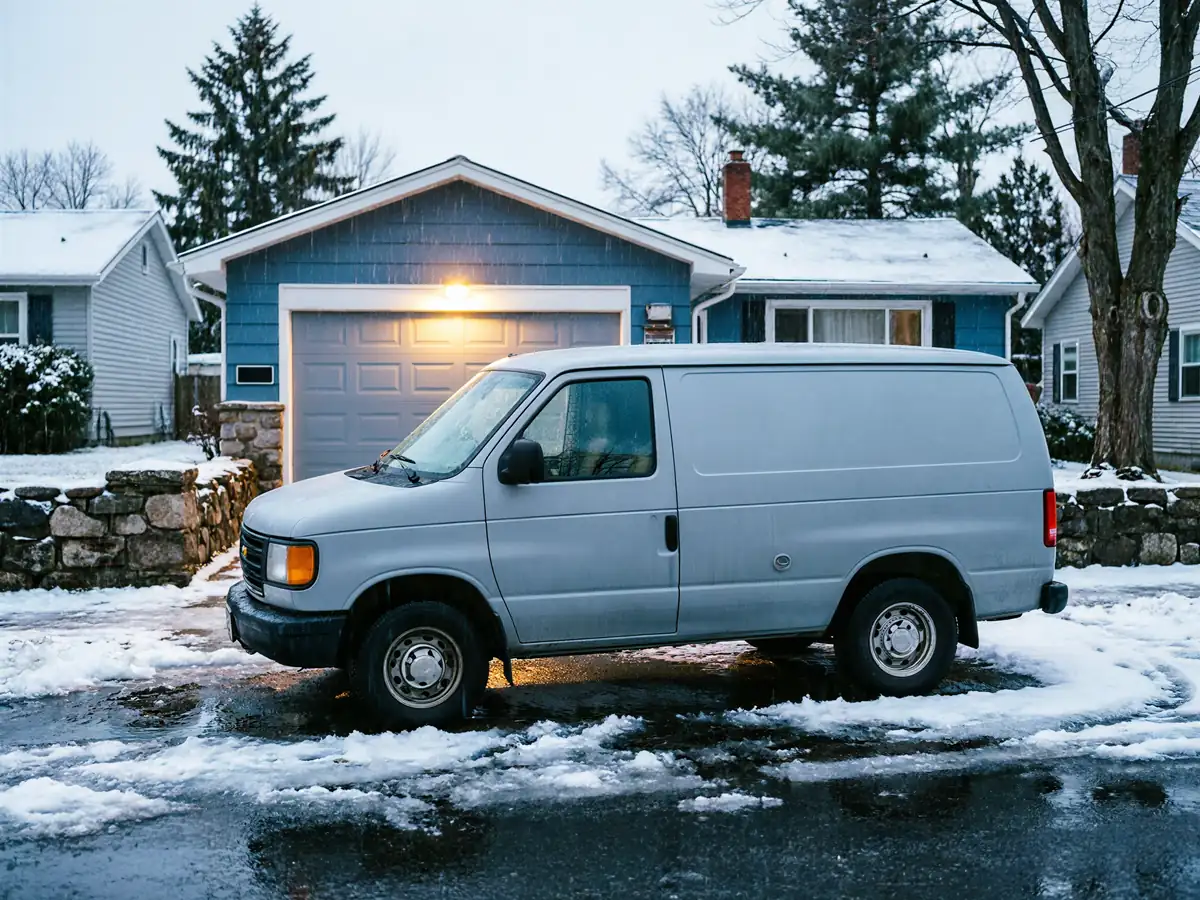
Bedford sits six miles from our Manchester shop, close enough that a spring call doesn't eat into the rest of the day's schedule. That short run matters more than it sounds like it should: it means we can carry the right spring size on the truck instead of guessing, and it means a morning call doesn't turn into an afternoon wait. We cover Bedford as part of the wider service area, but the job itself still starts the same way everywhere - we measure the door, check the spring wind, and look at what's actually failed before quoting anything. A six-mile drive is short enough that we're rarely working from memory of the last job we did out that way. We show up, look at the door in front of us, and work from there. The distance is a convenience for scheduling, not a promise about how fast any one call moves - that still depends on the day's board and what we find once the door's open.
Where This Job Goes Sideways
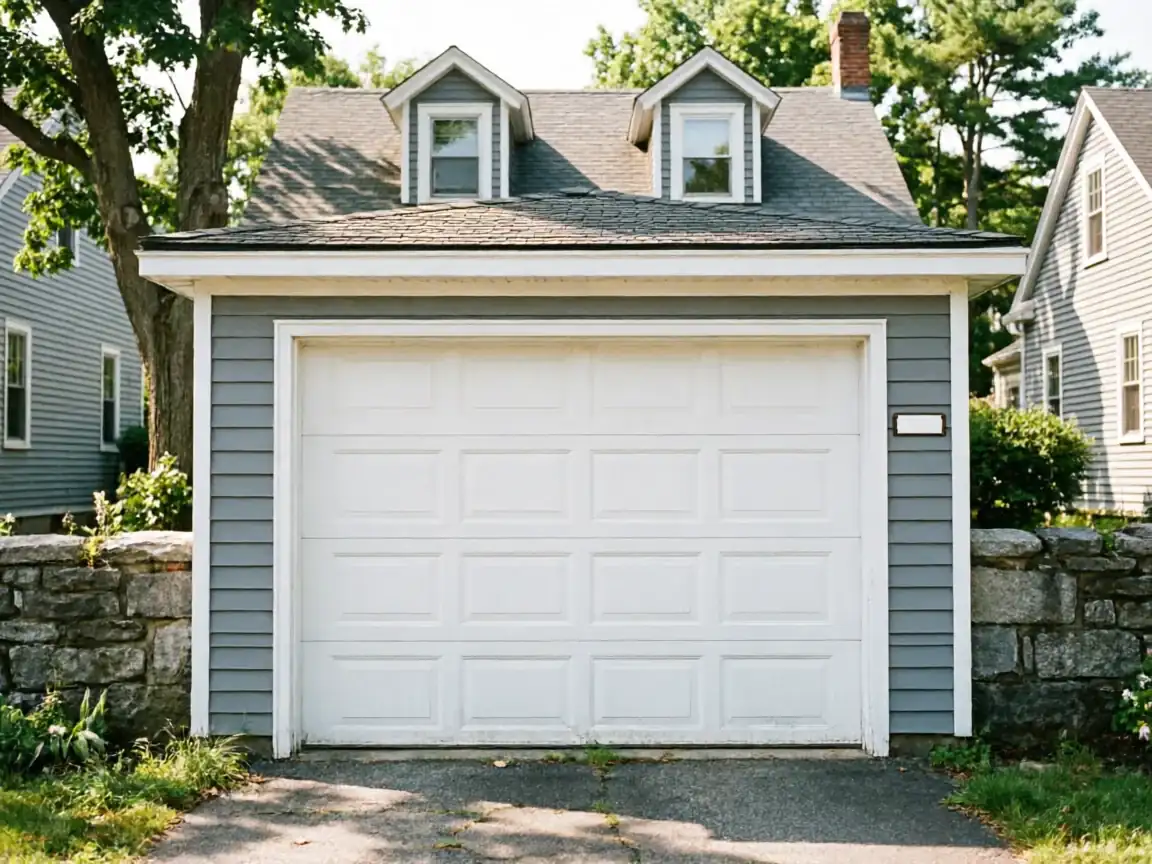
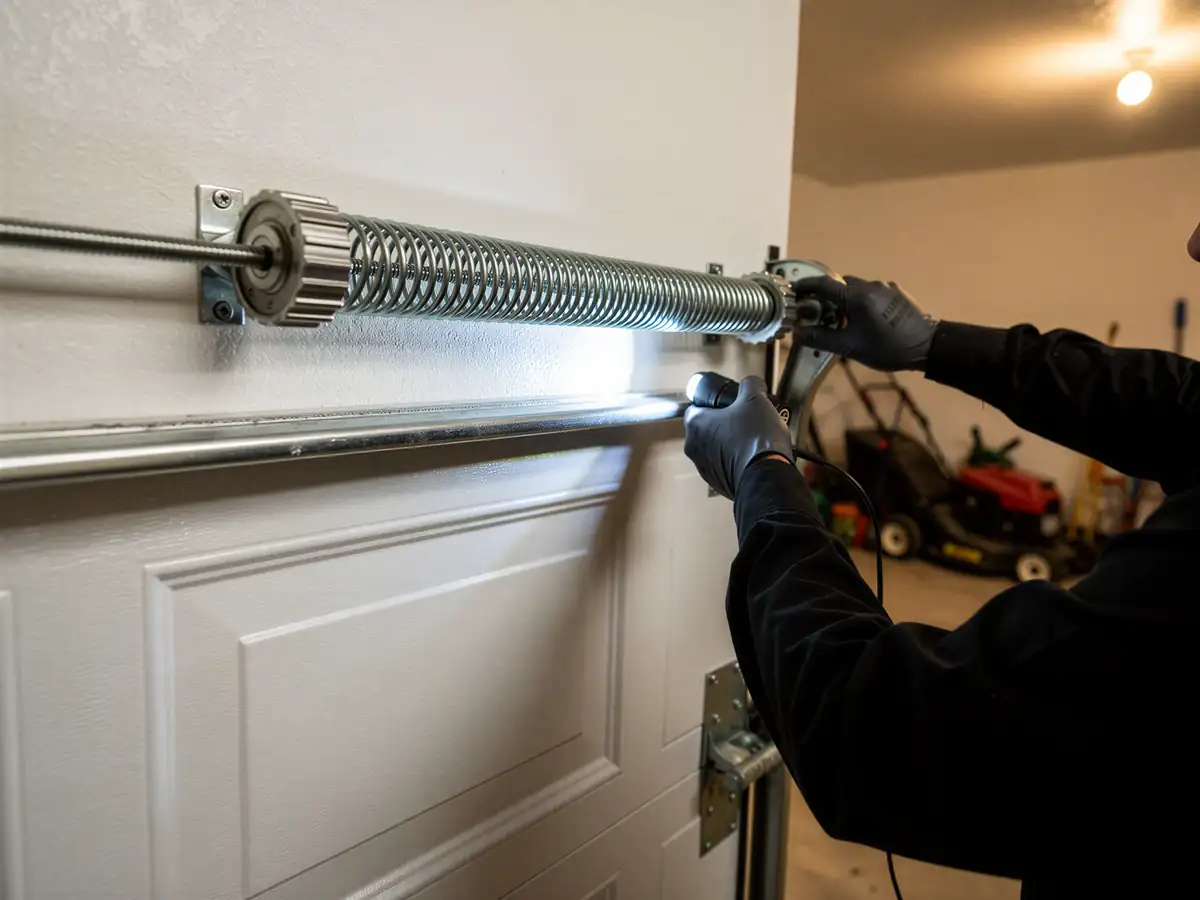
Most Bedford houses went up around 1990, a decade newer than the service area's overall median of 1982, which runs from 1938 to 1997 across the towns we cover. That later build date usually means factory torsion systems rather than the older side-mounted extension setups you still find on the oldest housing stock nearby, and it means the winding cones and end bearing plates are more standardized, which actually makes sourcing easier, not harder. With Bedford's median household income at $160,253, well above the wider area's $115,712, we see more upgraded insulated doors paired with heavier torsion springs than you'd find on a standard 16x7 builder-grade door. Heavier doors need springs wound to match that weight, and a spring swapped in without recalculating the lift can leave an opener straining or a door that won't stay up on its own. Where this job actually goes sideways is when a spring gets replaced to match the old door's weight instead of the current one - a replacement door installed years after the original springs were sized can leave the system out of balance even with a brand new spring on it.
How We Fix It
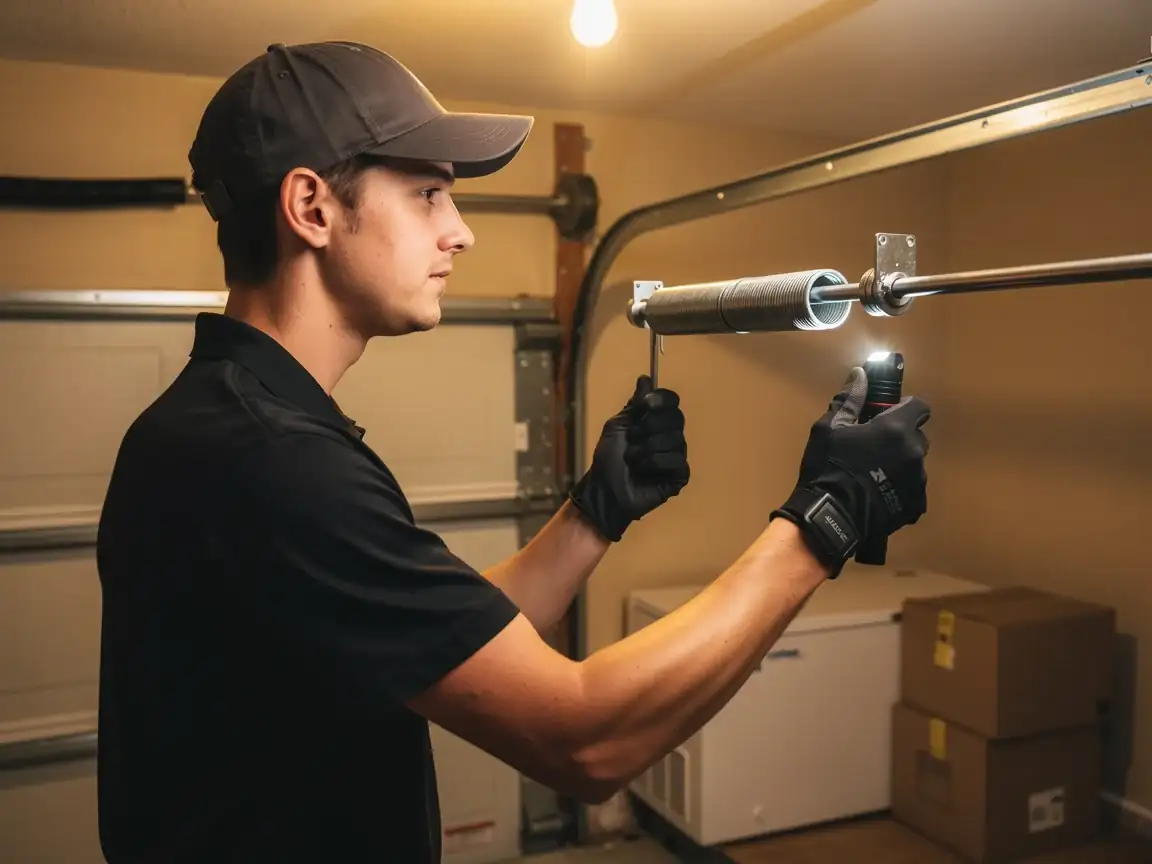
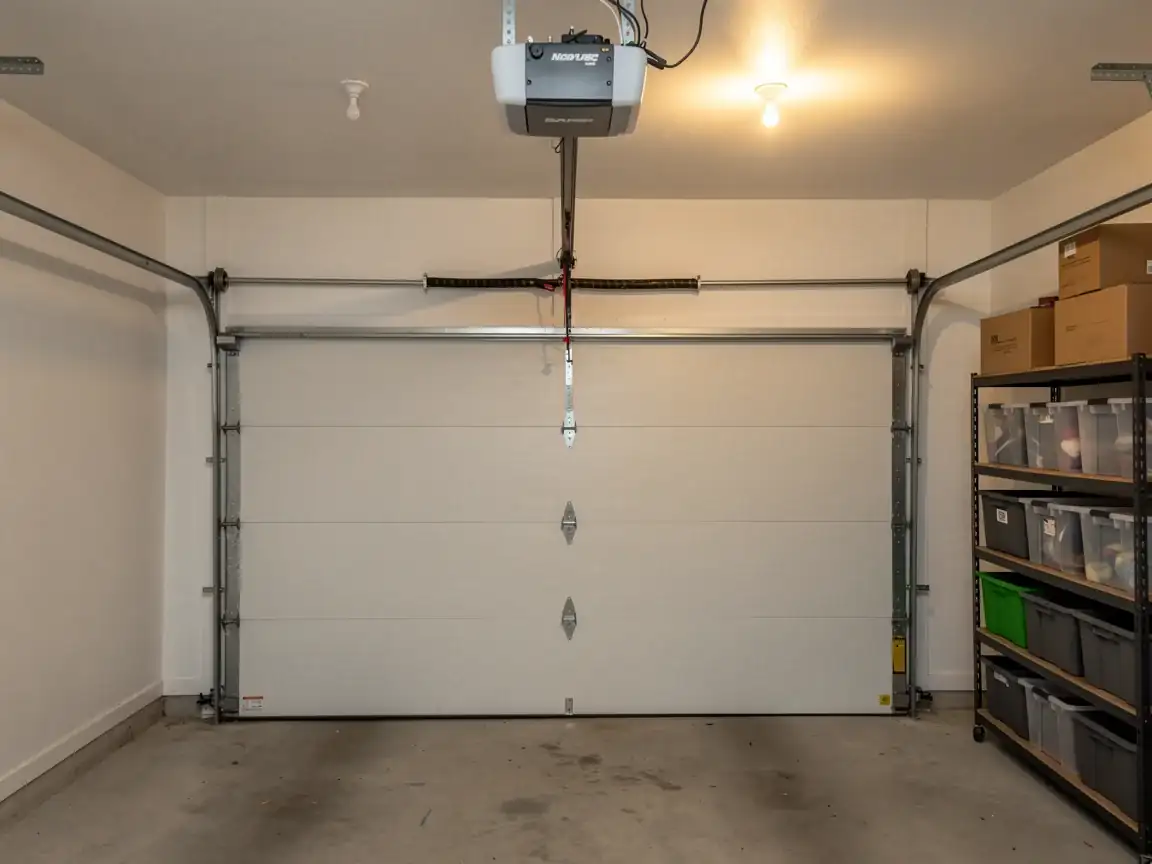
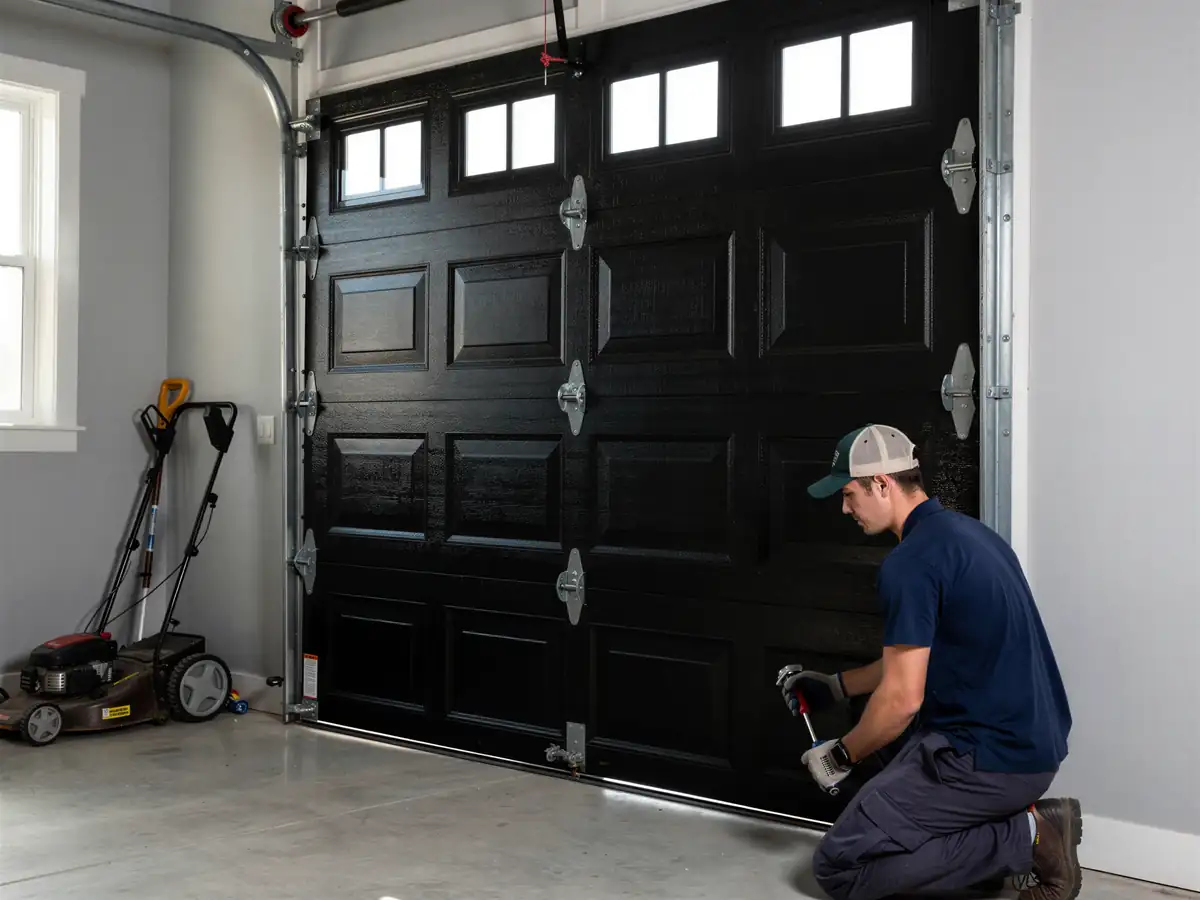
We unwind the old spring with winding bars, not a wrench and a prayer, and we check the drum, cable, and center bearing while the door is unloaded. New Hampshire's severe cold winters put extra stress on spring steel, and a six-mile run from our Manchester base still gets us to a Bedford garage without delay, which matters because cold-stiffened steel breaks more often in January than July and we'd rather not stretch a short drive into a long wait. Once the new spring's on, we count cycles while winding it to the door's actual weight, not a chart number, then test the door's balance by hand before we touch the opener. If the door won't hold at waist height on its own, something's still off, and we won't call the job done until it does. We check both springs on a double door even if only one broke - the other one is usually close behind.