Time on the Job
Bedford's median household income sits at $160,253, well above the $115,712 median across the rest of the service area we cover from Manchester. That number matters more than it sounds like it should, because it changes where the repair-or-replace line falls. A homeowner in a lower-income pocket of the region often wants the cheapest fix that gets the door moving again. In Bedford, the math usually favors doing it right the first time - a full spring and cable replacement instead of a patch, or a new opener instead of nursing along a board that's already failed twice.
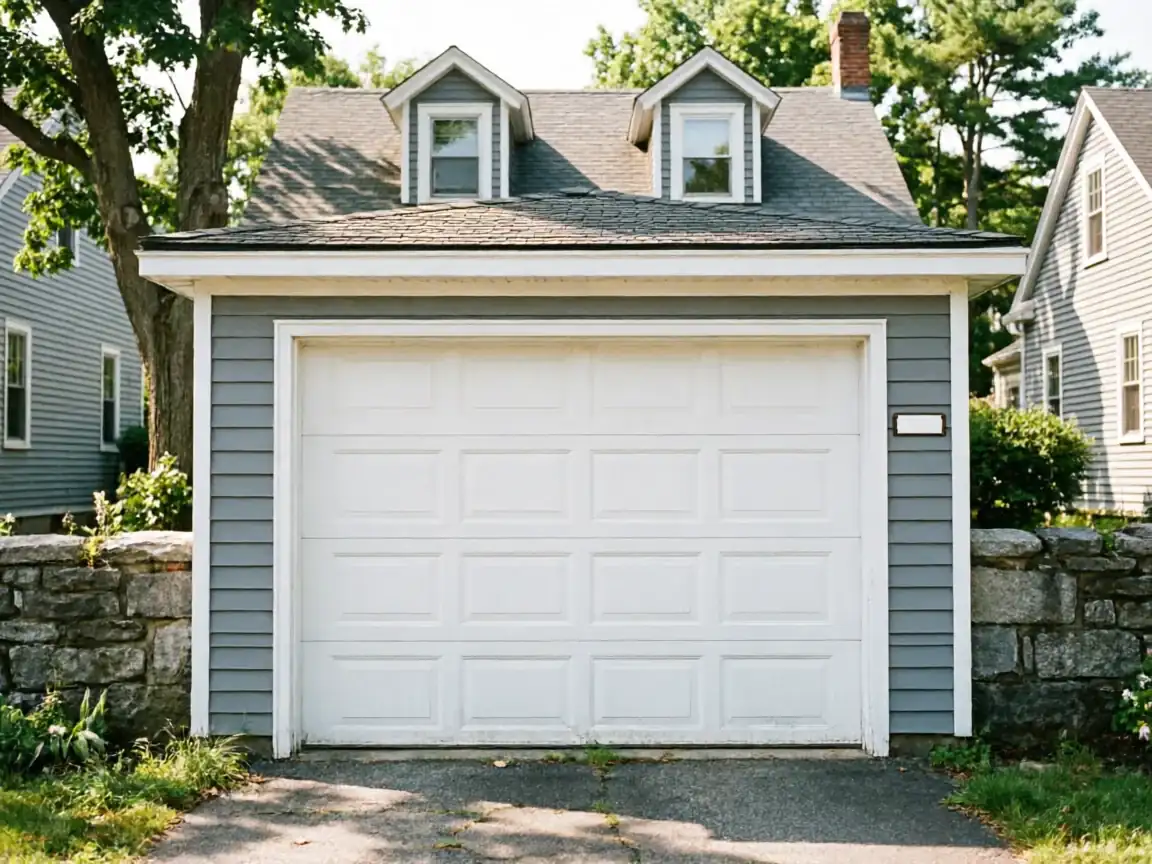
The housing stock backs this up. Most of the broader area was built between 1938 and 1997 with a median year of 1982, but Bedford's own housing runs newer, median year 1990. That's a meaningful gap - doors and openers installed in the early-to-mid 90s are hitting the point where torsion springs are past their cycle count and openers are old enough that circuit boards are starting to fail, but the doors themselves are usually still square and worth keeping. We travel the 6 miles out from Manchester for this work; there's no branch office in Bedford, just a truck that comes when you call.
Where This Job Goes Sideways
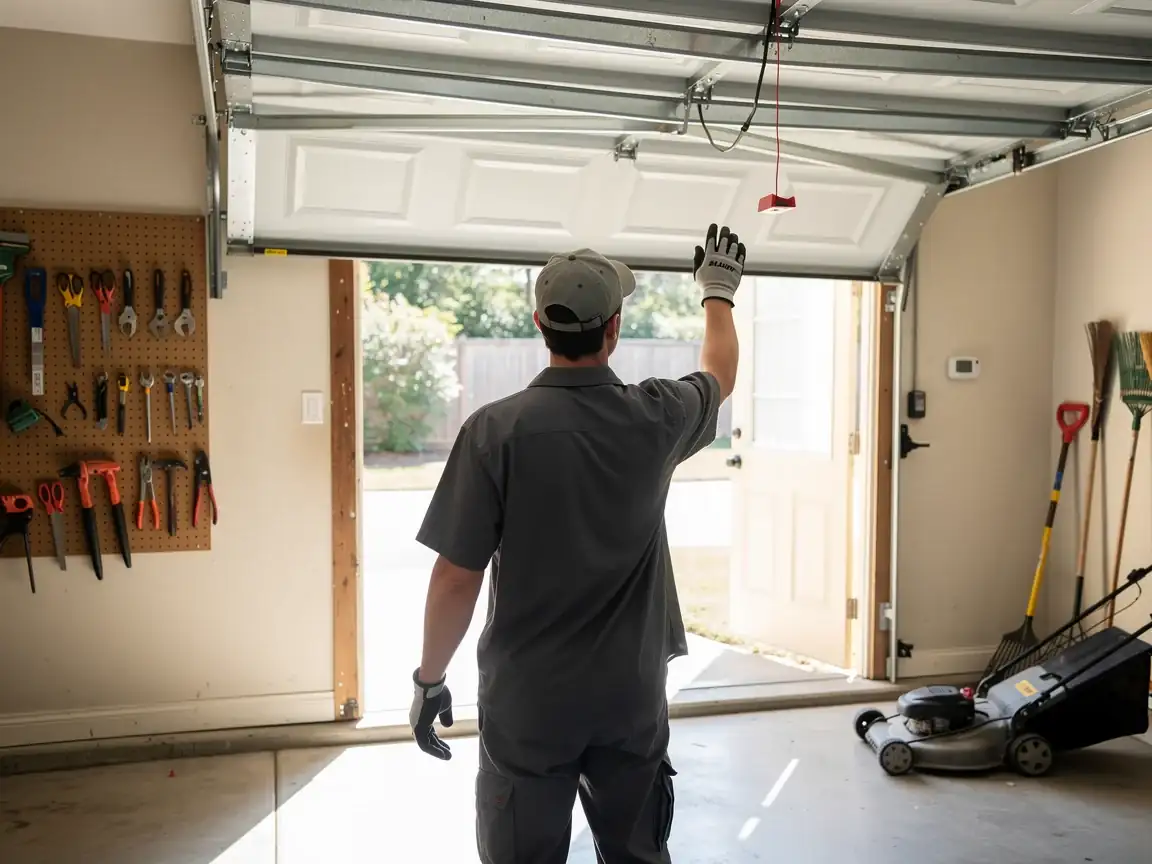
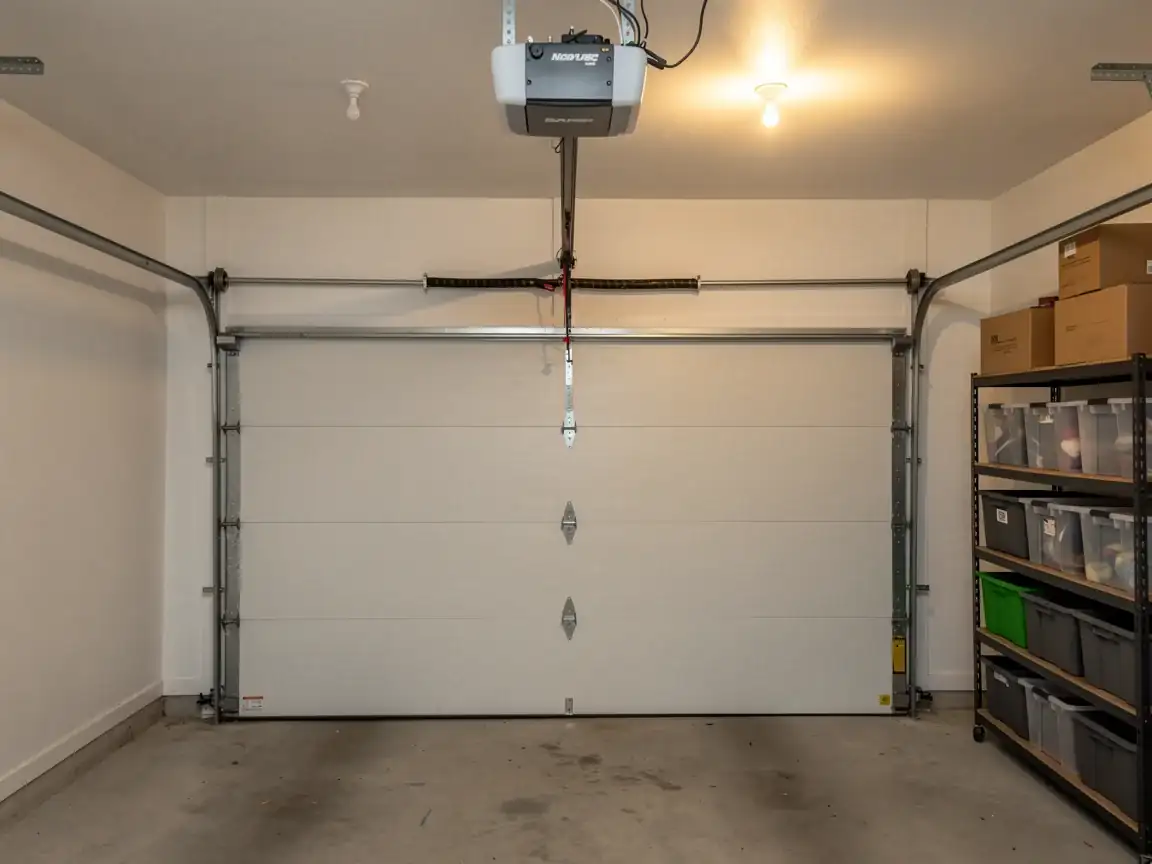
The failure point we see most in houses from this era is the opener, not the door. A 1990-built garage usually has its original door frame and track in decent shape, but the opener has been replaced once already, sometimes with a unit that doesn't match the door's weight or spring tension. That mismatch shows up as a door that reverses randomly, or a motor that strains and eventually burns out years before it should.
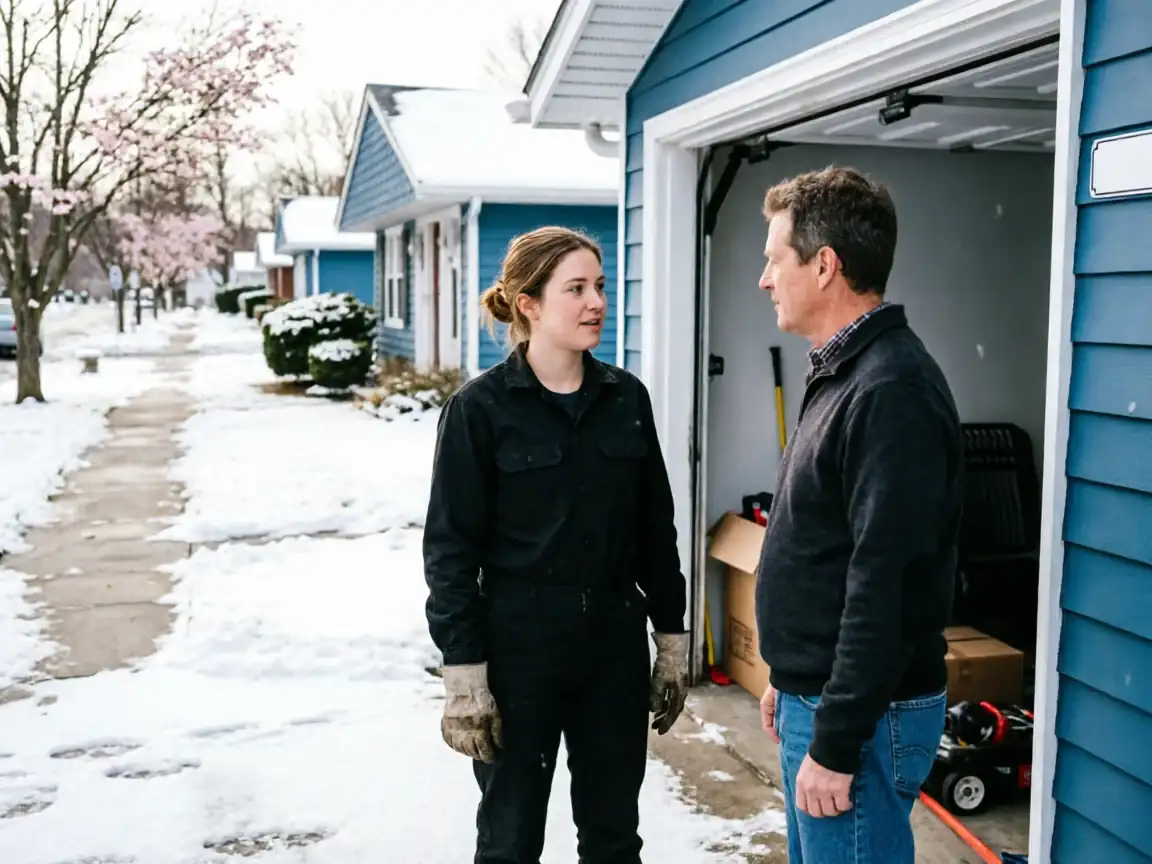
Winters here are the other factor. This region sits in a cold, severe climate band, and cold makes steel springs more brittle and lubricant on tracks and rollers stiffen up. A spring that's already near the end of its cycle count is far more likely to snap on a frigid morning than in July. If you've noticed the door moving slower or louder once temperatures drop, that's not your imagination - it's the metal telling you it's close to done.
Where we're honest with people: if a door built in this era is already on its second opener and the track is bent or rusted at the base, patching it again usually isn't worth the labor. At that point you're paying twice for something you'll replace within a year or two anyway.
Parts We Carry
For houses from the 1990 era common to Bedford
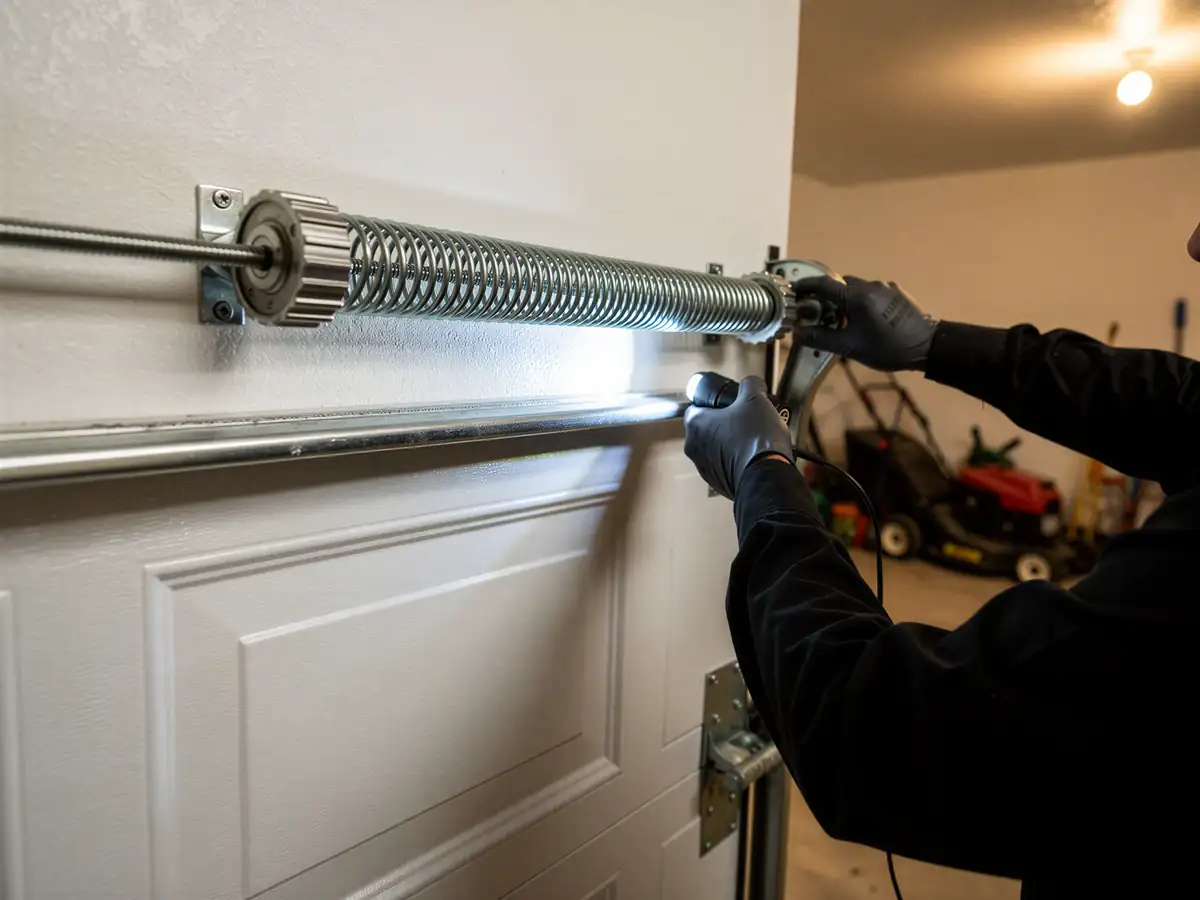
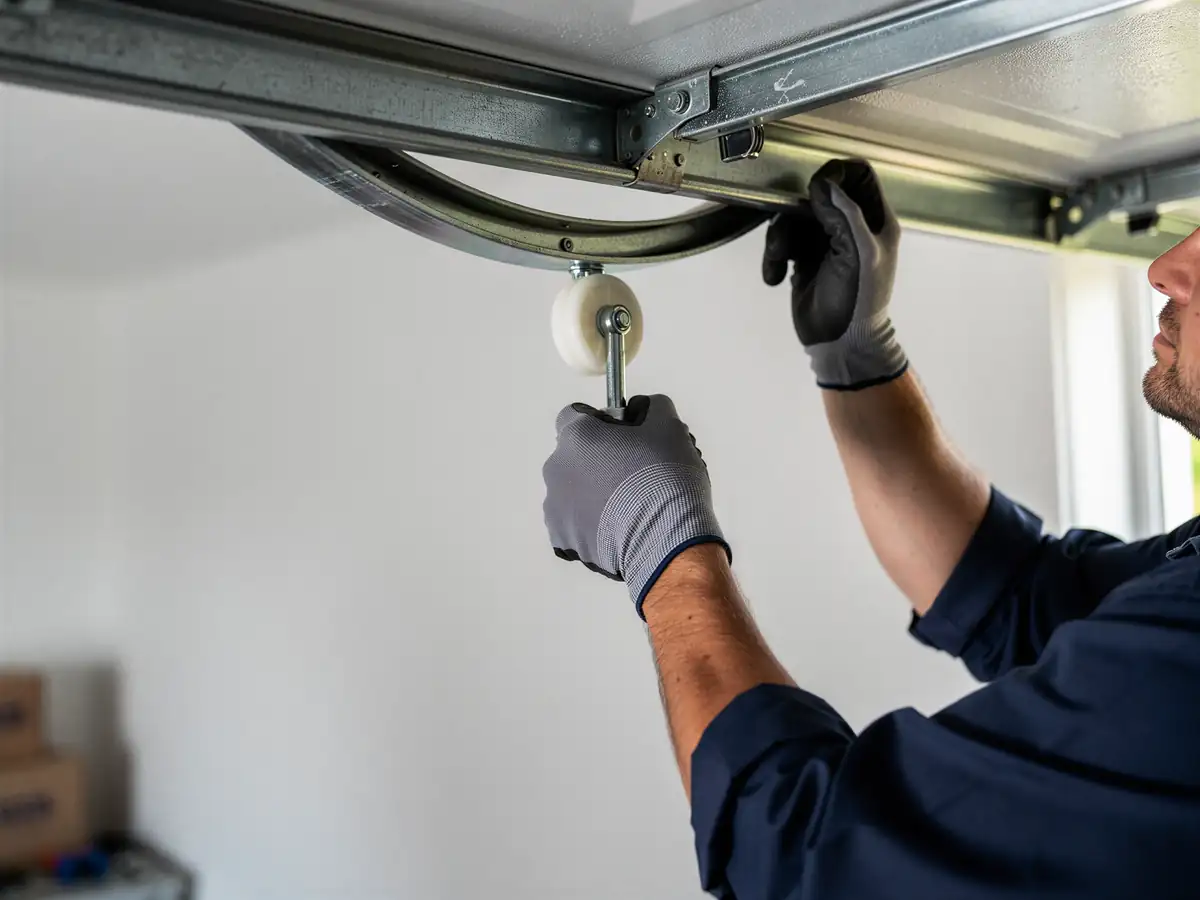
The parts that go first are torsion springs sized for a standard double door, nylon and steel rollers, and the lift cables that wear at the drum end. We stock the spring sizes and cable lengths that match this period of construction, since doors from 1938 through 1997 across the wider area use a handful of standard torsion setups rather than anything exotic.
Openers are a different story
If your opener dates back to the original install, replacement parts for that specific board are often hard or impossible to source - manufacturers stop supporting circuit boards well before the motor itself wears out. In that case we're not chasing a part number, we're swapping the unit. That's the honest limitation here: we can keep a 30-year-old door running almost indefinitely with the right springs and hardware, but an opener that old is a replace, not a repair, once the board goes.
How We Fix It
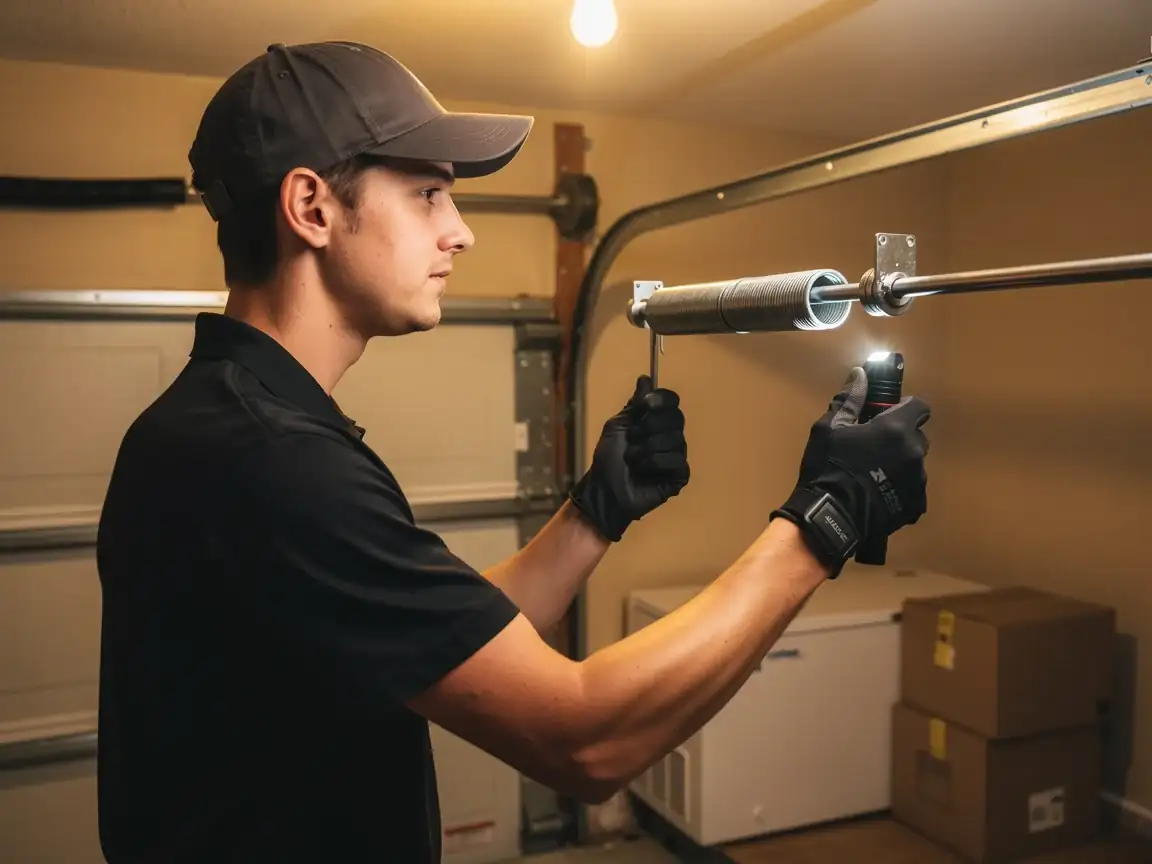
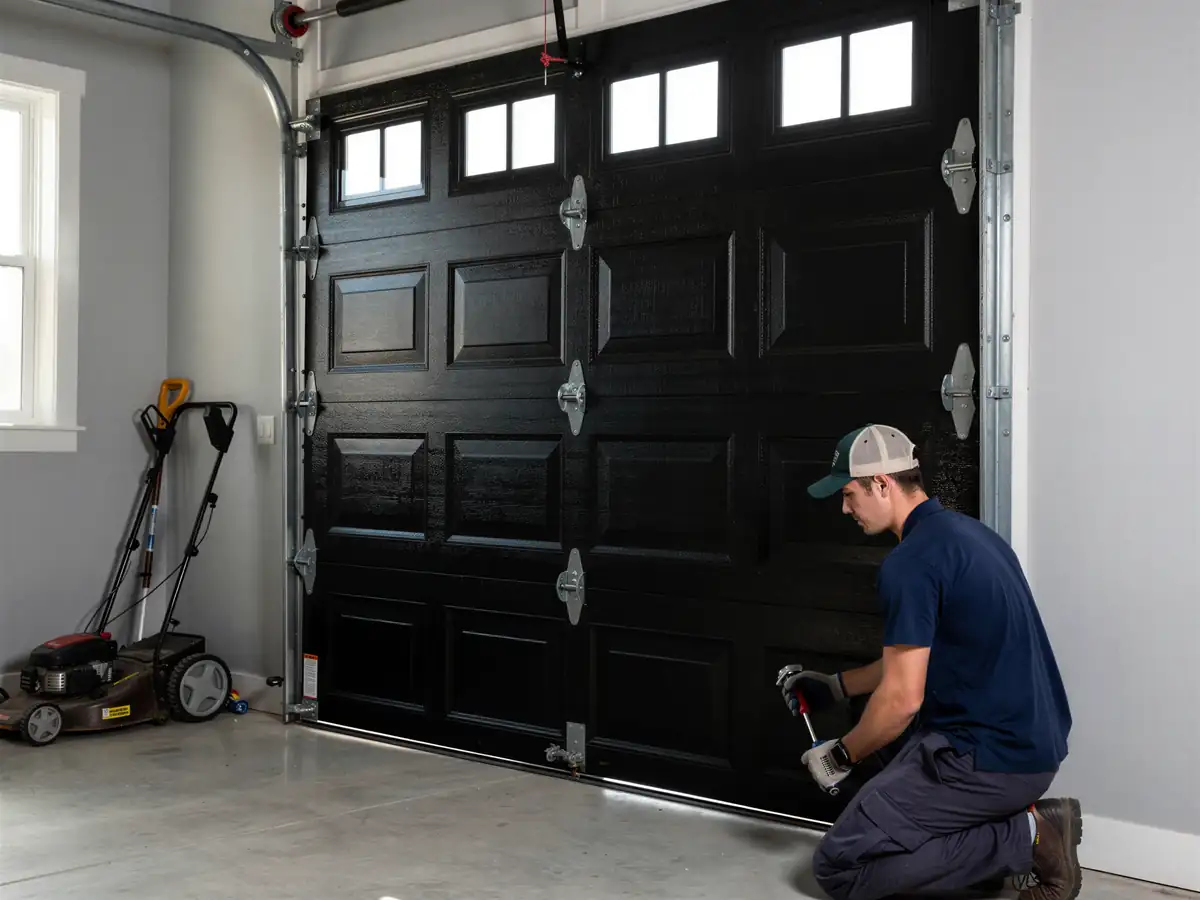
First call is diagnosis, not guesswork - we check spring cycle count against the door's age, look at the track alignment, and test the opener's force settings before touching anything. Given how many Bedford doors are nearing or past the typical torsion spring lifespan for their build year, that's usually where the problem sits.
If it's the spring, we replace it sized to the door's actual weight, not a universal stand-in, because an undersized spring in cold-severe conditions fails again within a season. If it's the opener, we talk through whether the board is the only dead part or whether the motor and gear are also near the end, since replacing one and not the other on a unit this old rarely makes sense.
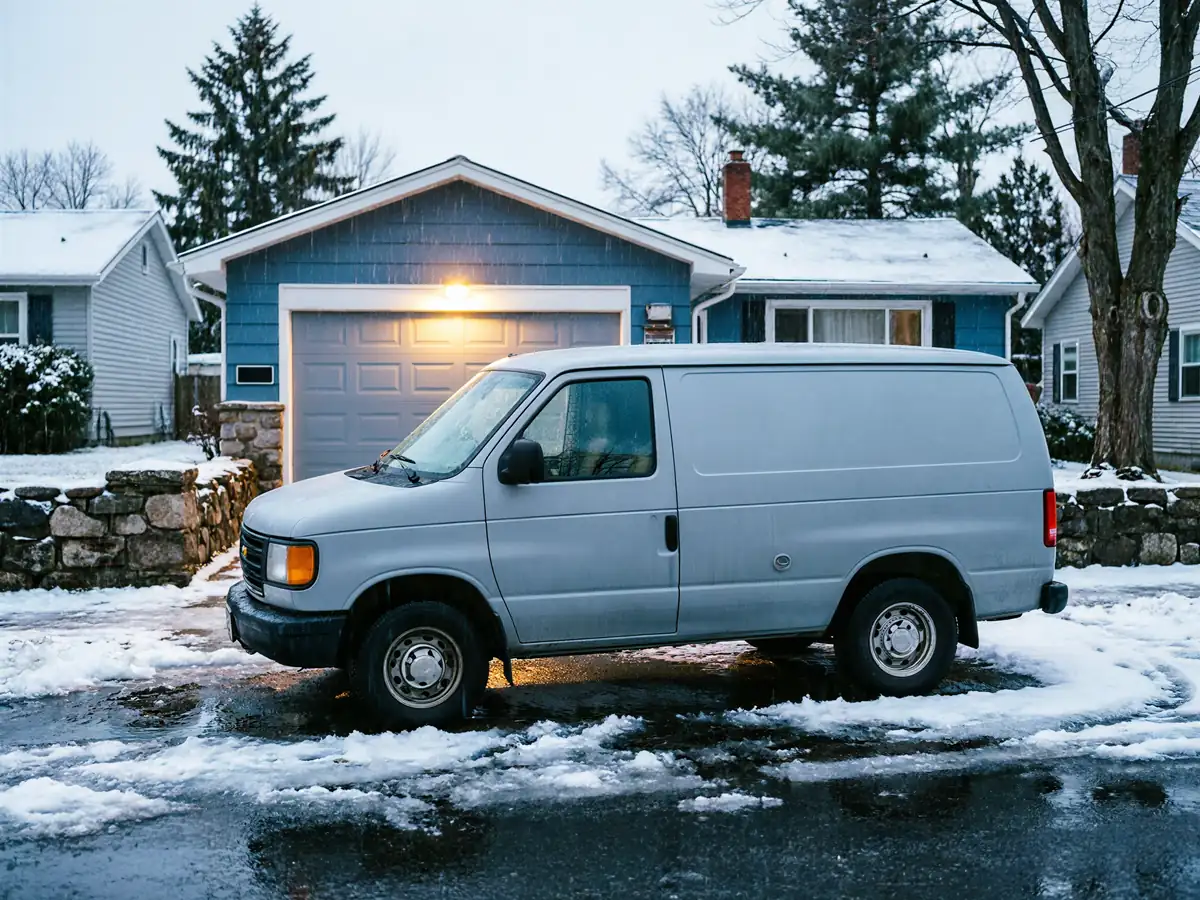
We come out from Manchester for every Bedford call, so we don't carry a local inventory sitting in town - what's on the truck is what we stock for jobs across the area, sized for the housing stock that's actually out here. If a specific opener board is discontinued, we'll tell you that up front rather than stringing out a repair that won't hold.