How We Fix It
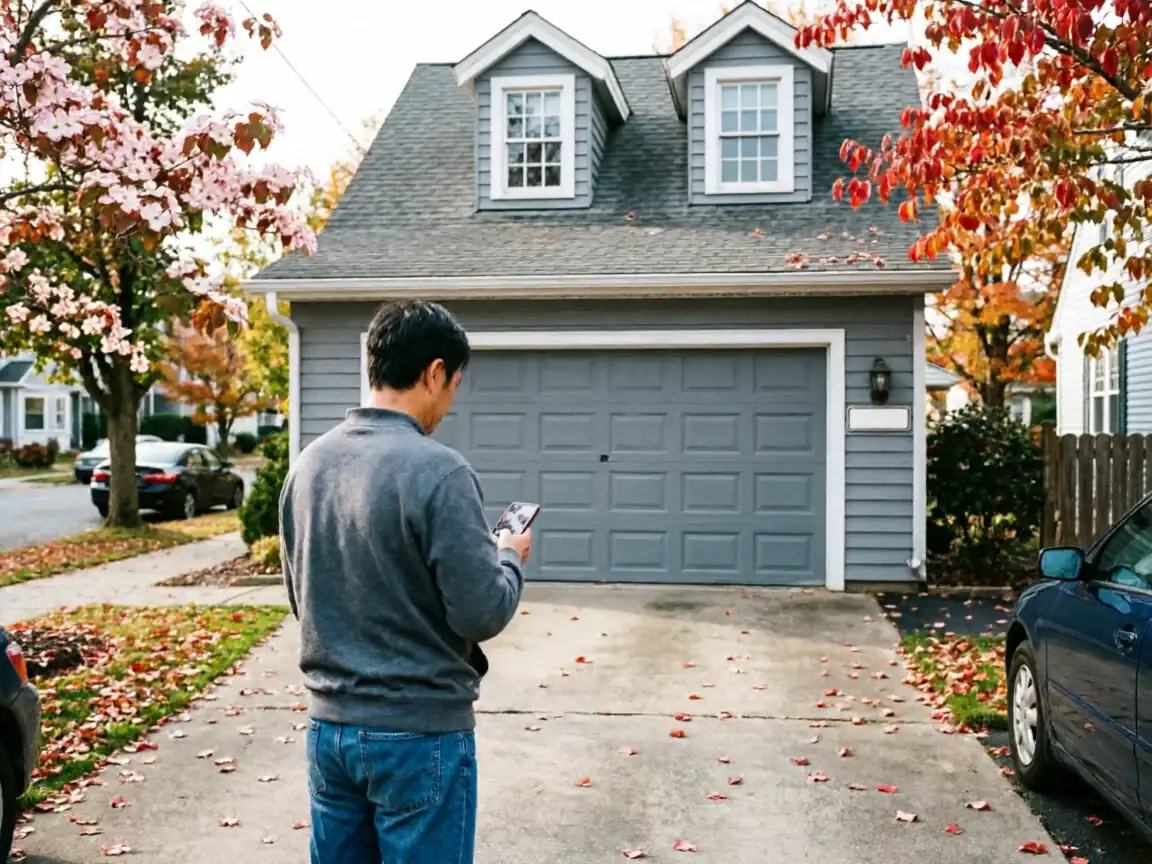
Auburn's median household income runs $146,290, well above the $115,712 median across the rest of the service area we cover out of Manchester. That number matters more than it looks like it should when a door breaks at 11pm. At that income level, the repair-or-replace line moves earlier - a homeowner here is more likely to just replace a tired door and opener together than nurse along a 20-year-old panel with a patched spring, because the gap in cost between a good repair and a full swap is smaller relative to the household budget. So when we get the call, we're not just fixing what's broken, we're telling you honestly which side of that line your door sits on.
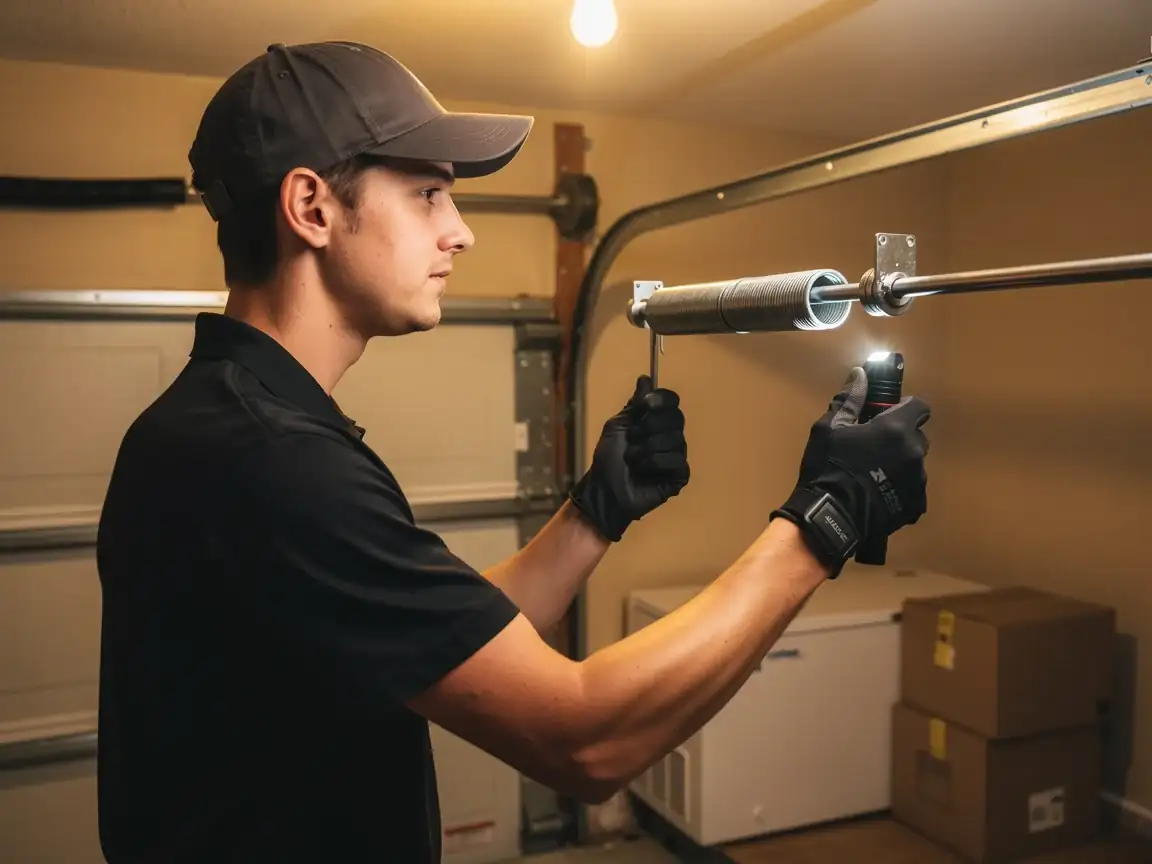
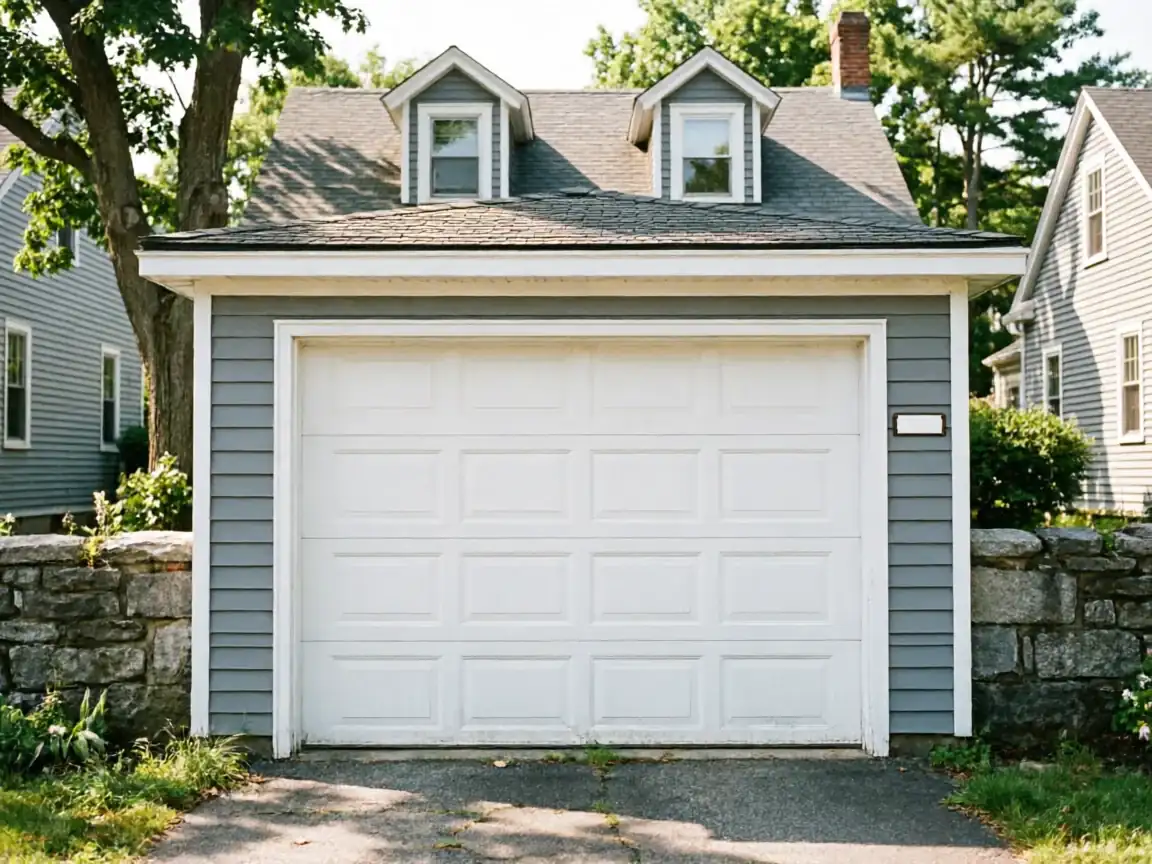
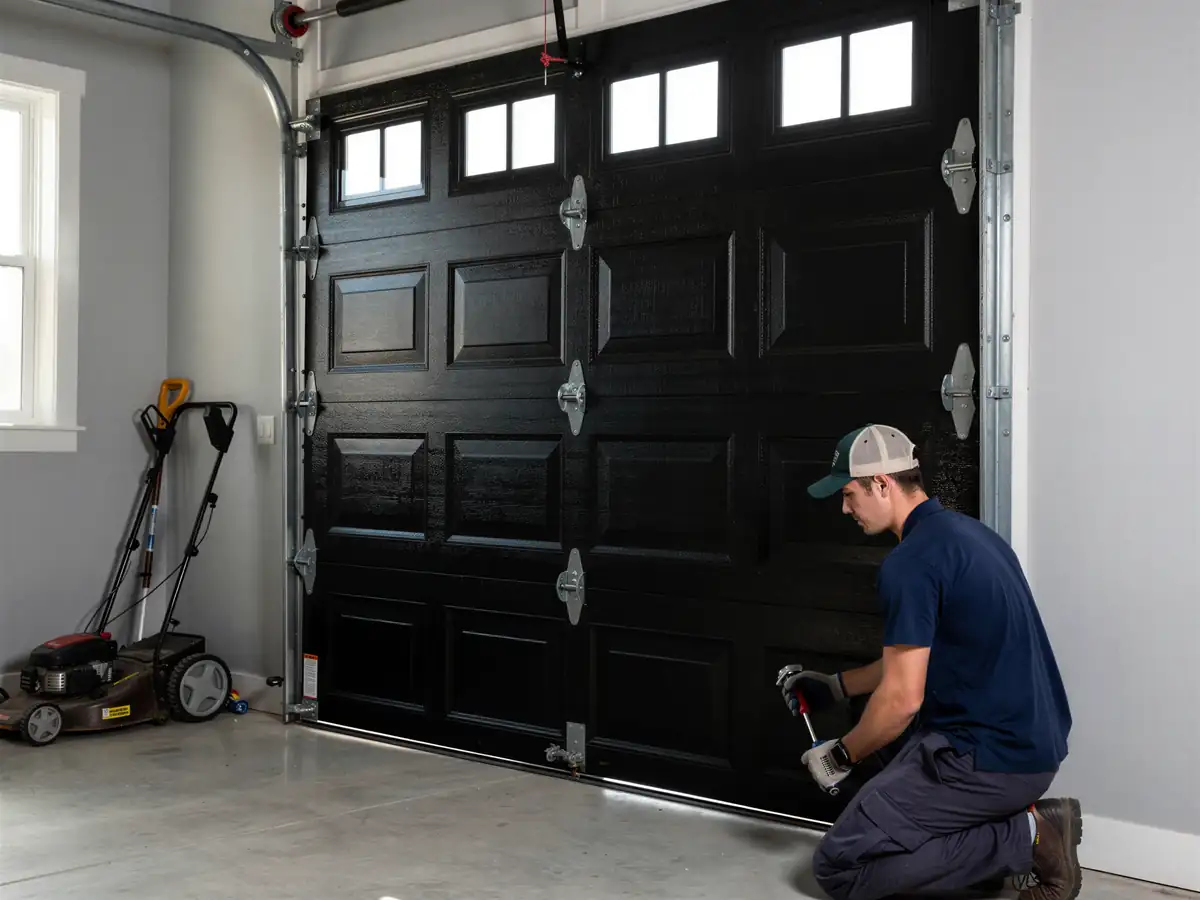
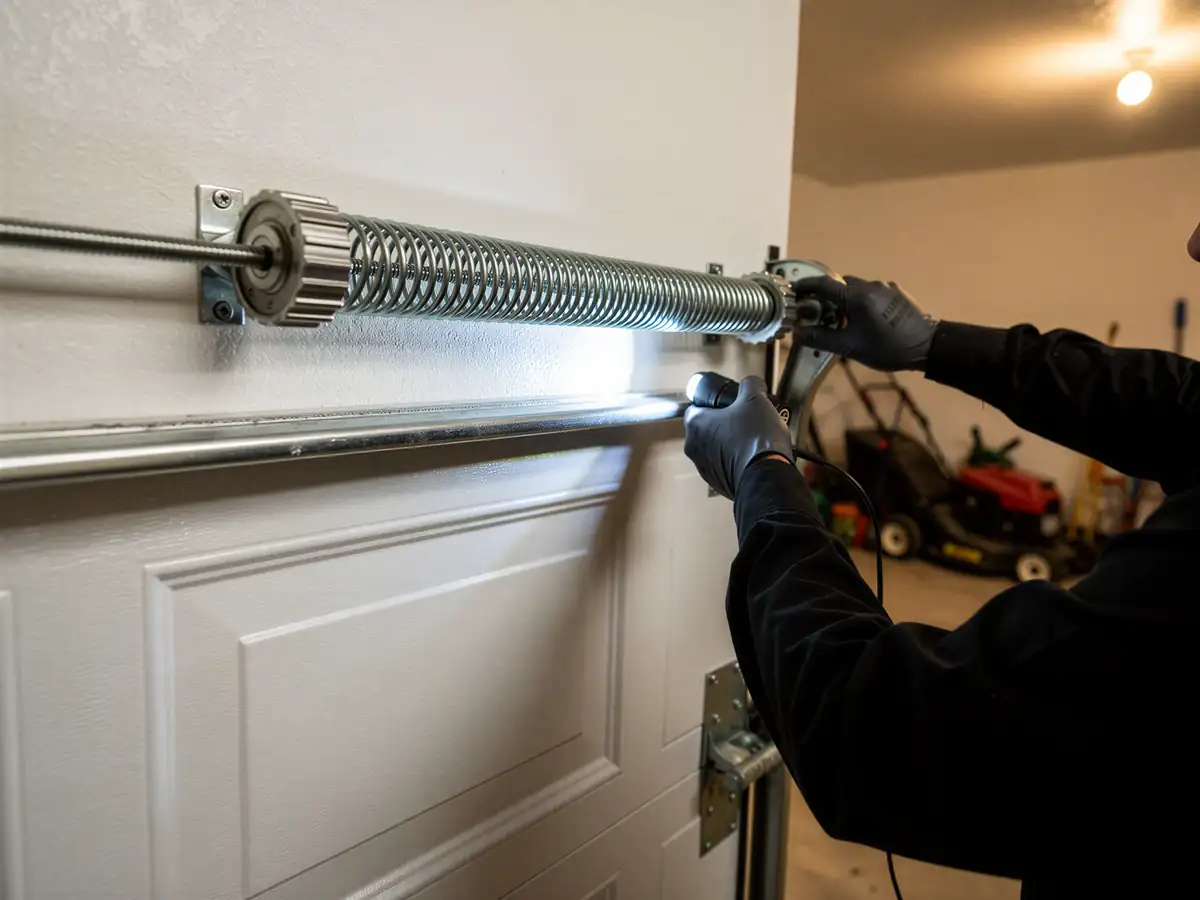
Most of the broken-door calls we get from Auburn are a torsion spring that's let go on a double door, or a cable that's jumped the drum after a spring failure stressed it. We come out from Manchester, about four miles, with spring sets sized for the torsion systems common on homes built through the 1980s and 90s here, and we diagnose on site before we touch anything - a broken spring can look like a dead opener, and we're not charging you for a new opener when the fix is a $200 spring.
Parts We Carry
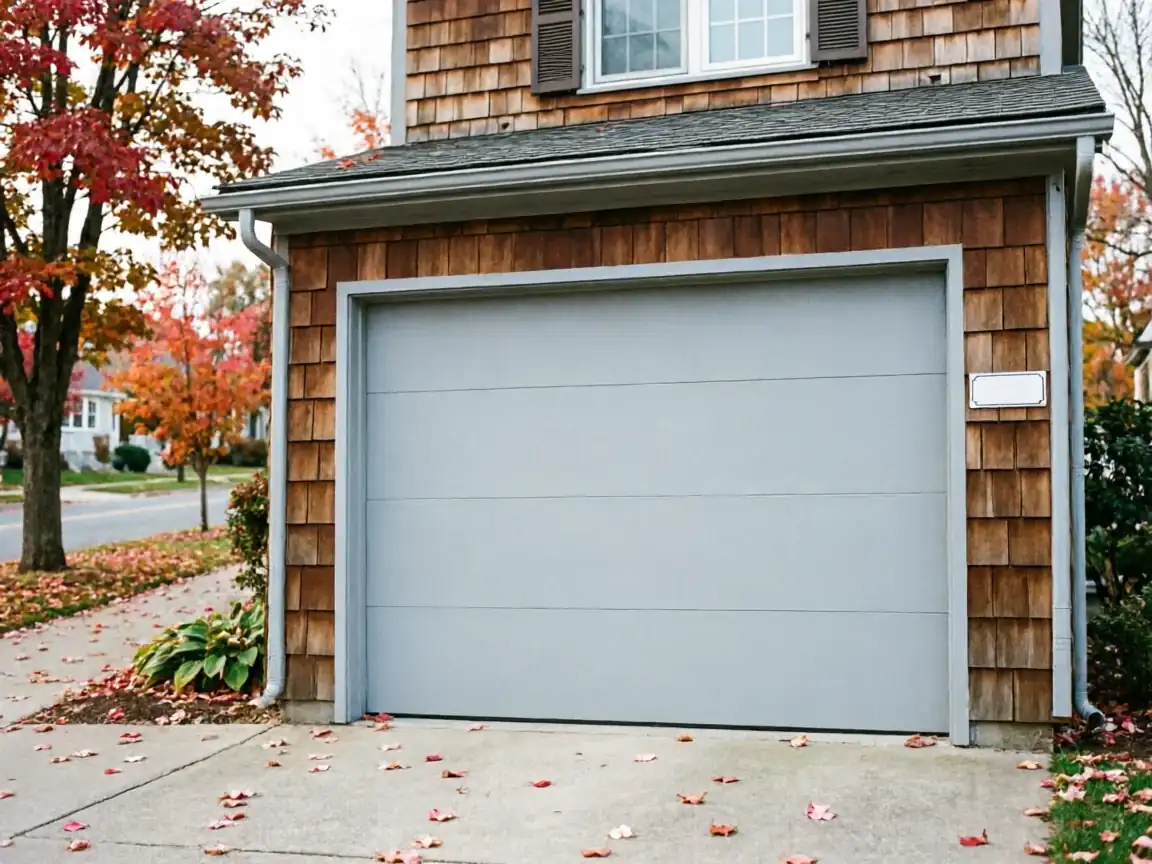
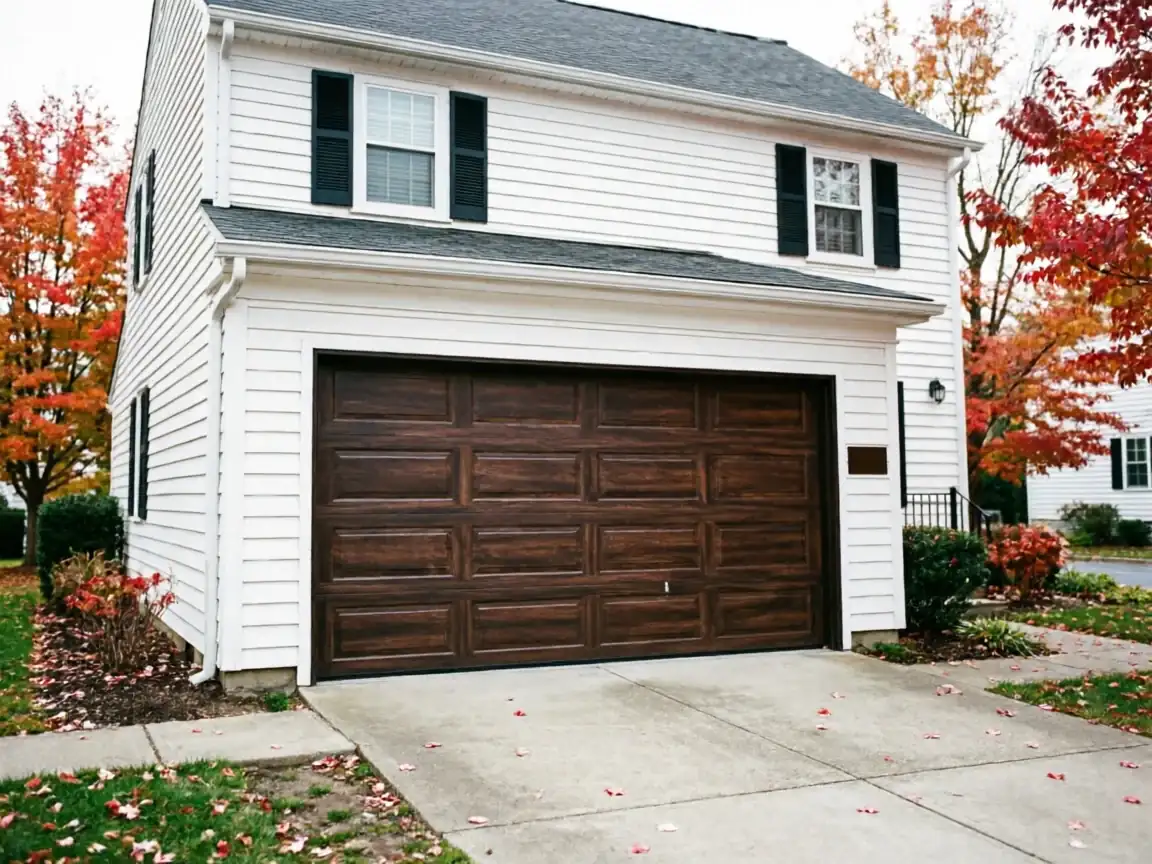
Auburn's housing stock centers on a median build year of 1983, which lines up with the wider service area's 1938-to-1997 range and its heavy concentration of 1980s and 90s construction. Doors from that era are almost always steel sectional panels on torsion spring hardware, not the older extension-spring setups you'd find on a pre-1960s house, and not the newer polymer-jacketed springs either. We carry torsion springs in the wind sizes that fit that generation of door, standard-lift and high-lift drums, and the galvanized cable gauge that matches them.
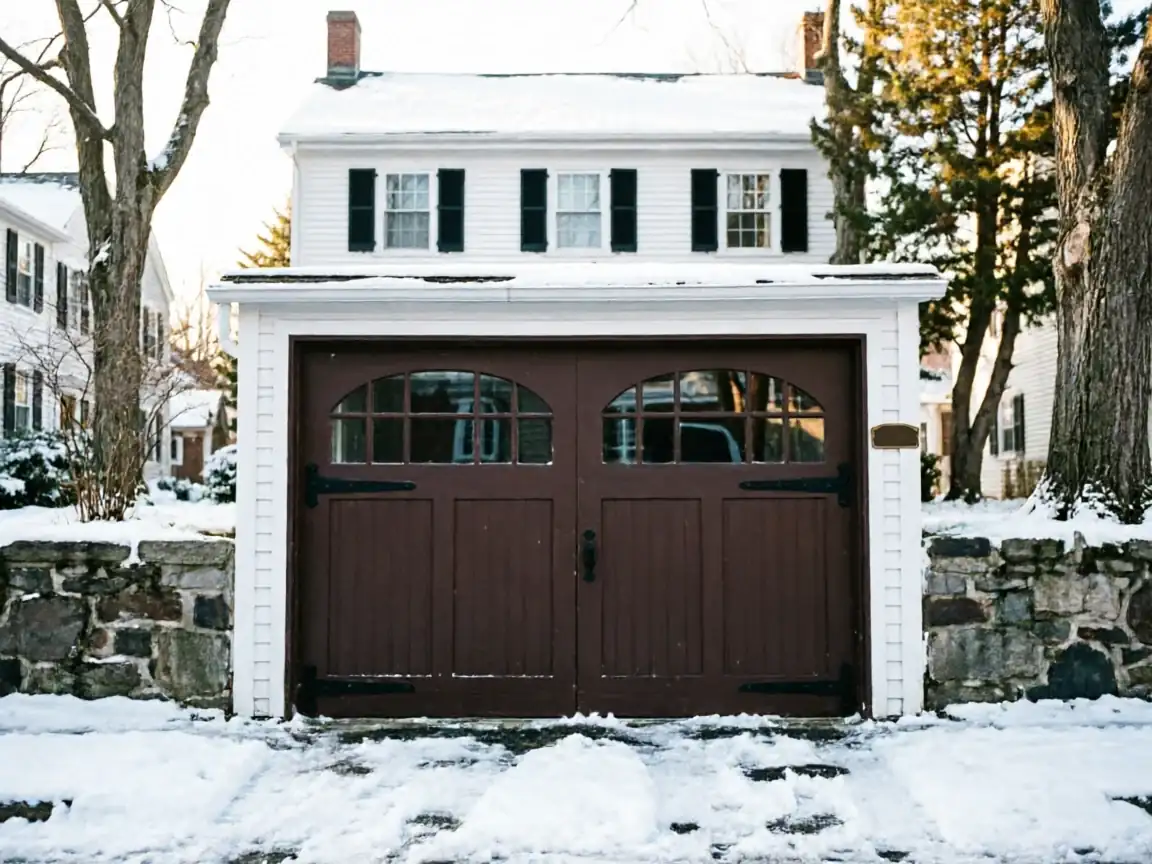
We also stock the common opener drive parts - chain and belt - because a house built in the early 80s has usually had its opener replaced once or twice since, and the newer unit doesn't always match the original track hardware. What we don't carry on the truck is replacement wood panels; if your door is an older wood-panel model rather than steel, that part gets ordered and the job becomes a return trip, not a same-visit fix.
Can You Do This Yourself
A torsion spring under tension can break a wrist or worse
We won't talk you through adjusting or replacing one over the phone, and no honest repair company will. That's the one we always say no to.
What you can safely check yourself before calling
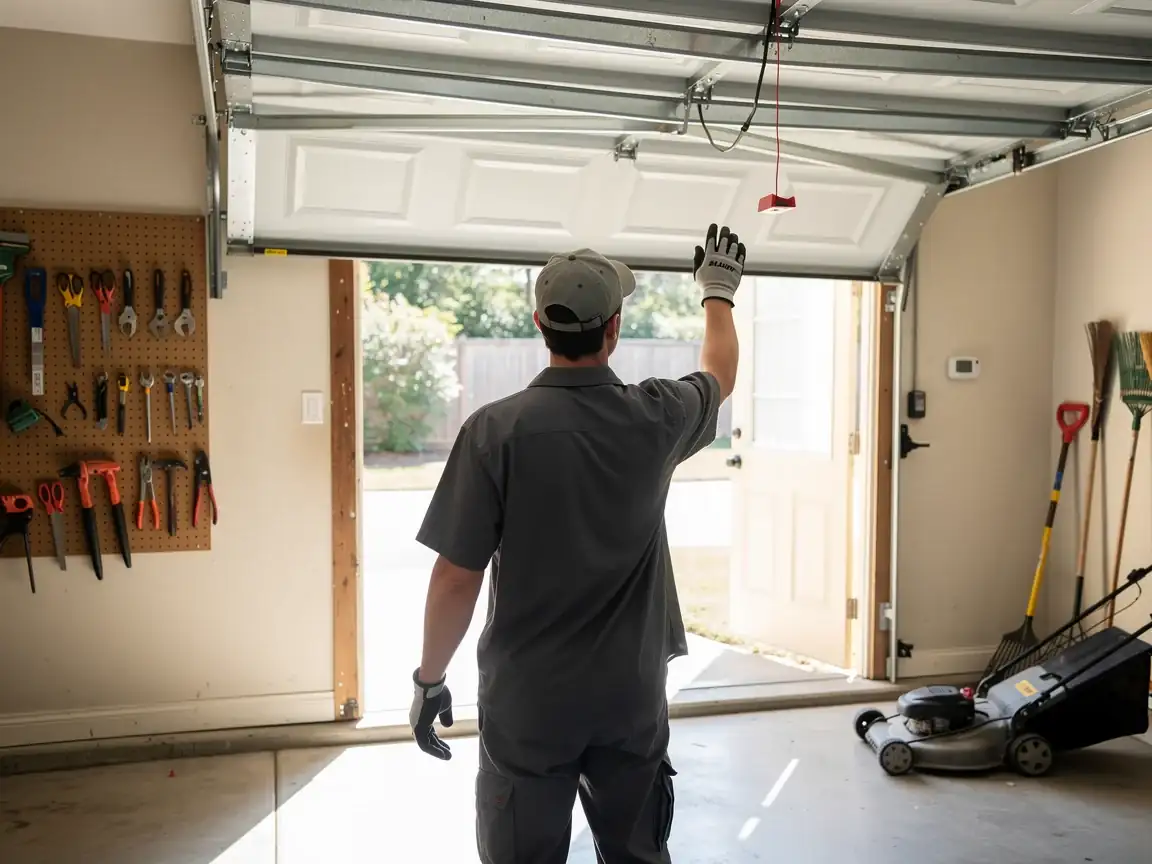
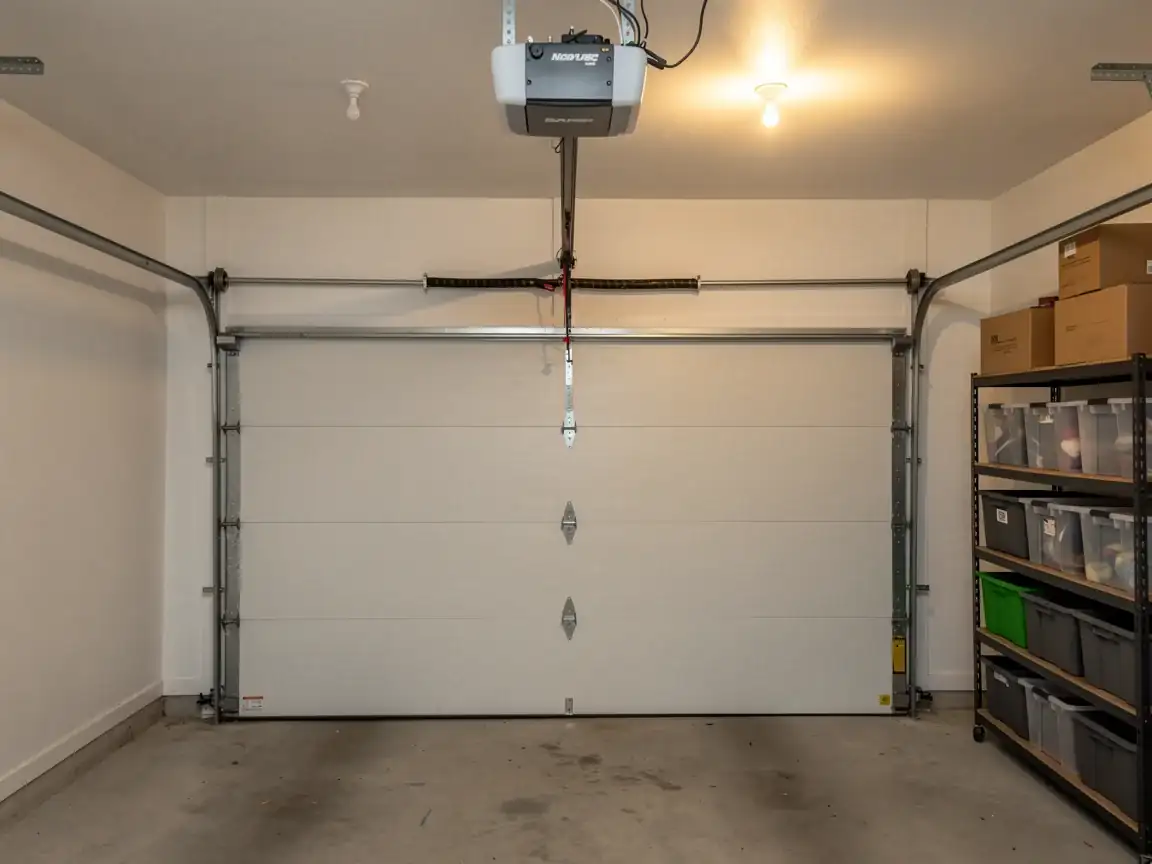
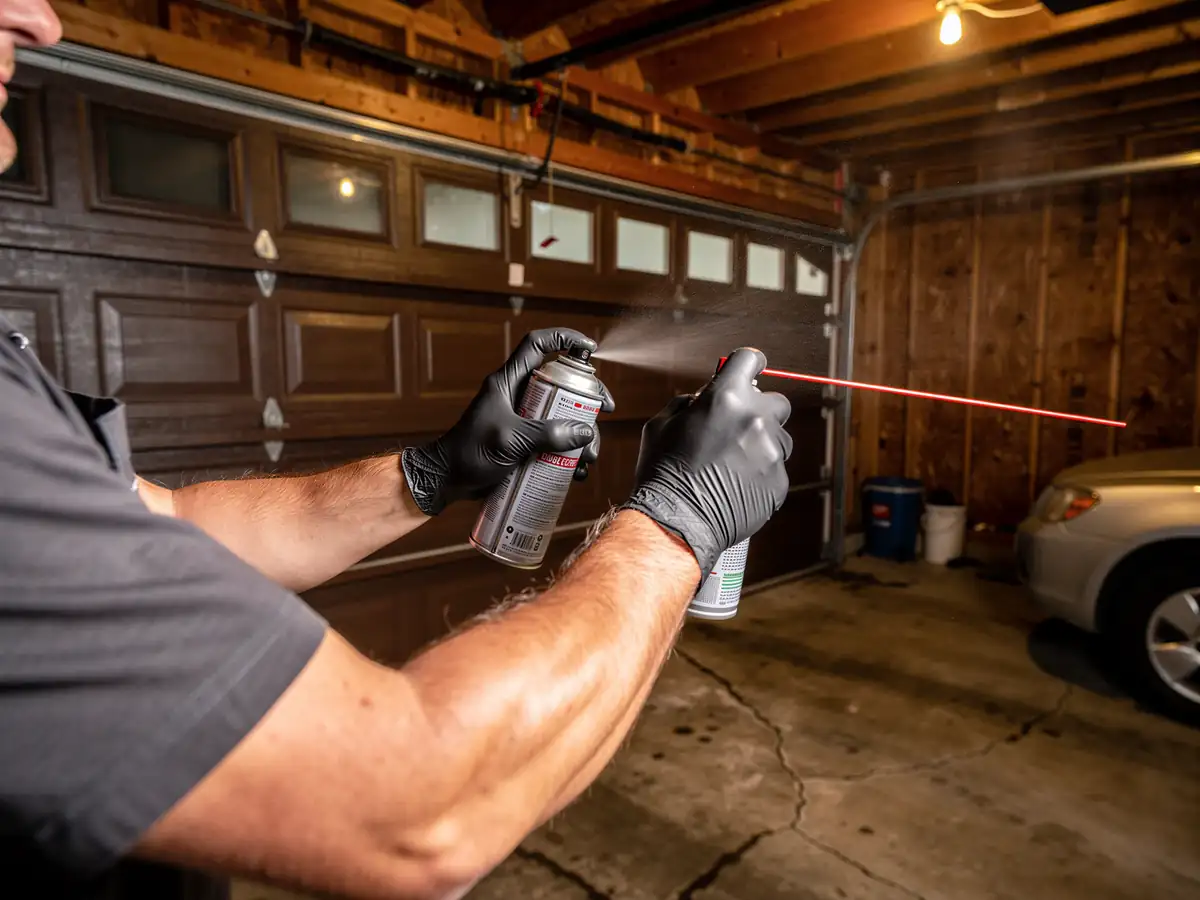
The opener's manual release cord, to see if the door moves freely by hand when disconnected from the opener. If it's heavy or won't move smoothly, that's a spring or roller problem, not an opener problem, and it tells us what to bring. You can also check whether the issue is a dead remote battery or a misaligned photo-eye sensor - both are common, both are a five-minute fix, and neither needs a truck. If the door won't budge at all with the opener disconnected, stop there and call. Forcing it by hand on a dead spring is how the cable jumps the drum and turns a $200 repair into a $600 one.
Time on the Job
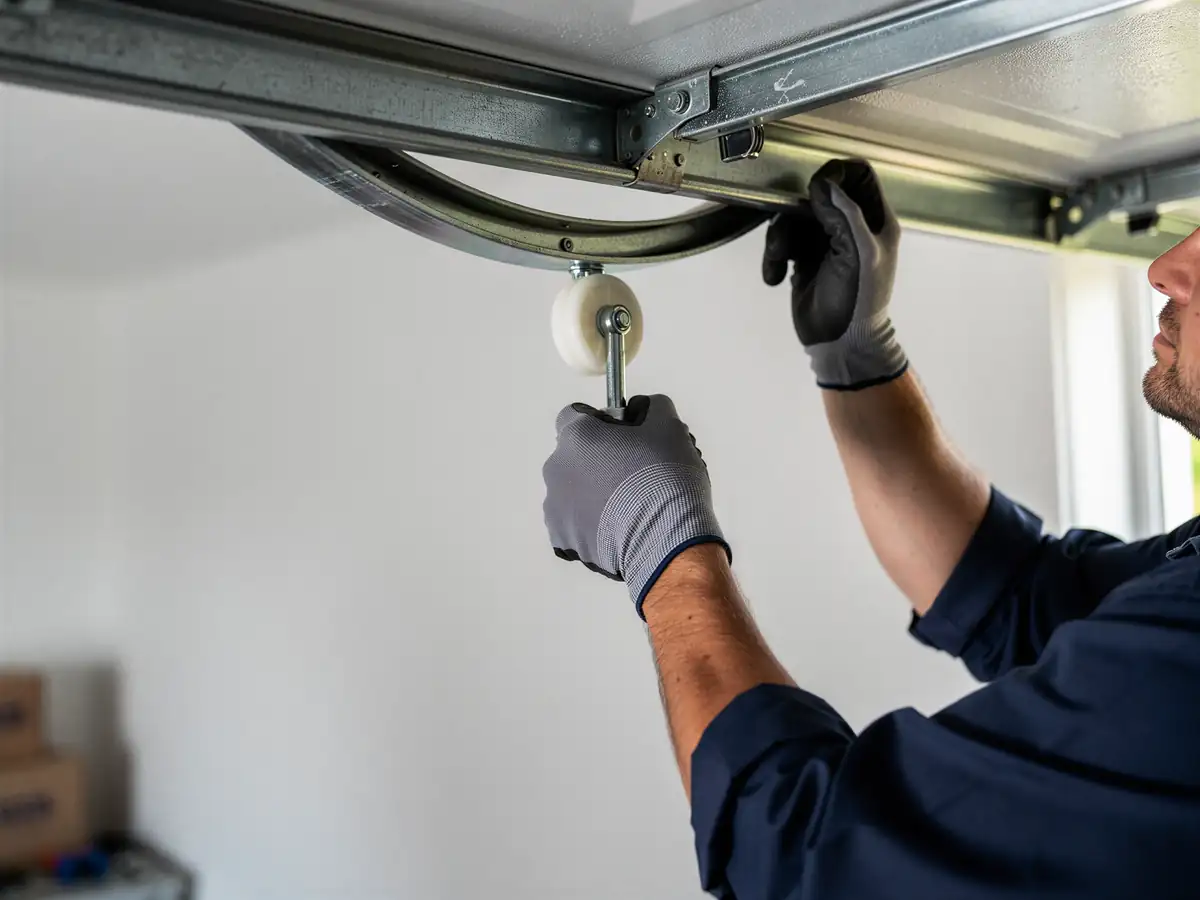
We travel from Manchester to Auburn, roughly four miles, so there's a drive built into every call - we don't have a branch here and won't claim one. Once we're on site, a straightforward torsion spring replacement on a standard double door usually runs under an hour. A cable that's jumped the drum, or a door that's come off a roller and needs realignment, takes longer because we have to check the track and hardware for damage before we close it back up.
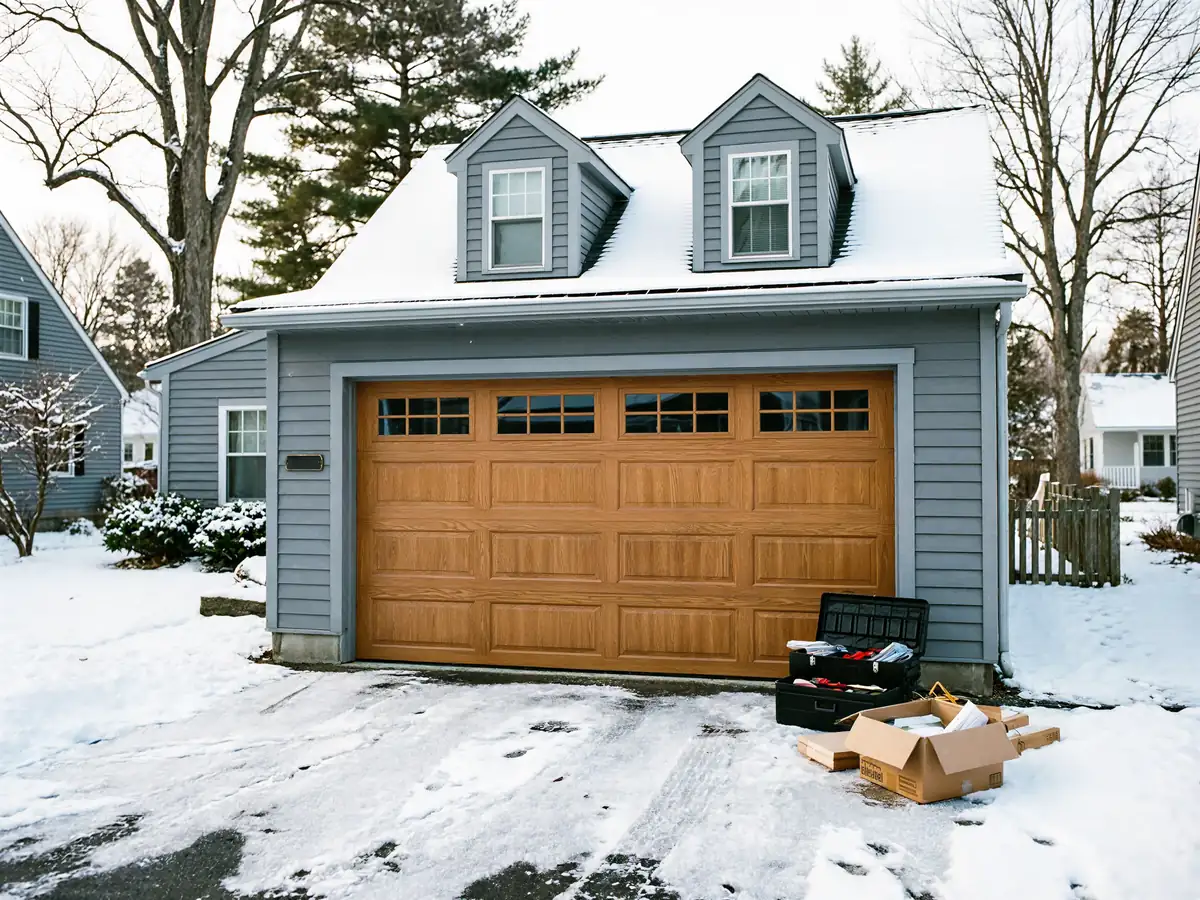
Winter adds time to almost every call in this part of New Hampshire. Cold-soaked steel springs lose a bit of give, lubricant in opener gears thickens, and a door that was merely stiff in October can seize outright in January. We budget extra time for diagnosis on cold-weather calls because a door that won't open might be three different problems stacked on top of each other, and we'd rather find all three before we leave than get called back out.
Where This Job Goes Sideways
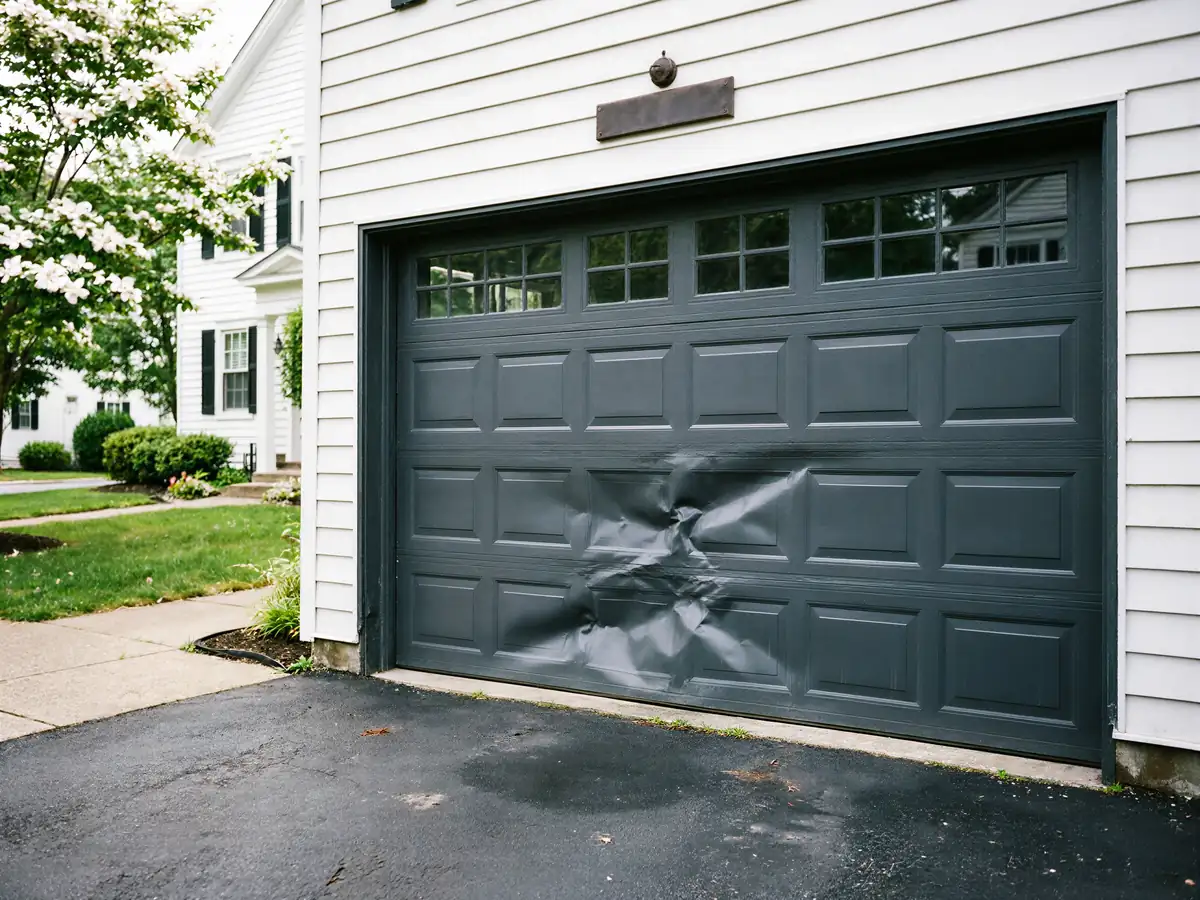
The calls that turn into bigger jobs almost always start the same way: someone heard a bang, the door wouldn't move, and they or a neighbor tried to force it open or closed by hand. On a broken torsion spring, that's how a cable jumps the drum, how a track bends, or how a panel gets dented from binding sideways. None of that is required damage from a spring failure on its own - it's damage from moving a loaded door without releasing the tension first.
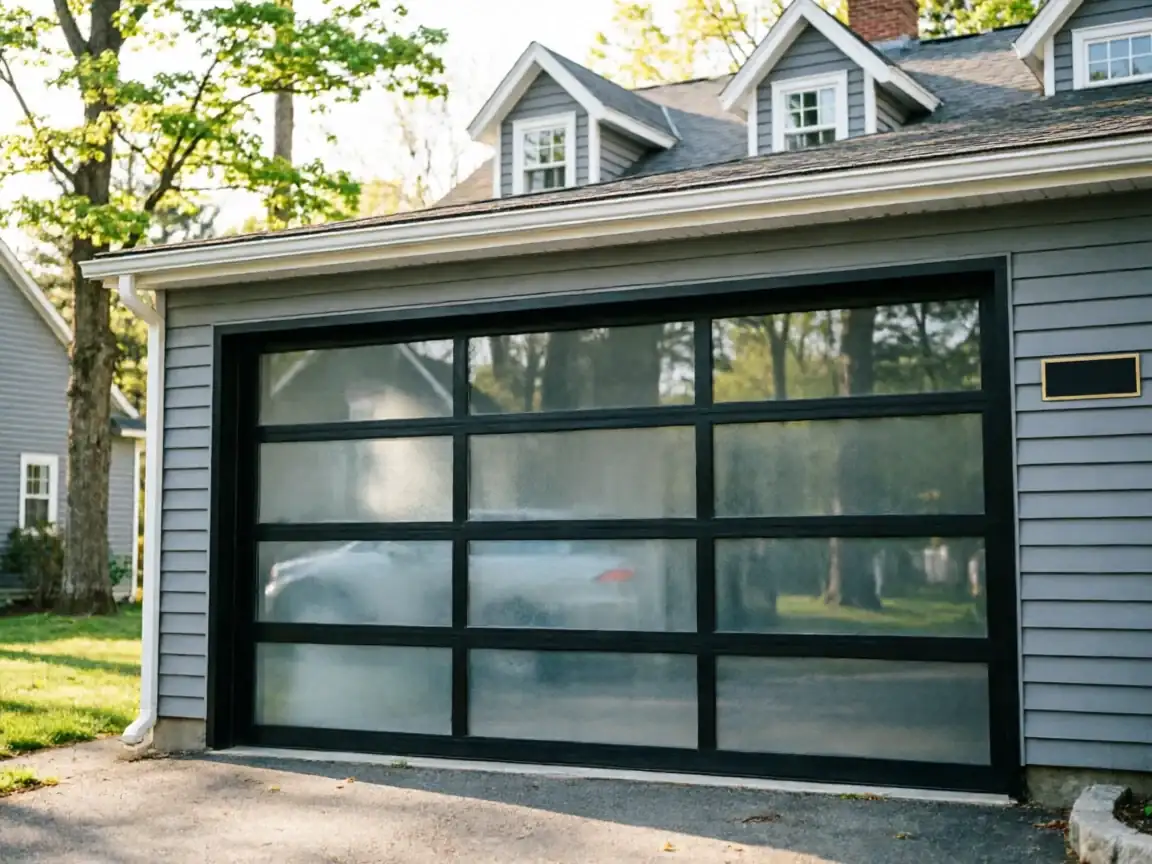
The other way it goes sideways is age stacking on age. A house with a median build year around 1983 has had 40-plus winters of cold contraction and expansion on the original hardware if nothing's been replaced. When we get out there and find the spring is gone and the rollers are shot and the bottom panel is rusted through at the corners, that's not a $200 call anymore - that's the point where we tell you straight that a new door costs less over five years than another round of patch repairs, and at Auburn's income level that's usually the call people make.