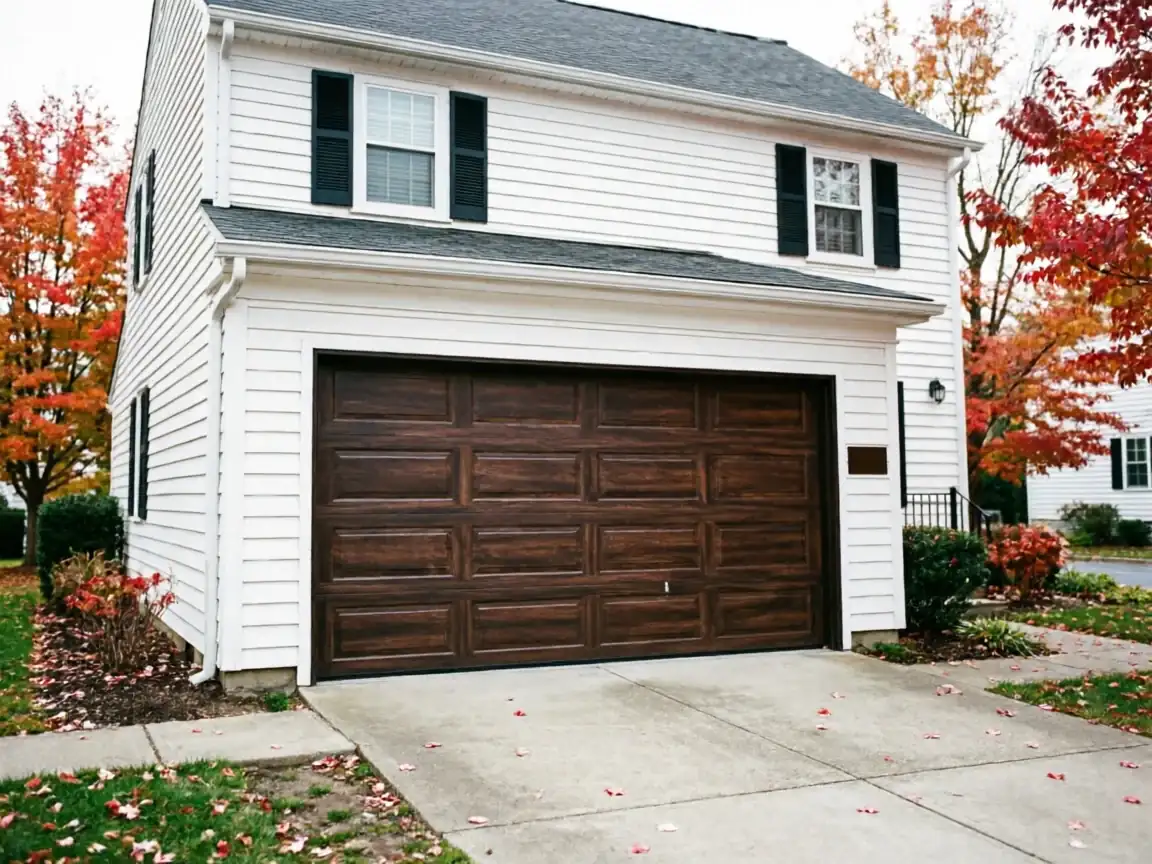
The Symptom
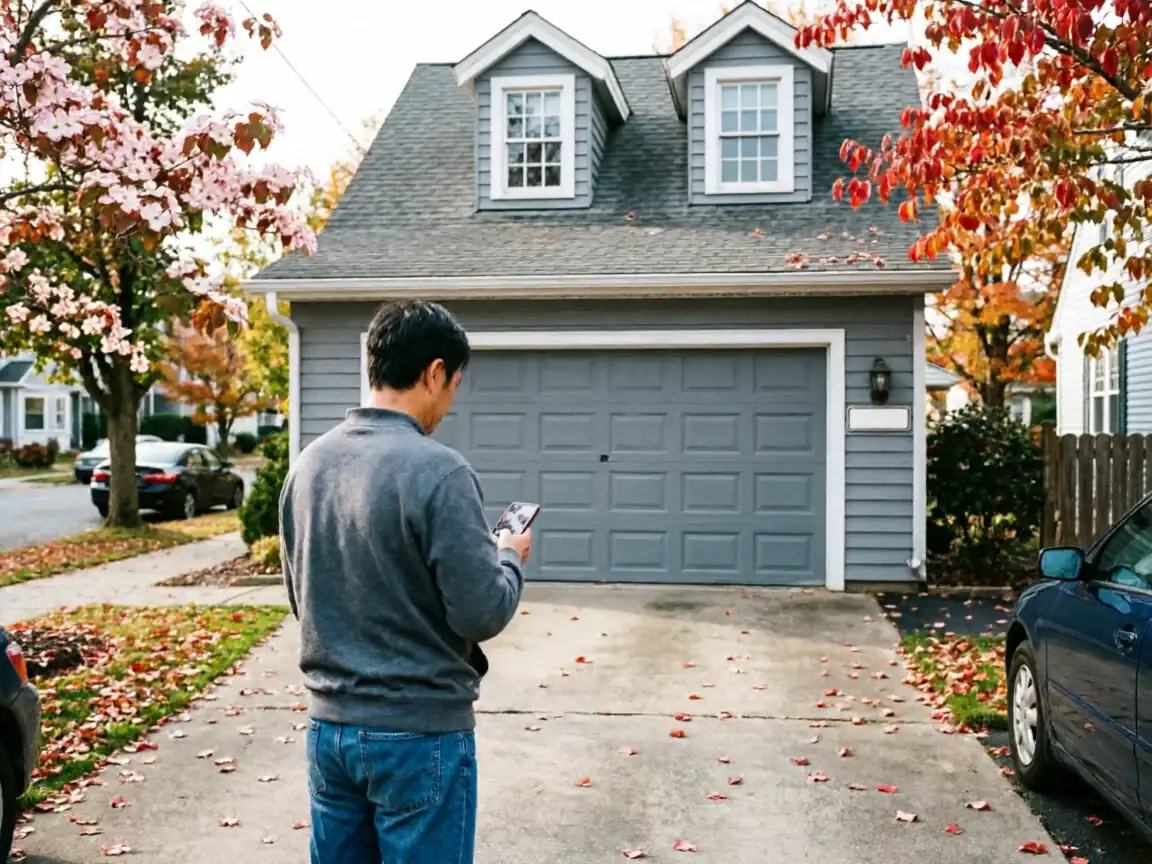
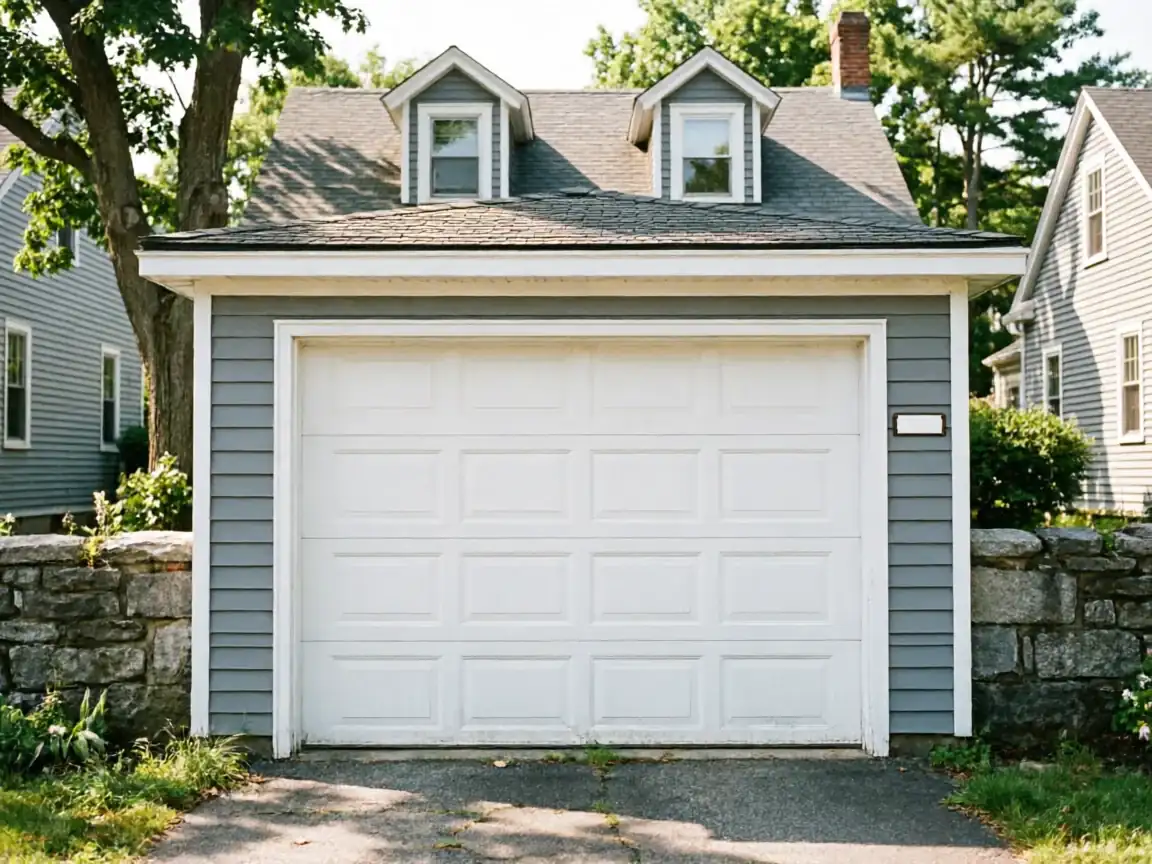
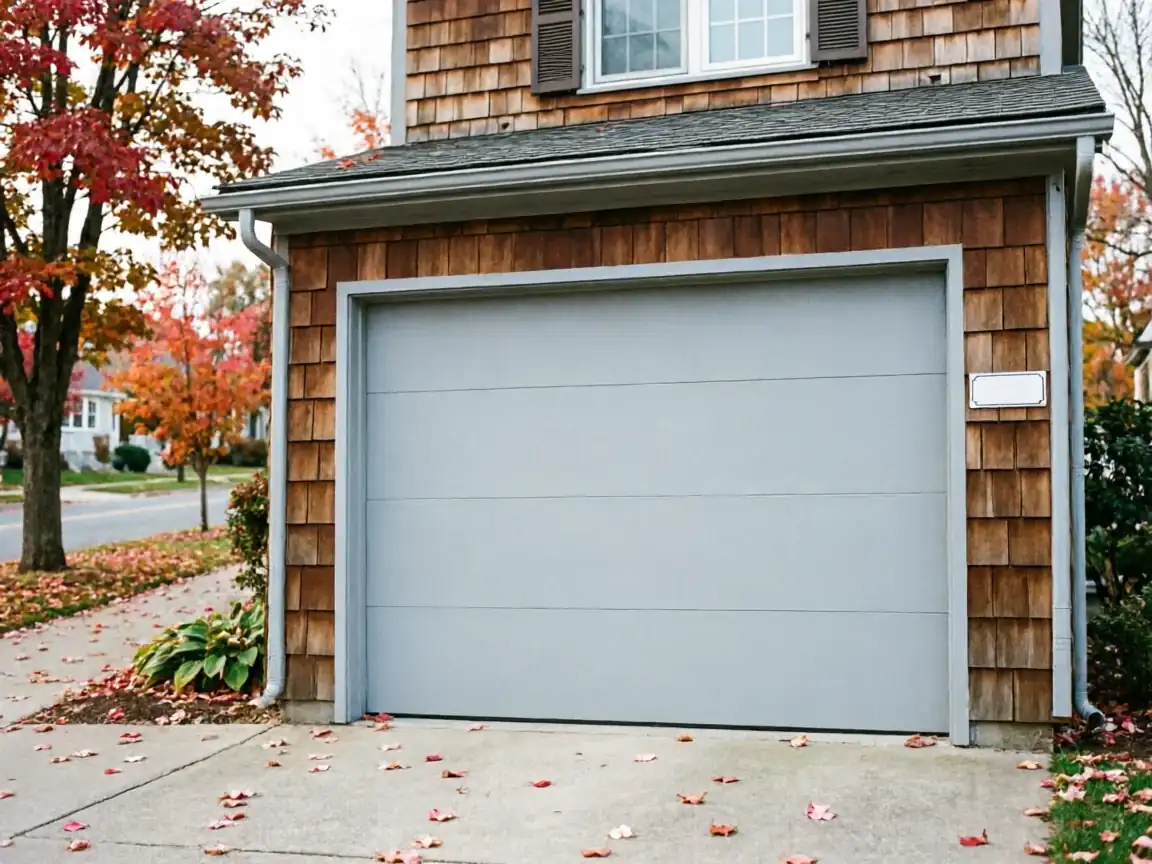
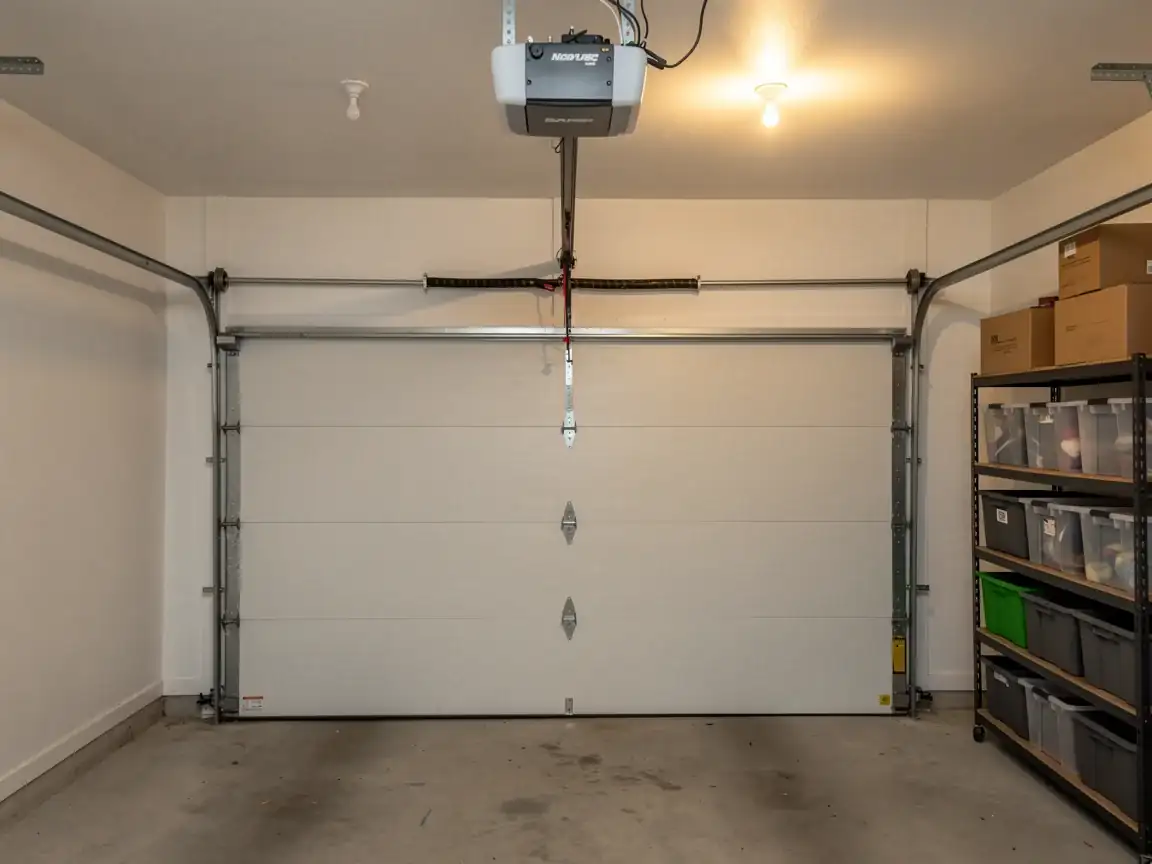
If your garage door in Derry groans going up, hesitates halfway, or the opener strains on the last foot of travel, the cause usually isn't the opener at all. Most houses on this side of town went up around 1981, a year ahead of the wider service area's median build year of 1982, and the doors that came with those builds used galvanized extension or torsion springs rated for a working life that ran out a long time ago. Add in cold-climate grease that's gone stiff and rollers worn oval instead of round, and you get exactly the symptoms above: slow travel, a labored motor, a door that reverses for no reason anyone in the house can explain. None of that is an electronics problem. It's wear that's been building since the Reagan administration, showing up now because nobody's touched the hardware since the house was built.
Why This Fails Locally
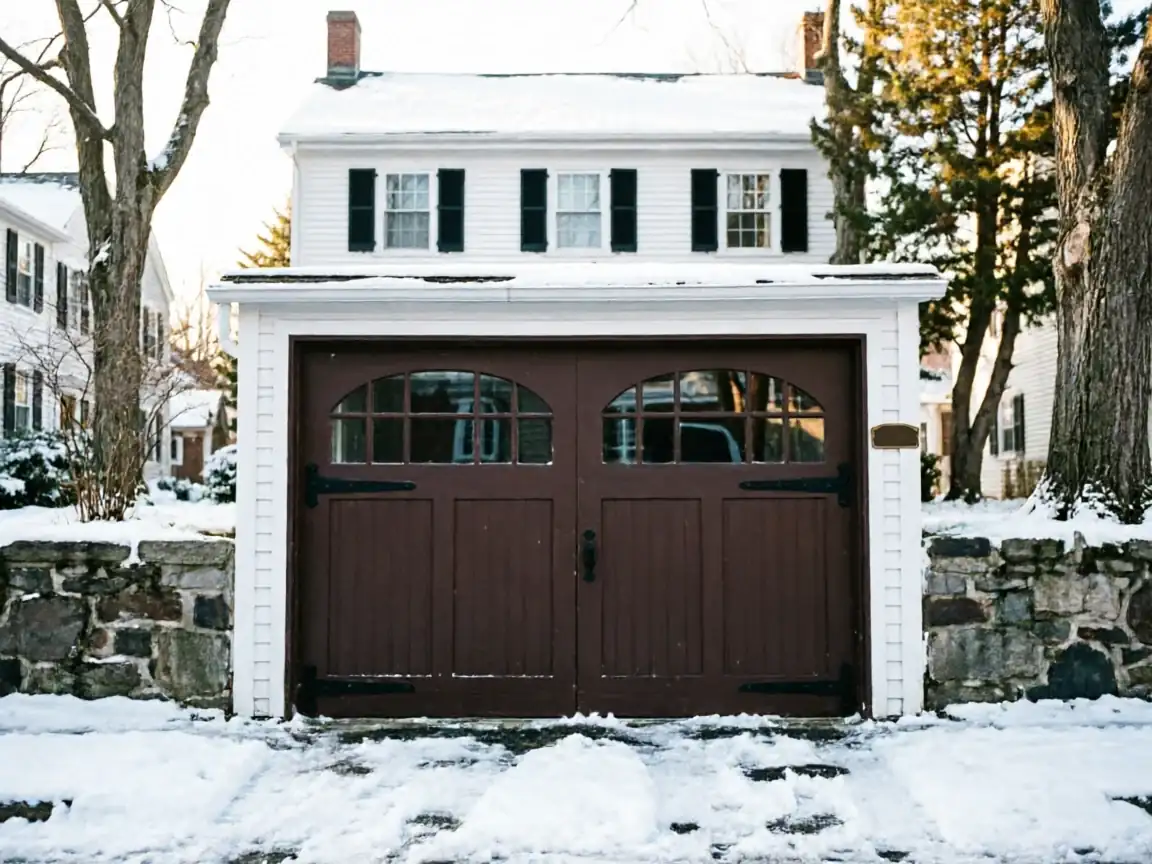
The winters here aren't gentle on steel and lubricant. This part of New Hampshire sits in a cold, severe climate band, and that matters for garage doors in a specific way: grease that's fine in July turns to paste in January, torsion springs lose a measurable amount of lift in deep cold, and a cable that's already frayed from UV and age is more likely to snap when it's stiff and brittle rather than flexible. A door built for a 1981 household didn't anticipate forty more winters of that cycle. Combine the age of the hardware with the climate and you get failures that cluster in late fall and midwinter, right when a dead garage door is least convenient. Derry's median household income, at $88,901, runs below the broader service area's $115,712, and in practice that often means owners here are more likely to push a noisy door a few more years rather than book the annual service that would have caught the worn spring before it let go.
Parts We Carry
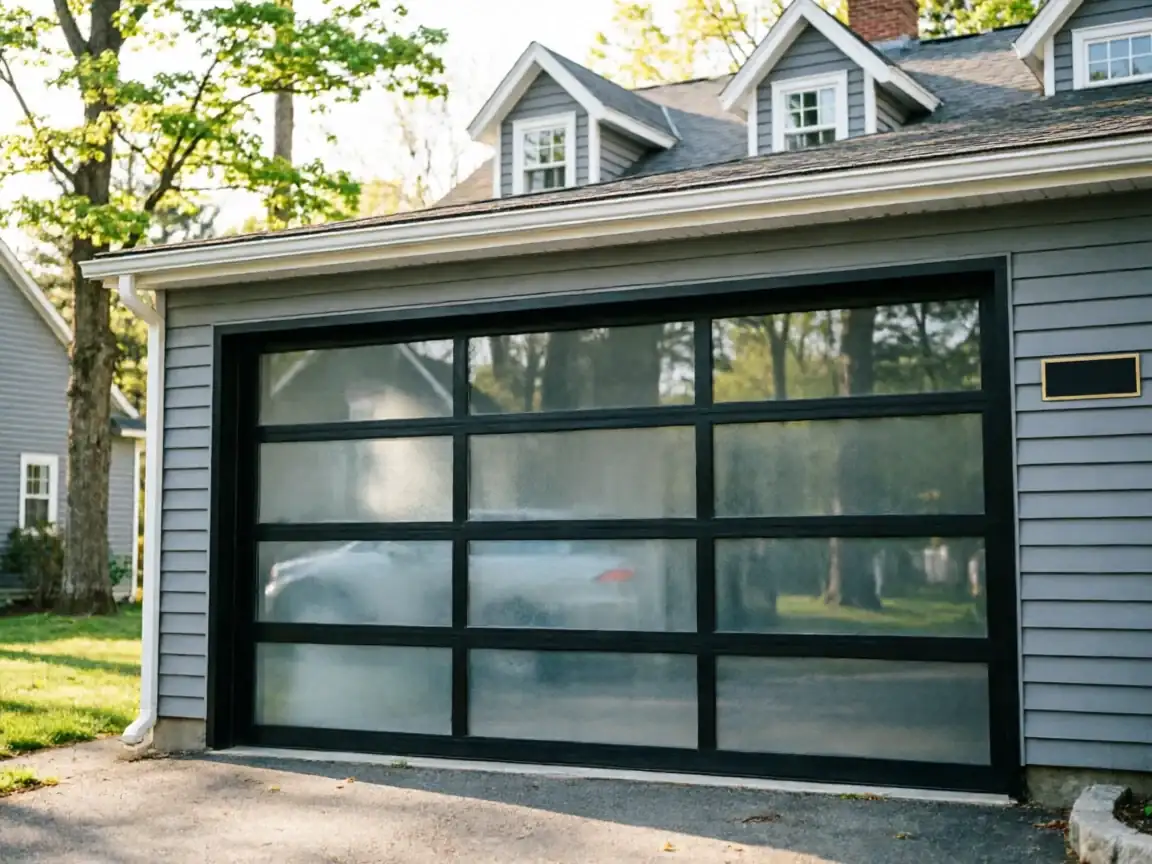
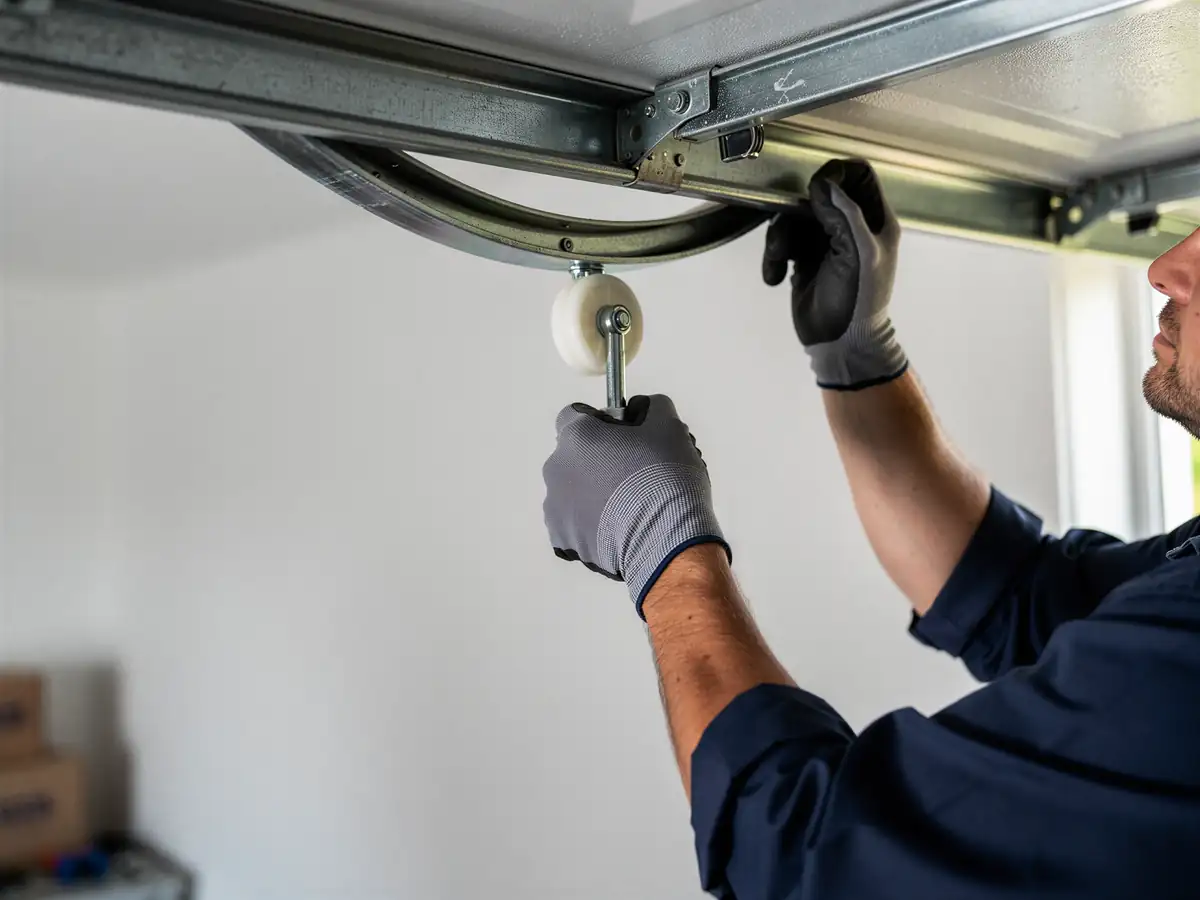
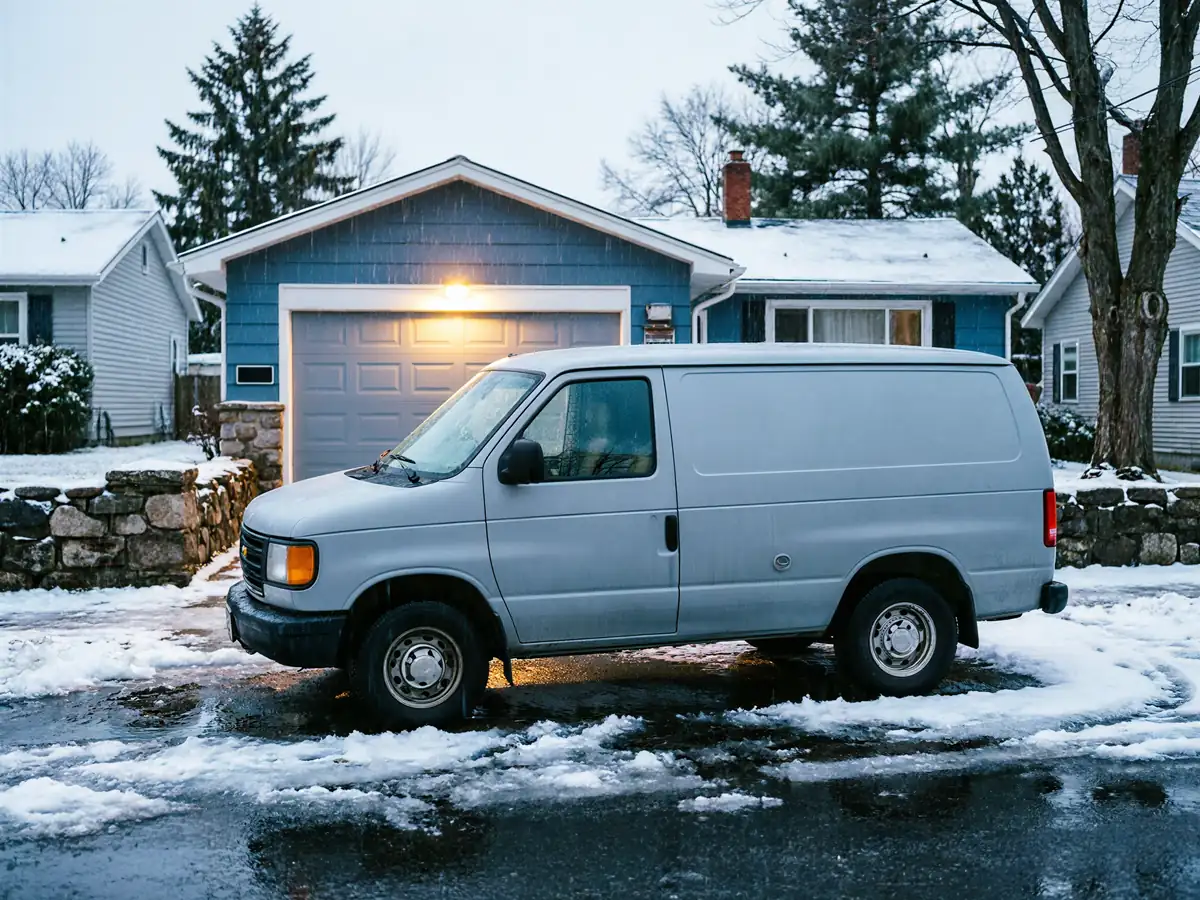
For doors from Derry's housing era, built mostly in the late 1970s through the 1990s, we carry the rollers, cable, and hinge hardware that era actually used: steel doors on standard-width torsion springs, not the wider high-cycle springs newer builds often get. We stock common roller sizes and track hardware for that generation of door on the truck, which covers the bulk of maintenance and minor repair calls without a second trip. What we don't carry is every obsolete panel or hardware kit for a door that's been discontinued for twenty years; if your door needs a specific legacy part we can't source quickly, we'll tell you that up front rather than quote a date we can't hit.
How We Fix It
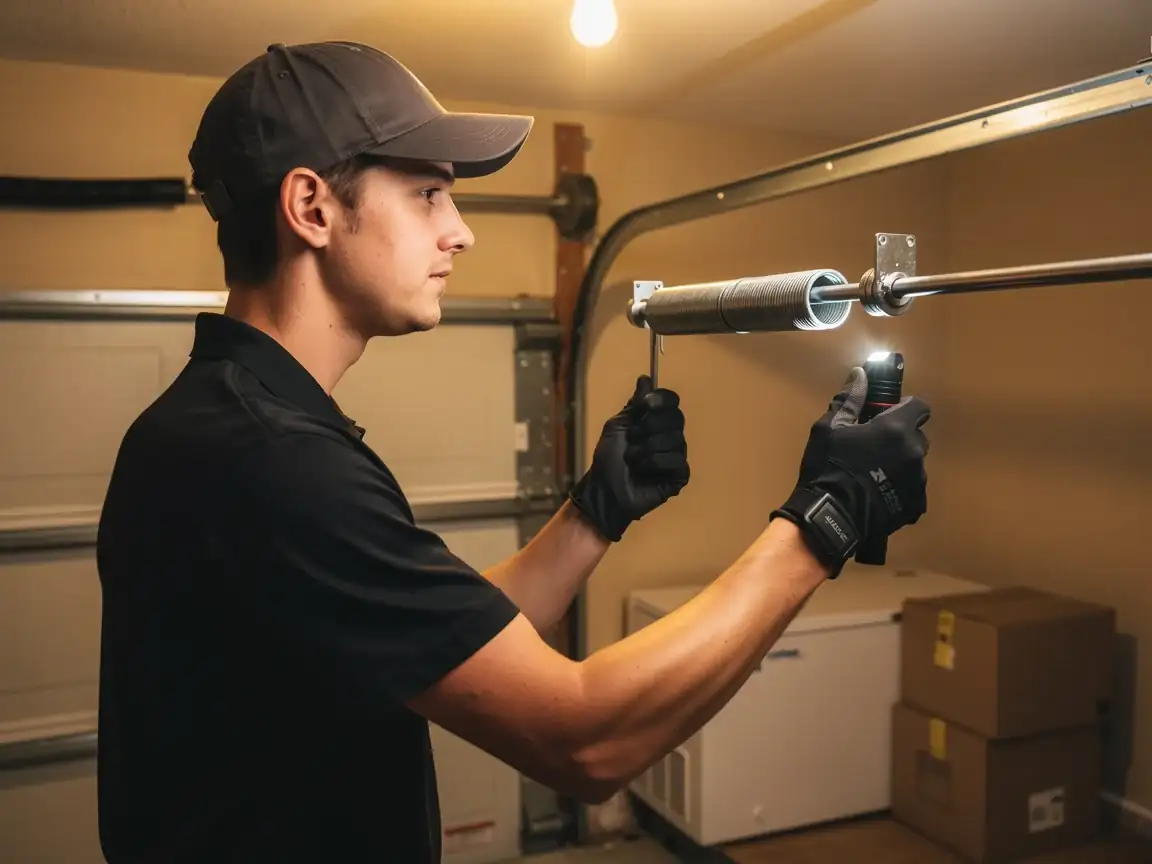
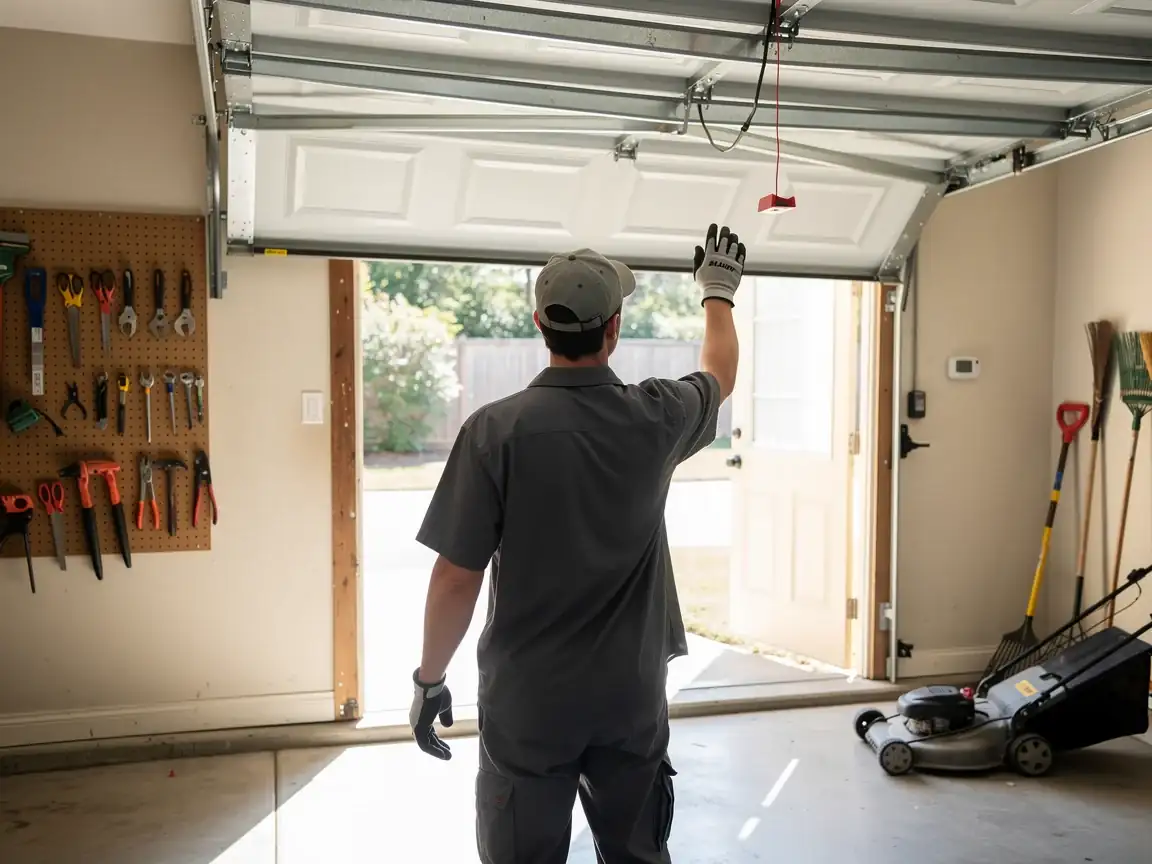
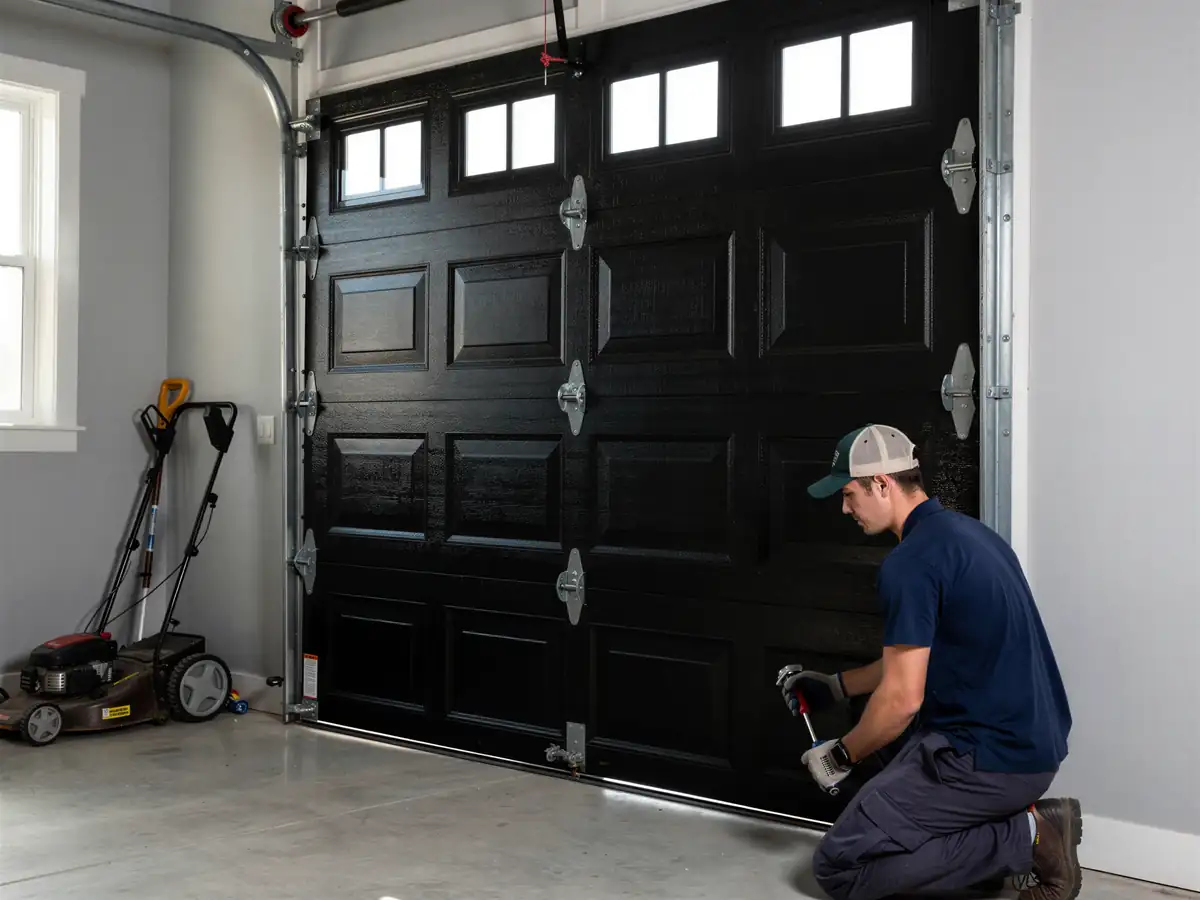
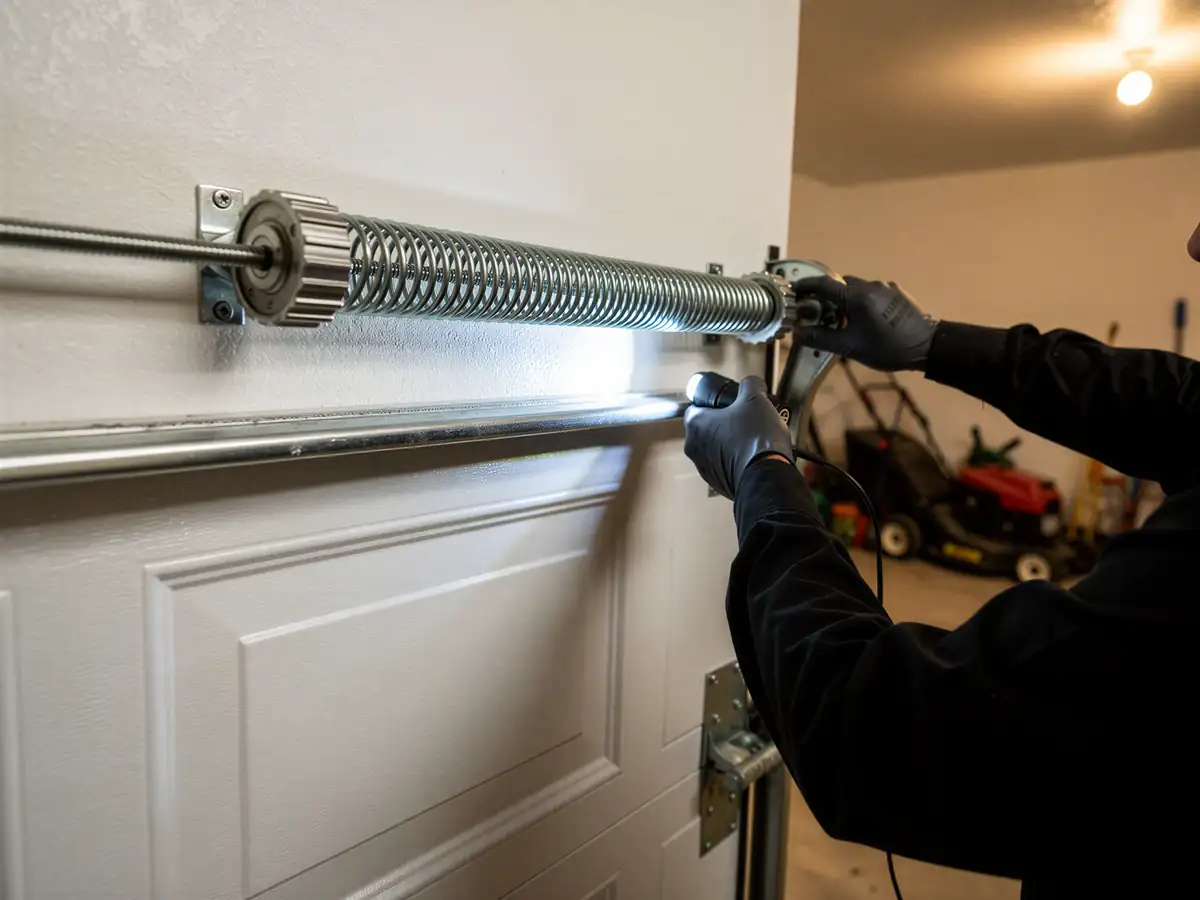
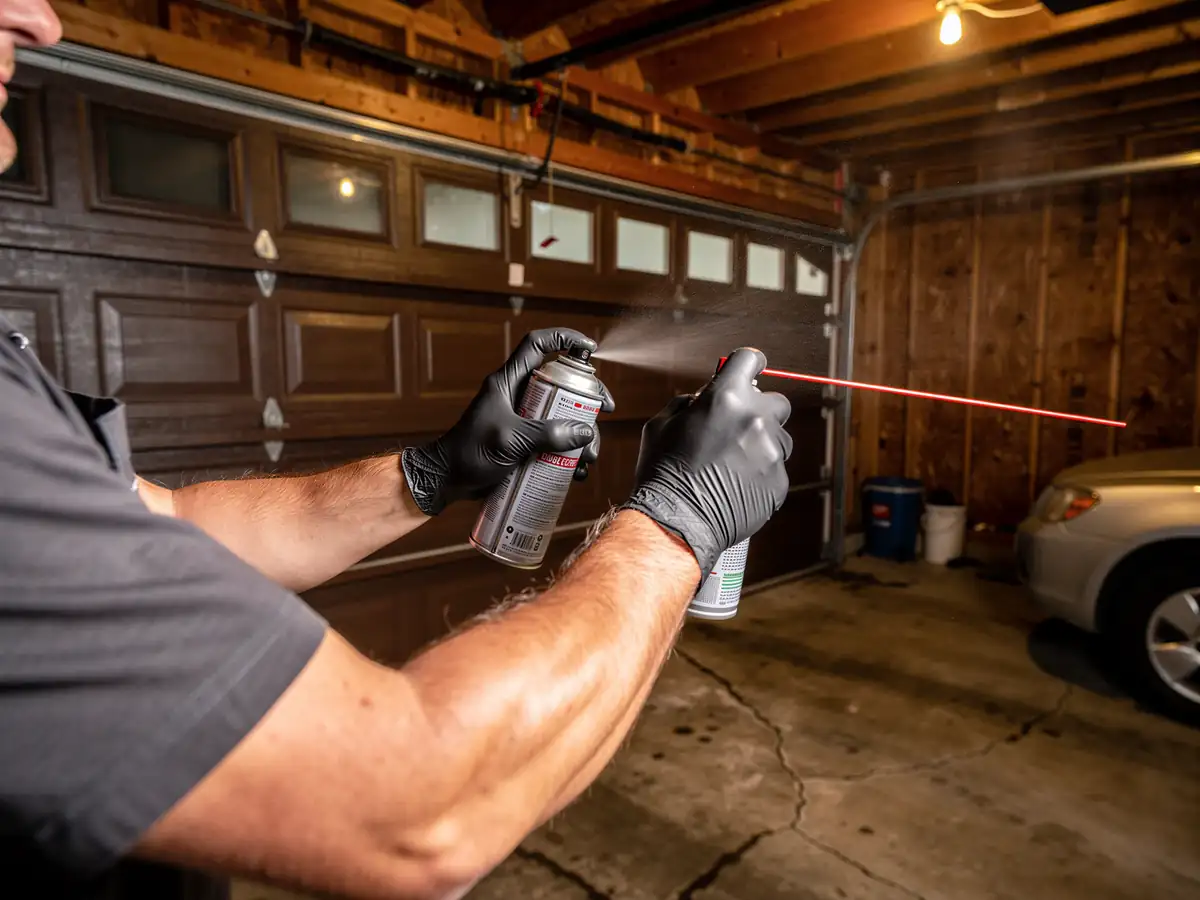
Maintenance starts with a full-cycle test: we run the door up and down watching for binding, listening for the grinding that means a bad roller bearing, and checking where the cable tracks on the drum. From there it's lubrication of hinges, rollers, and springs with a lubricant rated for cold-weather use, not household oil that thickens in winter, a check of torsion spring tension against the door's weight, and a look at the track for the kind of misalignment that eighty-one-year-old slab foundations tend to produce over decades of settling. We also check and reset the opener's force and limit settings, since those drift over time and are a common reason a door seems to be straining when the real issue is just a setting that's years out of calibration. Anything beyond that scope, a spring near failure or a cable fraying at the drum, gets flagged separately with an honest assessment of whether it's worth fixing now or scheduling before winter.