Parts We Carry
Most houses in South Hooksett carry a median build year of 1982, which means a lot of doors here still ride on the steel ball-bearing rollers that were standard through the late '70s and '80s, running in tracks sized for that hardware. We stock those steel rollers along with the nylon ball-bearing rollers that replaced them starting in the '90s. Nylon runs quieter, but in a cold-climate service area like this one, cheaper nylon rollers get brittle and chip at the edges once temperatures drop hard through the winter - we don't carry the bargain-grade stuff for that reason. We also carry the 7-ball and 10-ball bearing versions, since stem length and bearing count vary by door weight and by what the original builder put in. If your rollers are the plain sleeve-bearing kind with no ball bearings at all - common on some of the oldest doors in this build range - we'll swap those for a sealed bearing roller rather than trying to match the old part, because that style isn't something manufacturers keep making.
How We Fix It
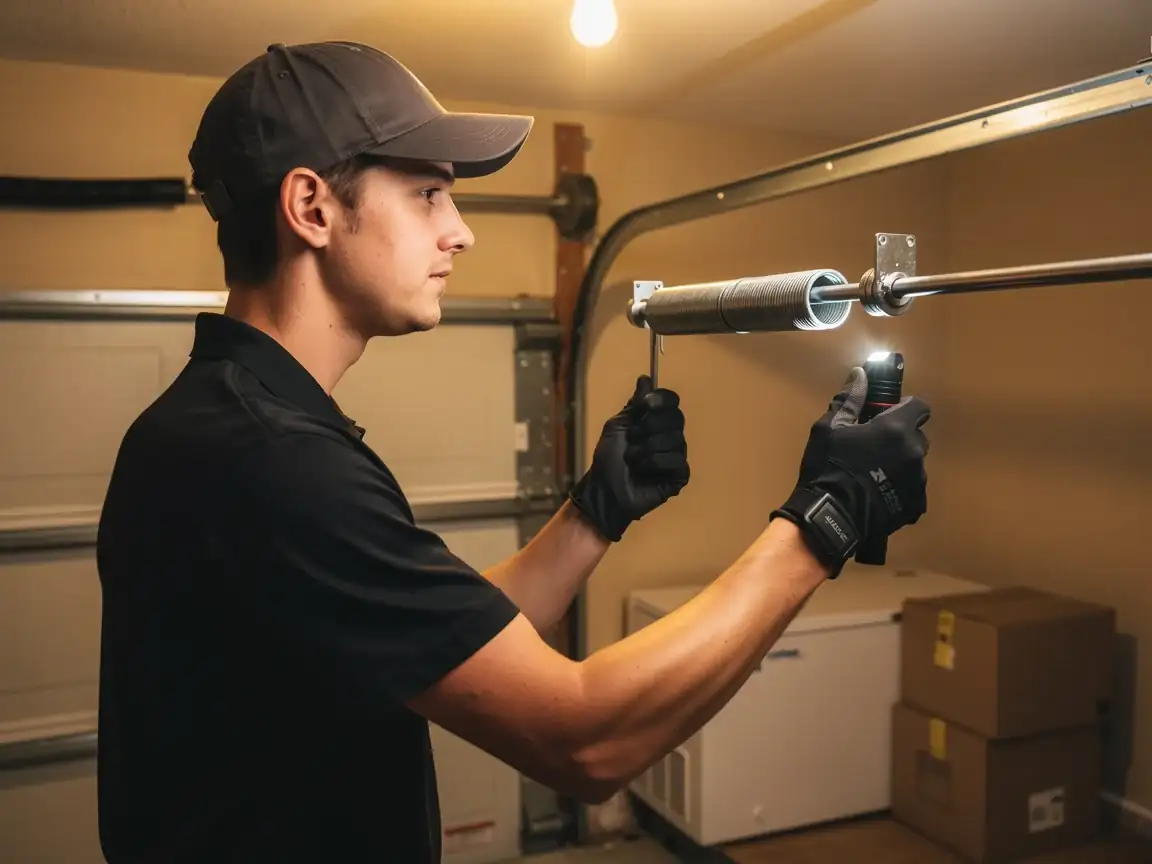
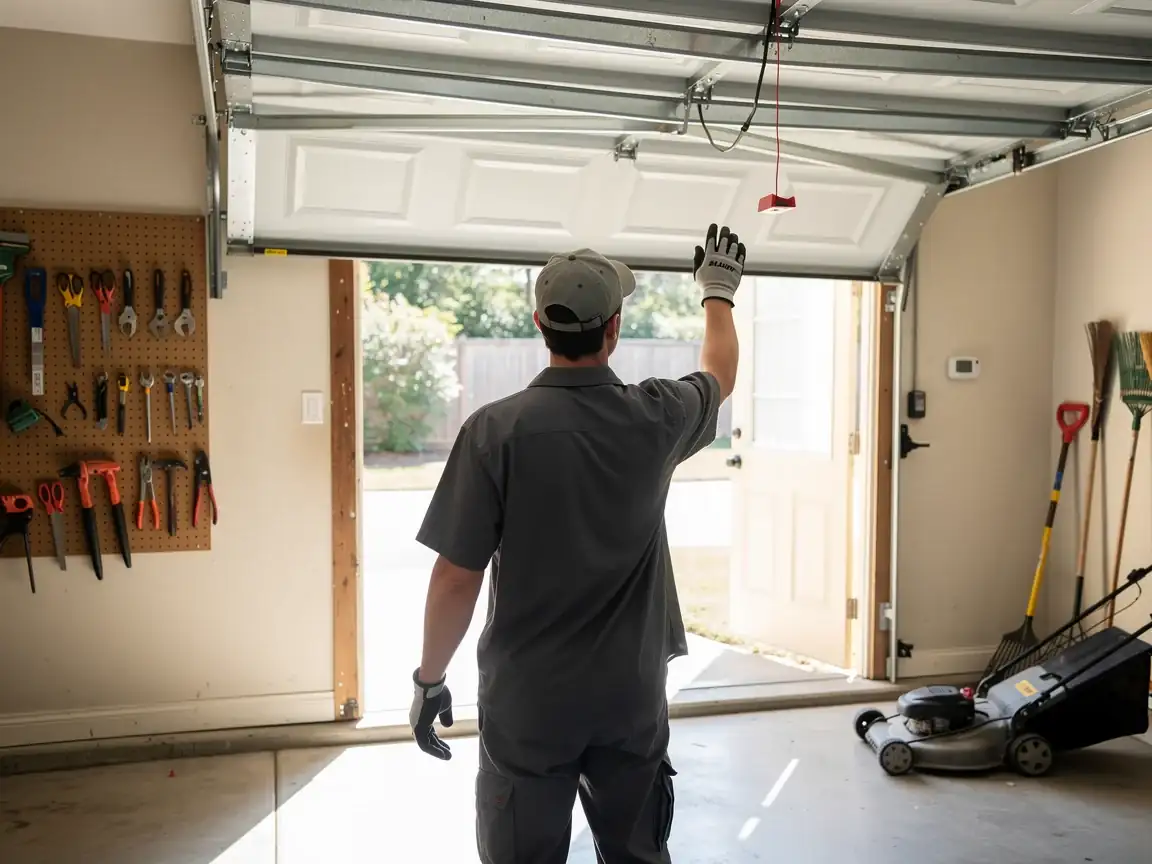
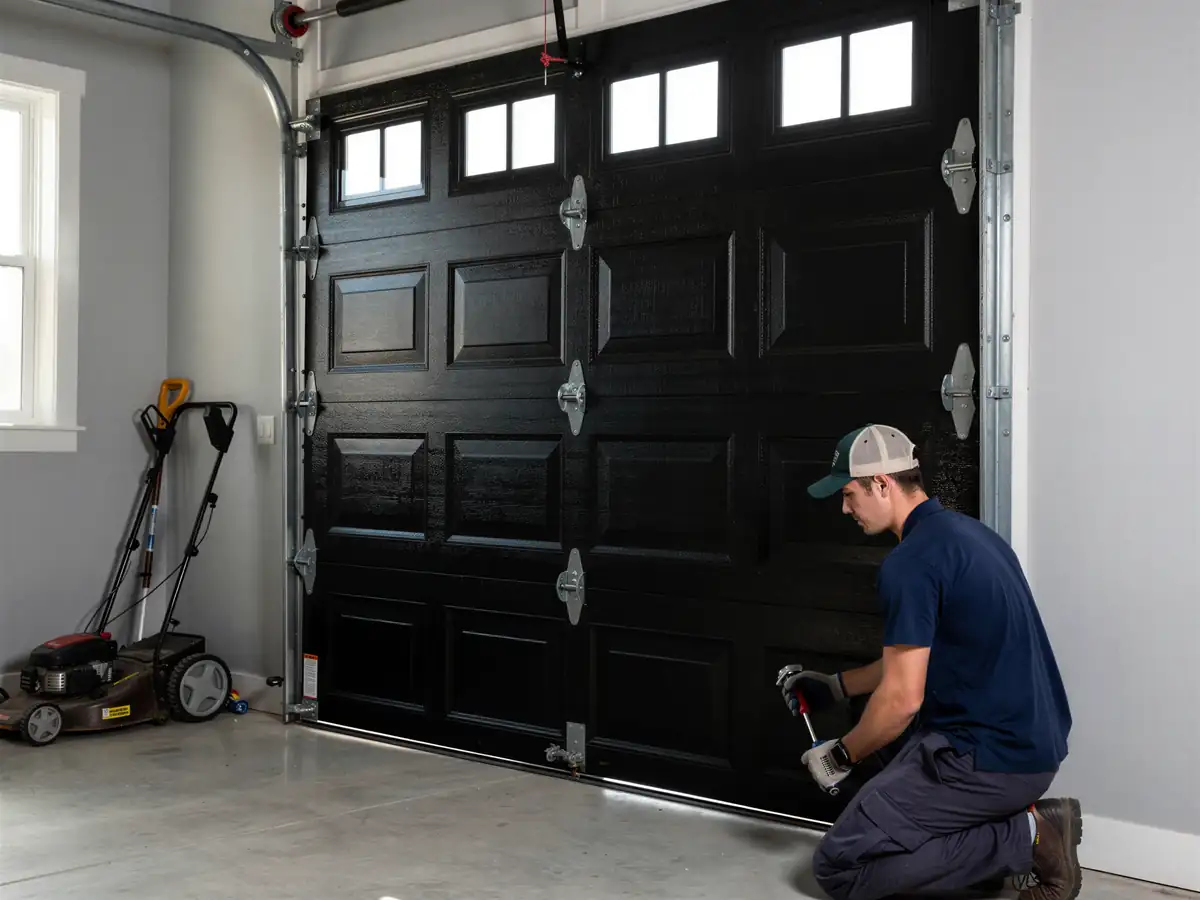
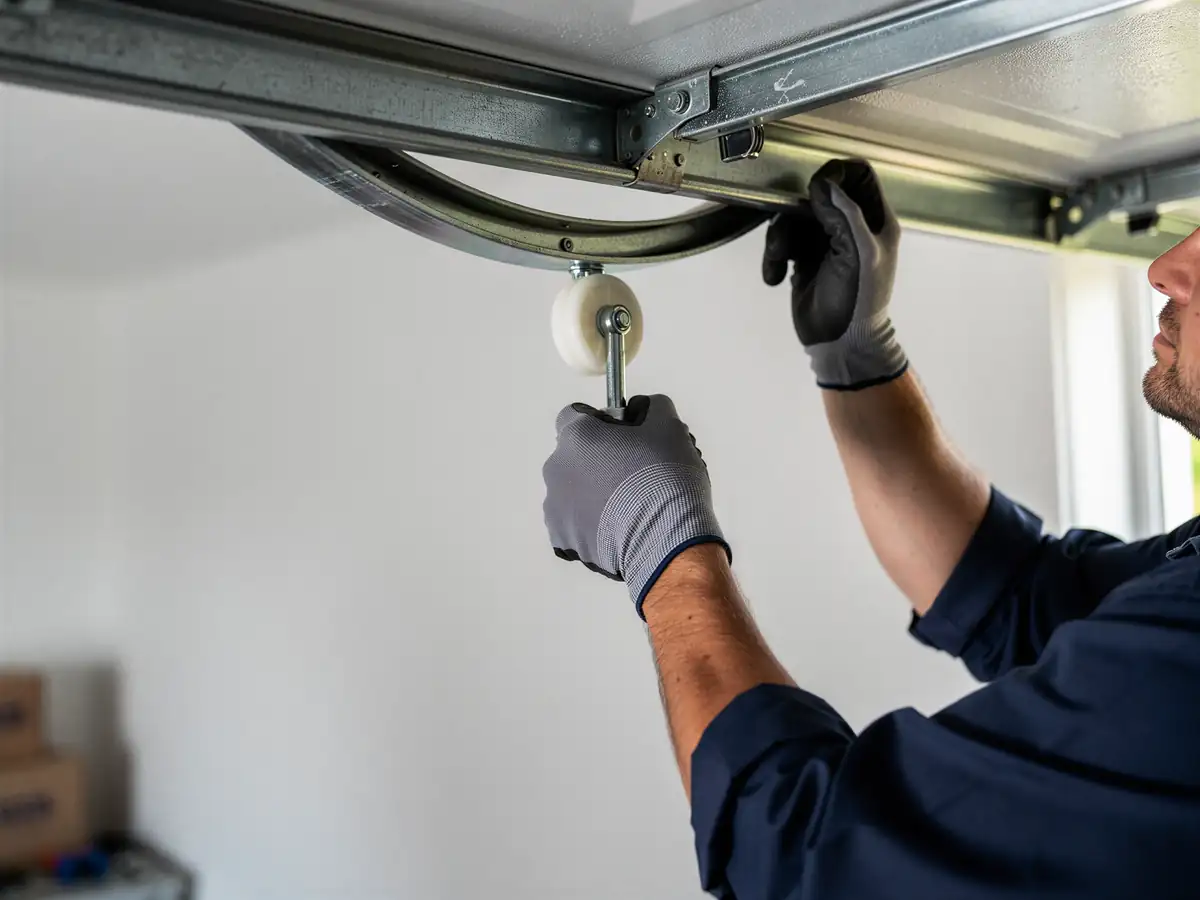
We pull the door down, support it, and work one track side at a time so the door never comes off its rails unsupported. Each roller stem comes out of its hinge or end bracket, the roller gets replaced, and we check the track gap as we go - on houses from this build era the track is often slightly bowed or pinched from decades of a roller riding rough inside it. If the track itself is bent rather than just worn, replacing rollers alone won't fix the noise or the binding, and we'll say so before we close out the job rather than after. Once new rollers are in, we run the door through a full open-close cycle, watching for drag, listening for anything hitting metal, and checking that the opener isn't straining to pull a door that's still not tracking true. Balance gets checked last - a new set of rollers on an out-of-balance door just wears unevenly again within a year, so that's part of the same visit, not a separate call.
What It Costs
We don't post a flat number here because roller count, roller grade, and what we find once the door's open all move the price - a 10-roller double door job costs more than a 2-roller touch-up on a side door, and a seized bracket adds labor a clean one doesn't. What we can tell you is that the quote you get on site reflects exactly what's on your door, not a rate built for a newer build with different hardware. South Hooksett's household income runs close to $115,592, in line with the broader service area average, and most jobs here are straightforward roller-and-track work rather than a full door replacement - which keeps cost on the lower end of what a garage door call can run.
Where This Job Goes Sideways
The trouble spot on doors from this era is the track bracket, not the roller. A roller is a cheap, fast part. A bent track or a bracket that's pulled loose from the jamb over 40 years of flexing is a bigger job wearing a small job's symptoms - grinding, a door that jumps instead of slides. We've also seen openers on these older doors compensating for bad rollers by pulling harder, which can mask the real problem until the opener itself starts failing. If your door is original to a house built near that 1982 median and it's never had the rollers touched, there's a decent chance the track needs attention at the same time, and we'd rather tell you that up front than have you call back in six months for a second visit.